Whippets: The Gentle Speedster Dog Breed (2026 Guide)
Whippets combine sprint speed with a calm, affectionate home life. This guide covers what the breed is really like to live with, from size and temperament to exercise, grooming, and health.
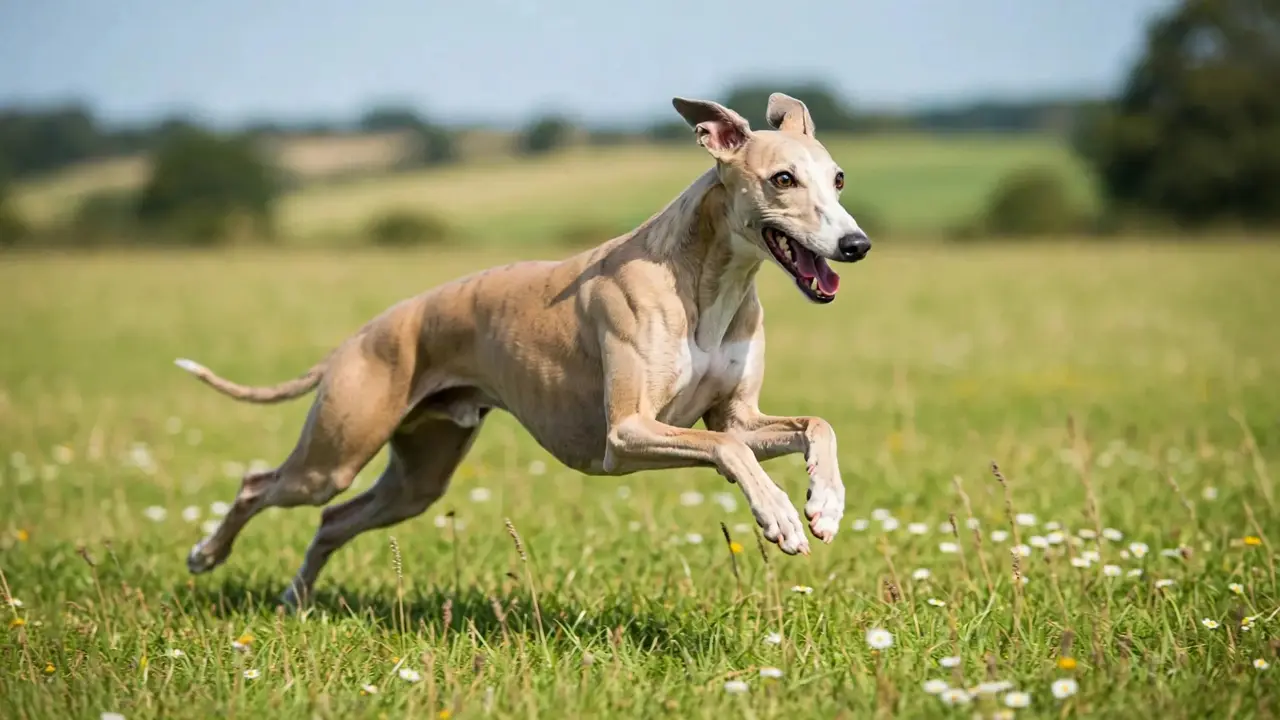
Whippets are one of those breeds that surprise people twice. The first surprise is how fast they are. The second, usually within a day of living with one, is how little they seem to care about that speed once they are home. A whippet will tear across a field like it was built for nothing else, then come inside, fold itself onto the softest thing in the room, and stay there for hours. That combination — a serious athlete and a serious sleeper — is the heart of the breed, and it is why whippets suit far more homes than most people expect.
This article is about the dog breed. One short note for clarity: the word “whippets” is also used as slang for small canisters of nitrous oxide, but that meaning has nothing to do with the breed covered here, and it will not come up again.
In this article
- What a Whippet Is
- Size, Appearance, and Coat
- Temperament and Personality
- Life at Home
- Exercise and Training
- Feeding and Everyday Care
- Health
- Whippets With Children and Other Pets
- Is a Whippet Right for You?
- Pros and Cons
- Frequently Asked Questions
What a Whippet Is
Key: breed group. Whippets are sighthounds, dogs that hunt and chase primarily by sight rather than by scent.
Key: origin. The breed was developed in England, mainly in the industrial north, during the late eighteenth and nineteenth centuries.
Whippets were bred by working people — miners and mill workers among them — who wanted a small, fast, affordable dog. The dogs raced in informal contests, sometimes called rag races, and were also used for catching rabbits. Because the dogs were cheap to keep and quick on their feet, they earned the nickname “the poor man’s racehorse,” a phrase that still turns up in almost every account of the breed. It captures something real: this was a fast dog for ordinary people, not a luxury animal.
Over time, whippets moved from the race track and the field into family homes, and the breed was formally recognised by kennel clubs. What did not change was the basic design. A whippet is still a lean, deep-chested, long-legged dog built for short, explosive bursts of speed, and that design shapes everything from how it exercises to how it sleeps.
The Sighthound Mind
Sighthounds see the world a little differently from scent hounds. A whippet notices movement first — a squirrel darting across a garden, a leaf skittering in the wind, a distant dog breaking into a run. That visual sharpness is part of the breed’s charm, and it is also the reason owners are told, again and again, to be careful about off-lead time in open areas. A whippet that spots something worth chasing may decide in a fraction of a second, and no amount of calling competes well with that instinct in the moment. Good fencing and a long lead are not signs of a strict owner. They are the practical tools that let a sighthound enjoy the outdoors safely.
Size, Appearance, and Coat
Key: height. Most adult whippets stand between 18 and 22 inches at the shoulder, with males usually a little taller than females.
Key: weight. Most adults weigh roughly 25 to 40 pounds.
Key: lifespan. Whippets typically live 12 to 15 years.
Look at a whippet and the first thing you notice is the outline. The body is smooth and aerodynamic: a deep chest, a tucked-up waist, long legs, and a fine coat that lies close to the skin. The head is long and lean, the neck is long and slightly arched, and the tail is long and tapering, usually carried low with a gentle upward curve. Nothing about the dog is bulky. Even a fit, well-fed whippet looks slender to people used to stockier breeds, and that is normal for the breed rather than a sign of a problem. New owners sometimes worry that their whippet looks thin. A healthy whippet should show a hint of rib and a clear waist; a whippet that looks padded like a retriever is probably carrying extra weight.
The coat is short, smooth, and fine, and it comes in almost every colour and pattern: fawn, black, blue, white, brindle, red, cream, and parti-colours among them. Grooming is correspondingly simple. A weekly brush with a soft brush or a grooming mitt is usually enough, and baths are needed only when the dog is actually dirty. Whippets do not carry much body fat, so they feel the cold. A coat for winter walks is not a fashion statement for this breed. It is practical clothing, and most whippet owners end up owning several.
Temperament and Personality
If you ask whippet owners for one word, you will hear “gentle” more than any other. Whippets are affectionate, quiet, and sensitive dogs. They bond closely with their people and tend to follow them from room to room, not out of anxiety in most cases but out of simple preference for company. They are not usually noisy dogs. Many whippets rarely bark, and when they do, it is often at something specific rather than general excitement.
That sensitivity cuts both ways. Whippets respond best to calm voices and gentle handling, and they can shut down or become nervous if training is harsh or loud. They are not stubborn in the way some breeds are stubborn. They are more like thoughtful dogs that need a reason to cooperate and a handler who makes cooperation pleasant. Treats, praise, and short, upbeat sessions work far better than repetition and pressure.
Whippets are also polite rather than pushy with strangers. They may be a little reserved at first meeting, warming up once they decide a new person is safe. This is not aloofness in the cat-like sense. It is a quiet dog taking a moment to assess, and most whippets are friendly once that moment passes.
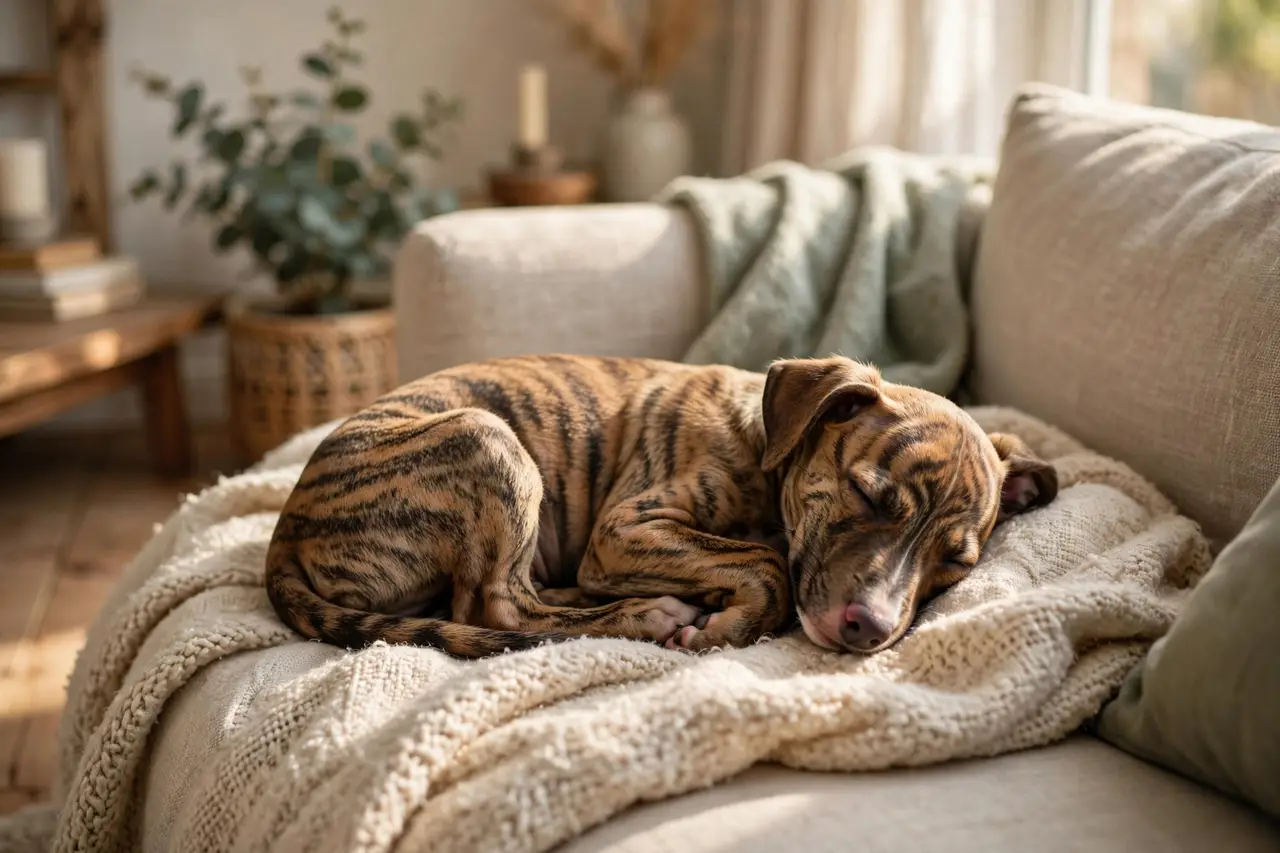
One trait that surprises first-time owners is how much whippets love comfort. Beds, blankets, laps, and sunbeams are all treated as serious business. A whippet that has just finished a run will often head straight for the warmest, softest spot available and stay there. Owners joke that the breed’s real hobbies are sleeping and leaning, and there is more truth in that than in many breed stereotypes.
Life at Home
Whippets adapt well to different kinds of homes, including apartments, provided their exercise needs are met. They are clean, quiet indoors, and not prone to destructive chewing when they are settled. They do best in a home where someone is around for much of the day, because they are companion dogs at heart and can become anxious if left alone for very long stretches. That does not mean an owner who works cannot have a whippet, but it does mean planning matters: a dog walker, a staggered schedule, or a second dog for company can all help.
A few practical points make life with a whippet smoother. First, soft bedding is not optional. A whippet’s thin coat and bony frame mean hard floors and thin beds are uncomfortable, and many whippets will simply relocate to your sofa if their own bed is not inviting. Second, whippets like warmth. A draught-free sleeping spot and a coat for cold weather are worth sorting out early. Third, whippets are notorious sofa thieves and blanket burrowers. If you want the furniture to stay dog-free, decide that on day one and be consistent, because a whippet that has discovered the sofa will not easily accept being evicted from it later.
Exercise and Training
Key: exercise needs. Moderate — short bursts of intense activity rather than all-day endurance work.
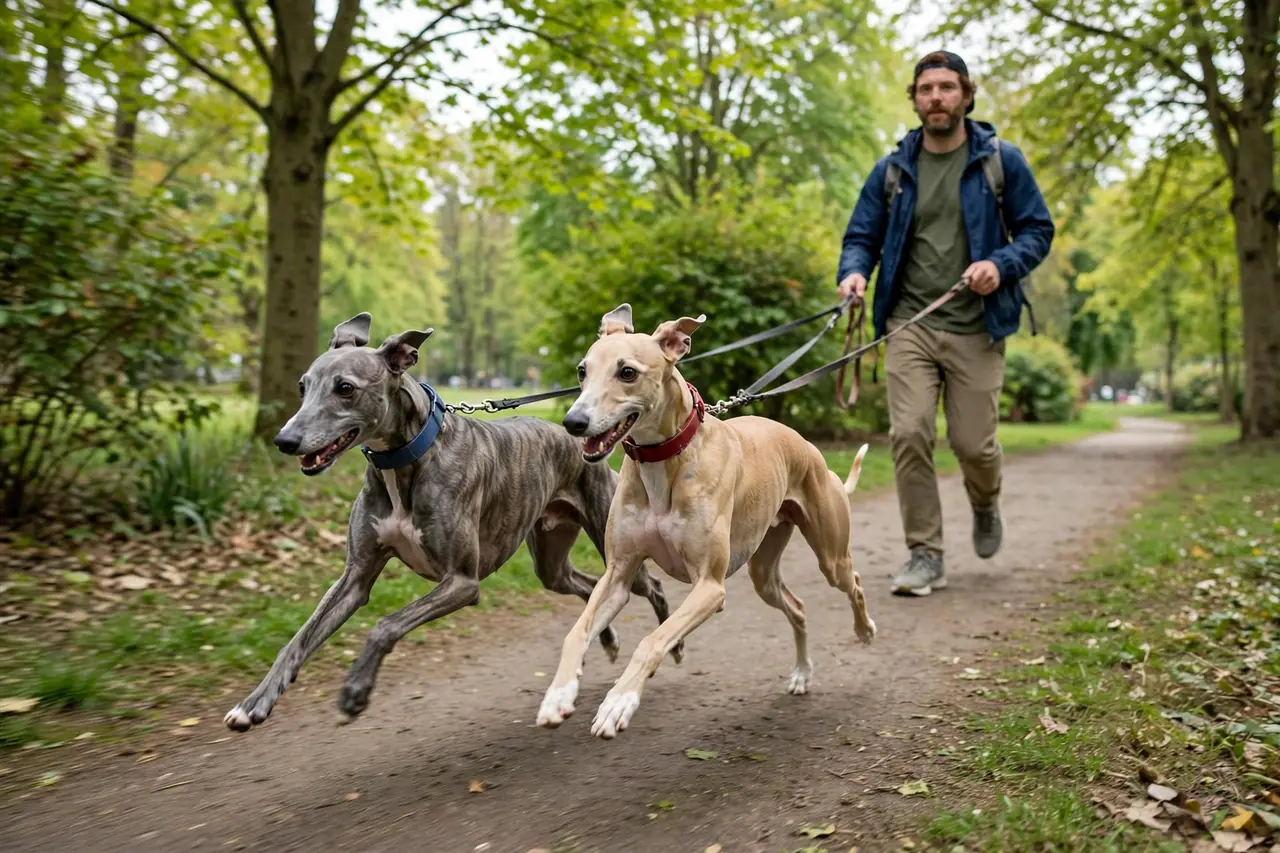
The classic whippet exercise pattern is sprint, then sleep. A good off-lead run in a secure field, a game of fetch, or a lure-coursing session will satisfy most whippets far better than a long, slow walk, though walks still matter for socialisation and for toileting. A daily walk plus a few chances to run each week is a reasonable baseline for a healthy adult. Puppies and young dogs need shorter, more frequent sessions, and very young puppies should not be pushed into hard sprinting before their joints are ready.
Recall training deserves honest attention. A whippet’s chase instinct is strong, and many owners find recall reliable in the garden but less reliable in a field full of distractions. That is not a failure of the dog or the owner. It is the breed doing what it was bred to do. The sensible approach is to practise recall in low-distraction places first, reward generously, and use secure fields or a long line where distractions are high. Some owners never fully trust off-lead recall in open countryside, and that is a reasonable, responsible choice rather than a shortcoming.
Training in general should be short, positive, and varied. Whippets learn quickly when they are interested and switch off quickly when they are bored. Five minutes of engaged training beats twenty minutes of drilling. House training is usually straightforward, especially with a consistent routine, and crate training can help a puppy settle, provided the crate is treated as a comfortable den rather than a punishment.
One more exercise note: whippets can reach speeds in the region of 35 miles per hour over short distances. That is not a number to test on a busy road or an unfenced field. It is a reminder that a whippet’s speed is real, and that a secure space is the kindest place to let it out.
Feeding and Everyday Care
Whippets are not usually greedy dogs, and many are light eaters compared with food-driven breeds. A good-quality dog food, fed in measured meals rather than left out all day, suits most adults. Because the breed carries little fat, weight can be hard to judge by eye alone for new owners, so a regular weigh-in at the vet and a simple hands-on check — ribs easy to feel under a thin layer, waist visible from above — are useful habits.
Puppies need food formulated for growth, and portions should follow the packet guidance adjusted for the individual dog’s condition. Older whippets may need fewer calories as their activity drops, and any sudden change in appetite or weight is worth a vet check rather than a guess.
Everyday care is refreshingly low-maintenance. Nails should be checked and trimmed regularly, though active dogs wear them down naturally to some extent. Teeth benefit from regular brushing or dental chews, and ears should be checked after runs through long grass. The short coat means mud brushes out easily, which is a genuine advantage for a dog that loves to run.
Health
Key: general health. Whippets are generally healthy, sturdy dogs with a good lifespan for a medium-sized breed.
That said, no breed is free of health concerns, and prospective owners should know what to watch for. Whippets’ thin skin and low body fat make them more vulnerable to cuts and scrapes when running, and to cold weather. Some whippets are sensitive to anaesthesia, which is worth mentioning to a vet before any procedure, since sighthounds can metabolise certain drugs differently. Heart conditions, including mitral valve disease, occur in the breed, as they do in many dogs, and a vet who listens to the heart at routine checks will pick up murmurs early. Eye conditions and deafness occur occasionally, and responsible breeders screen their breeding dogs for known issues.
The single most useful health habit is unglamorous: keep up with routine vet visits, vaccinations, and parasite prevention, and do not ignore small changes. A whippet that suddenly goes off food, limps after a run, or seems unusually tired is telling you something, and early checks are almost always cheaper and kinder than late ones.
When choosing a puppy, look for a breeder who health-tests, who raises puppies in the home, and who is happy to answer questions and stay in touch. A breeder who cannot explain the health history of the parents is a warning sign, and so is a puppy offered far below the usual price with no paperwork. Rescue is also a real option: whippet and sighthound rescues regularly have adult dogs looking for homes, and an adult rescue can be a wonderful choice for someone who wants to skip the puppy stage.
Whippets With Children and Other Pets
Whippets are generally excellent with children, especially children who are gentle and calm around dogs. Their patience and quiet nature make them a good match for families, though, as with any dog, interactions with toddlers should be supervised. A small child who grabs or falls on a slender dog can hurt it without meaning to, and a startled dog of any breed can snap.
With other dogs, whippets are usually sociable and polite. They enjoy the company of other sighthounds in particular, and many whippet owners end up with two. The caution is with small animals. A whippet raised with a cat from puppyhood will often live happily with that cat, treating it as family rather than prey. An adult whippet meeting a cat for the first time, or a whippet spotting a rabbit, squirrel, or small dog running in the distance, may react very differently. The distinction is between animals the dog knows and animals that trigger the chase instinct, and owners should manage introductions carefully rather than assuming all small animals are safe.
Is a Whippet Right for You?
A whippet could be a good fit if you want a quiet, affectionate, medium-sized dog, if you can offer a secure place to run and a warm, comfortable home, and if you are happy with a dog that wants to be near you most of the time. The breed suits first-time owners more than many fast breeds do, because the home behaviour is so easy, but the chase instinct and the cold sensitivity are real responsibilities to accept.
A whippet may be a poor fit if you need a dog that can be left alone all day without company, if you want a dog for long-distance running or hiking in all weathers, or if you have a garden with low fencing and expect the dog to be safe off-lead near roads. None of these are criticisms of the breed. They are simply mismatches between what the dog is and what the home offers, and recognising a mismatch early is kinder than discovering it later.
Pros and Cons
| Pros | Cons |
|---|---|
| Gentle, affectionate, and quiet indoors | Strong chase instinct; recall can be unreliable in open areas |
| Low grooming needs and little smell | Feels the cold; needs coats and warm bedding |
| Adaptable to apartments and smaller homes | Can suffer separation anxiety if left alone too long |
| Good with children and other dogs | Small pets may trigger prey drive |
| Healthy breed with a 12–15 year lifespan | Thin skin and low fat make injuries and chills more likely |
| Athletic and fun for lure coursing and fetch | Needs secure fencing; not a dog for unfenced gardens near roads |
Frequently Asked Questions
Are whippets good family dogs?
Yes, whippets are generally excellent family dogs. They are gentle, quiet, and affectionate, and they usually get on well with children who treat them kindly. Supervision with toddlers is still sensible, as with any breed, because whippets are slender and can be hurt by rough handling.
How much exercise does a whippet need?
Most adult whippets need a daily walk plus regular chances to sprint in a secure area. They are built for short bursts of speed rather than long endurance exercise, so a good run followed by a long sleep is a typical and healthy pattern.
Do whippets bark a lot?
No, whippets are usually quiet dogs and rarely bark without a reason. They are not known as guard dogs or alarm barkers, which is one reason they suit apartments and quieter households.
Are whippets easy to train?
Whippets learn quickly with positive, reward-based training, but they bore easily with repetition and respond poorly to harsh methods. Short, fun sessions with treats and praise work best, and recall training needs patience because of the breed’s chase instinct.
How long do whippets live?
Whippets typically live 12 to 15 years, which is a good lifespan for a medium-sized breed. Routine vet care, a healthy weight, and protection from cold and injury all help a whippet reach the upper end of that range.
Do whippets need a coat in winter?
In most cases, yes. Whippets have a short, fine coat and very little body fat, so they feel cold more than many breeds. A coat for winter walks and a warm, draught-free bed are practical necessities rather than extras.
Are whippets good with cats?
It depends. A whippet raised with a cat from puppyhood often lives happily with it, but an adult whippet may chase unfamiliar cats or small animals outdoors. Careful introductions and supervision are important, and owners should never assume a whippet is automatically safe with every small pet.
WRITTEN BY: The adailyinsight360.com editorial team covers pet breeds, everyday health, and practical guides for readers looking for honest, useful information.
Reead Also: 763 Area Code Guide to Minnesota Cities and Dialing
You can also explore more everyday guides on our sister sites, including the team at 9bio.co.uk and the editors at dailyorvix.com.
#whippets

Related Articles
Granulation Tissue Explained (2026 Guide): What It Is, How Wounds Heal & Warning Signs
That pink, bumpy tissue in a healing wound has a name - granulation tissue. Here is…
Canker Sore Treatment: 12 Ways to Heal Mouth Ulcers Fast (2026 Guide)
Canker sores heal in 1-2 weeks on their own, but the right treatment eases the pain…
How to Wash a Wool Blanket (2026 Guide): Hand Wash and Machine Steps
Wool blankets need gentle care to stay soft and shrink-free. This guide covers hand washing, machine…
1 Comment