409 Area Code: Southeast Texas Cities and Full Guide
A 409 number means southeast Texas: the Golden Triangle of Beaumont, Port Arthur, and Orange, plus Galveston and the Gulf Coast. This guide explains where 409 covers, its history, and how to dial it.
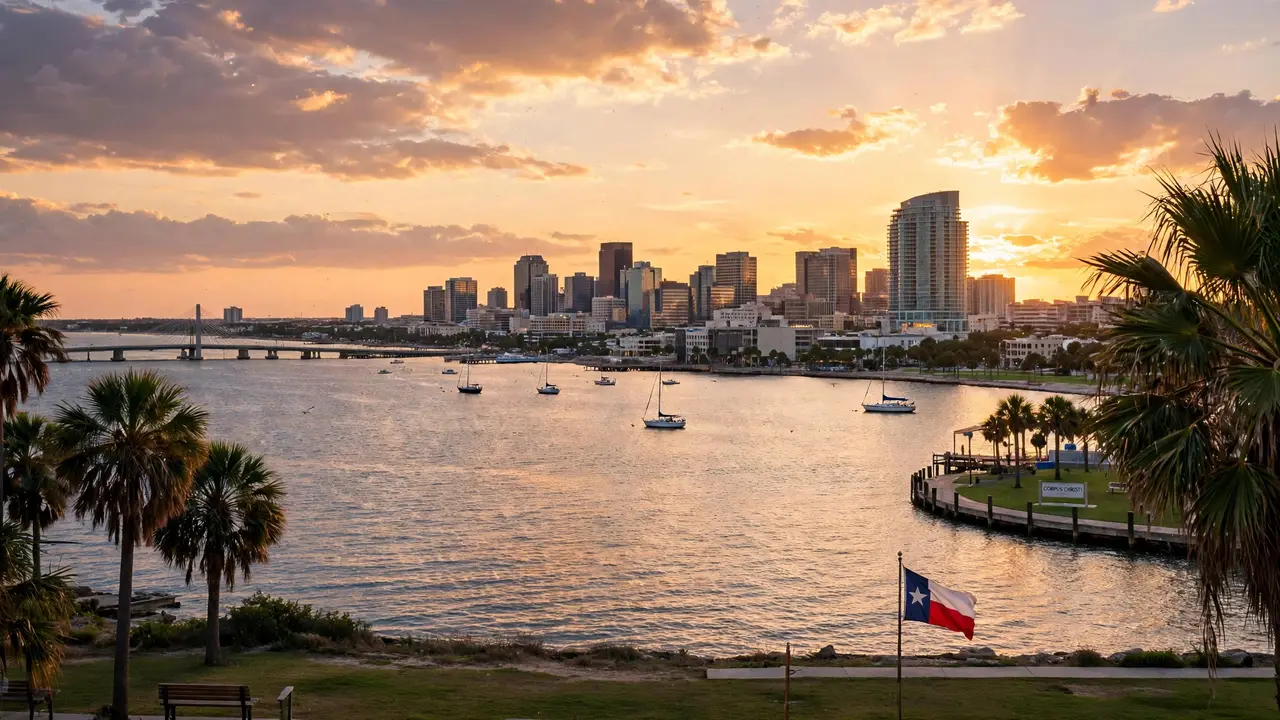
If you see a phone number starting with 409, you are looking at south-east Texas. The 409 area code covers the far south-east corner of the state: the Golden Triangle cities of Beaumont, Port Arthur, and Orange near the Louisiana border, and the Galveston Bay communities down the Gulf Coast. It is a smaller area code than it used to be, and it has no overlay partner, which means a 409 number still points to one fairly specific region — and that specificity is exactly why people search for it.
Most searches for the 409 area code come from one of a few situations. Someone has missed a call from an unfamiliar 409 number and wants to know where it came from. Someone is moving to Beaumont or Galveston and wants to know whether their new number will be a 409 number. Or a business wants a local number that signals it belongs in south-east Texas. This guide answers all three questions, with the cities, the counties, the time zone, the history, and the dialling rules, plus the practical warnings about scam calls that apply to any area code.
In this article
- 409 Area Code at a Glance
- The Two Halves of 409
- History: How 409 Got Its Shape
- Cities and Counties in 409
- Time Zone and Dialing
- Getting a 409 Number
- 409 and Scam Calls
- Frequently Asked Questions
409 Area Code at a Glance
Key: state. The 409 area code serves south-east Texas in the United States.
Key: main cities. Beaumont, Port Arthur, Orange, Galveston, and Texas City are the main cities.
Key: created. The 409 area code was created on March 19, 1983, in a split from area code 713.
Key: overlay. The 409 area code has no overlay.
Key: time zone. All 409 communities observe Central Time.
| Detail | 409 area code |
|---|---|
| State | South-east Texas, United States |
| Main cities | Beaumont, Port Arthur, Orange, Galveston, Texas City |
| Created | March 19, 1983, in a split from 713 |
| Overlay | None |
| Time zone | Central Time |
That last point is worth stressing, because area code lookups often get the time zone wrong. The 409 area code is entirely in Central Time: Central Standard Time (UTC−6) in winter and Central Daylight Time (UTC−5) in summer. If you are calling a 409 number from the East Coast, it is one hour earlier there. From the West Coast, it is two hours later there. And if you are in the United Kingdom or elsewhere abroad, the time difference is larger still, so checking the Central Time clock before calling is a courtesy that avoids early-morning or late-night calls.
The 409 area code is part of the North American Numbering Plan, the system that assigns area codes across the United States, Canada, and several other countries and territories. Area codes in this system are not just random numbers. They are geographic identifiers, and in the case of 409, the geography is unusually distinctive: a region split into two clusters, separated in part by water, with a long and interesting history of splits and redraws.
The Two Halves of 409
The easiest way to understand the 409 area code is to think of it as two clusters stitched together. The first cluster is the Golden Triangle, in Jefferson and Orange counties and the surrounding area: Beaumont, Port Arthur, Orange, and the smaller towns between them, such as Nederland, Groves, Port Neches, and Lumberton. The second cluster is Galveston County on the coast: Galveston Island itself, Texas City, La Marque, Hitchcock, Santa Fe, and the communities along Galveston Bay.
The Golden Triangle is named for the triangle formed by Beaumont, Port Arthur, and Orange, and it is one of the great industrial regions of the Gulf Coast. Refining and petrochemical plants line the Sabine-Neches Waterway, and the ports at Beaumont and Port Arthur handle a huge volume of trade. The region’s economy has been built on energy, chemicals, shipping, and manufacturing for generations, and its cities reflect that history: working cities with deep roots, strong local identities, and a culture shaped by the Gulf, by the refineries, and by the proximity of Louisiana.
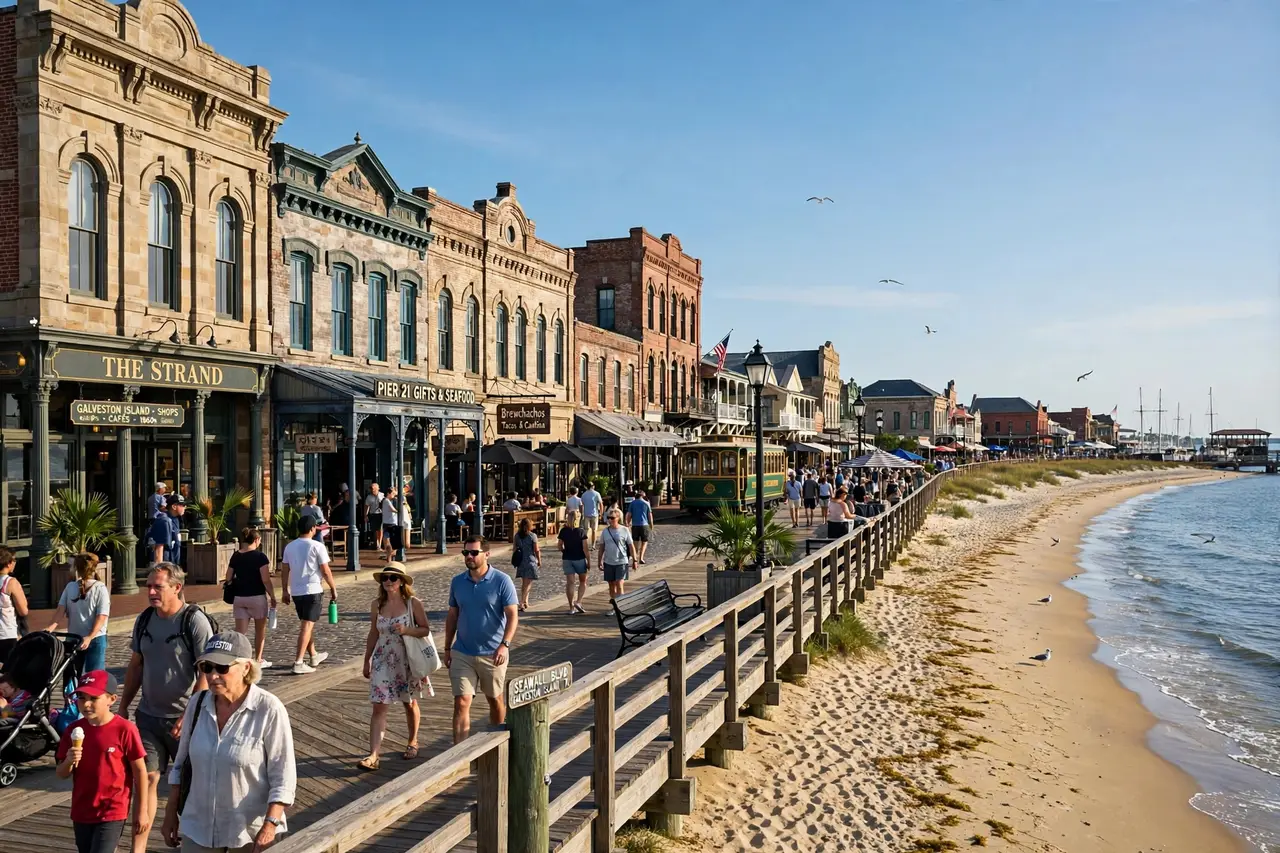
Galveston is a different world, though it shares the same area code. Galveston Island is a barrier island city with a long history as a port, a resort, and a centre of Texas history. The Strand, its historic downtown district, is lined with Victorian-era buildings, and the city’s seawall, beaches, and historic homes draw visitors from across Texas and beyond. Texas City, on the mainland side of Galveston Bay, is a major industrial and port city in its own right, and La Marque, Hitchcock, and Santa Fe are growing communities that blend suburban life with Gulf Coast character.
What connects the two clusters is history, not geography. They were both part of the original 409 territory created in 1983, and when that territory was divided in 2000, the eastern segment kept the 409 code. The result is an area code that is not fully contiguous in the way most area codes are. The Galveston part of 409 is separated from the rest of the code by the Gulf of Mexico and by neighbouring area codes, which makes 409 one of the few non-contiguous area codes in the United States. That quirk is a conversation piece for telephone enthusiasts, and it is a useful reminder that area code boundaries follow history and regulation, not just geography.
History: How 409 Got Its Shape
Key: split from 713. Area code 409 was created in 1983 when it split from Houston’s 713 area code.
Key: split in 2000. In 2000, the 409 territory was divided into three parts, creating area codes 936 and 979.
The story of the 409 area code begins with Houston. For decades, area code 713 covered Houston and a vast surrounding region, including much of south-east Texas. As Houston grew and telephone demand increased, 713 could no longer serve the whole region, and a split was needed. On March 19, 1983, area code 409 was created from 713, covering a large horseshoe-shaped region that almost completely surrounded Houston.
That original 409 was much larger than today’s version. It stretched from the Gulf Coast deep into East Texas, covering cities and towns that are now in other area codes. But telephone demand kept growing, and by the late 1990s, the 409 territory itself needed relief. In 2000, the region was divided into three sections. The eastern segment kept the 409 code. The central portion, centred on Nacogdoches, received area code 936. The western portion, centred on Bryan–College Station, received area code 979.
The effect of that split is still visible today. If you meet someone in Huntsville, Lufkin, Nacogdoches, or Conroe, their number is likely a 936 number, not a 409 number, even though those places were once in 409. If you meet someone in Bryan or College Station, their number is likely a 979 number. And Houston itself is now served by a set of overlay codes — 713, 281, 832, and others — that reflect decades of growth.
Since the 2000 split, the 409 area code has been stable. It has no overlay, which means no second area code shares its territory, and number supply has remained sufficient. Industry projections have suggested that the 409 inventory will last for many years to come, so there is no current plan for an overlay or a further split. For residents and businesses, that stability is welcome: a 409 number today means the same region it meant twenty years ago, and there is no need to learn a new dialling pattern.
Cities and Counties in 409
The 409 area code serves all or part of eleven counties: Chambers, Galveston, Hardin, Jasper, Jefferson, Newton, Orange, Polk, Sabine, Trinity, and Tyler. Within those counties, the cities and towns include Beaumont, Port Arthur, Orange, Galveston, Texas City, Nederland, Port Neches, Groves, Vidor, Lumberton, Silsbee, Jasper, Newton, Hemphill, Woodville, Orangefield, Bridge City, La Marque, Hitchcock, Santa Fe, Anahuac, Winnie, Sour Lake, Kountze, Kirbyville, and many smaller communities.
Beaumont is the largest city in the 409 area code and serves as the economic and administrative centre of the region. It is the county seat of Jefferson County, and it is known for its energy industry, its museums, and its role as a gateway to the Big Thicket, a vast area of forest and wetlands to the north. Port Arthur, on Sabine Lake near the Louisiana border, is a major port city with a strong refining presence and a rich cultural mix, including a significant Vietnamese-American community. Orange, on the Sabine River at the Louisiana line, is a smaller city with a history in shipbuilding, timber, and chemicals.
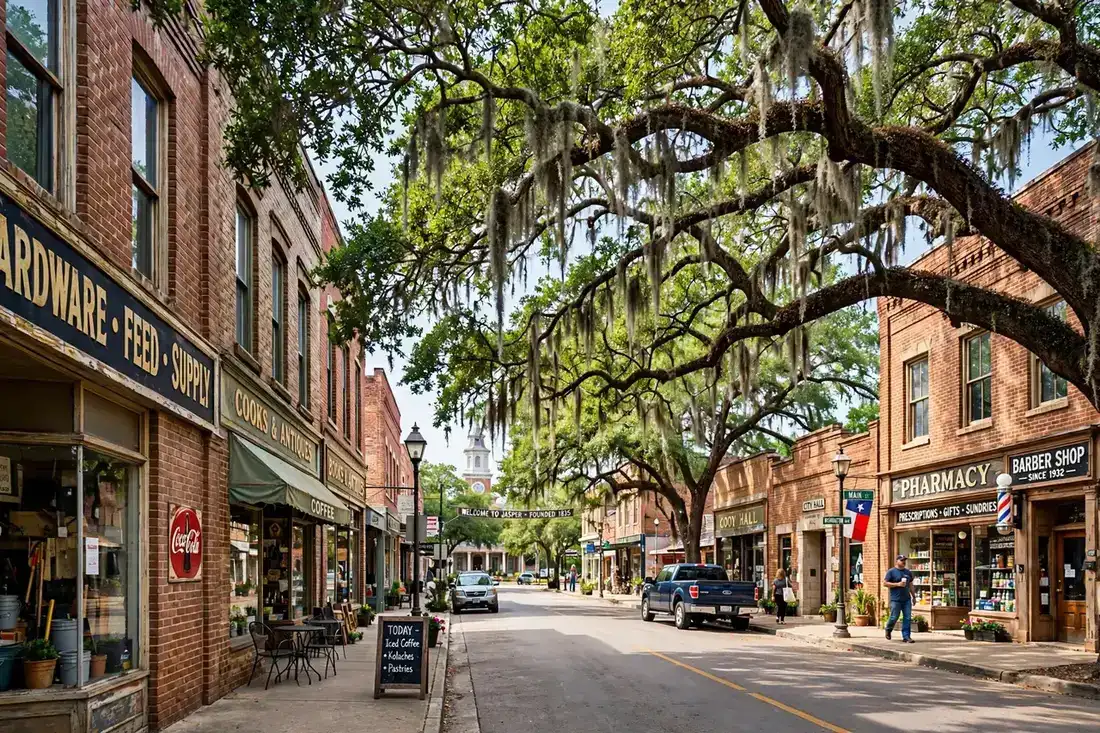
Galveston, as described above, is the region’s historic island city and a major tourist destination. Texas City is a major industrial port on Galveston Bay, and it is one of the largest cities in the region by population. The smaller towns each add their own character: Nederland and Port Neches are classic Golden Triangle suburbs, Lumberton and Silsbee are gateways to the Piney Woods, Jasper and Newton are East Texas towns with deep histories, and Anahuac and Winnie sit in the coastal prairie between Houston and Beaumont.
What 409 Does Not Cover
Knowing what 409 does not cover is just as useful as knowing what it does. Houston and most of its suburbs use 713, 281, and 832. The western edge of Galveston County around League City and Friendswood is in the Houston overlay codes, not in 409, which surprises some people who assume the whole county shares one code. To the east, across the Sabine River, Louisiana uses area codes 337 and 318. To the north and west, 936 and 979 cover the Piney Woods and the Brazos Valley. If a caller claims to be “from the 409” but their number starts with a different code, that does not necessarily mean anything is wrong — people move and keep their numbers — but the 409 code itself points to south-east Texas and nowhere else.
Time Zone and Dialing
Key: time zone. Central Time: CST (UTC−6) in standard time, CDT (UTC−5) in daylight saving time.
Key: dialing. Ten-digit dialing is used for local calls in the 409 area code.
Dialling a 409 number follows the standard North American pattern. From within the United States, dial 1 followed by the ten-digit number: 1-409-XXX-XXXX. From outside North America, dial your country’s international access code, then 1, then the ten-digit number: for example, +1 409 XXX XXXX. From within the 409 region itself, dial the full ten-digit number, including the area code. Ten-digit dialing became mandatory across the United States for local calls in areas affected by certain changes, and it is now the normal practice everywhere, so including the area code is never wrong.
For businesses, the dialling rules matter for printed materials. A 409 number on a sign, a vehicle, or a business card should always be shown with the area code, because customers outside the region need it, and customers inside the region are used to dialling it. For individuals, the main practical point is the time zone: a call to a 409 number at 9 a.m. Eastern Time reaches someone at 8 a.m. Central Time, and a call at 9 p.m. Pacific Time reaches someone at 11 p.m. Central Time. Checking the clock is a small courtesy that makes a real difference.
Getting a 409 Number
For a business that wants a local presence in south-east Texas, a 409 number is a straightforward choice. A local number signals that the business belongs in the region, and local customers often answer local numbers more readily than out-of-state or toll-free numbers. That is especially true in a port and industrial economy where relationships and local reputation matter.
You do not need to live in south-east Texas to get a 409 number. Most major phone providers and virtual phone services allow you to choose an area code when you sign up, and 409 numbers are generally available through those services. The process is usually quick: choose a provider, search for available 409 numbers, pick one, and activate it. Some services allow you to choose a number with a memorable pattern, though the most memorable combinations are often taken.
For individuals moving to the region, getting a 409 number is optional. Mobile numbers are portable across the United States, so you can keep your existing number when you move. Many newcomers do keep their old numbers, and many also get a local number to make it easier for schools, employers, and local services to recognise their calls. There is no rule that requires a local number, and the choice is a personal one.
One caution applies to any virtual number service: make sure the provider is reputable, and check what the monthly cost includes. Some services charge extra for features like call forwarding, voicemail transcription, or text messaging, and those extras can add up. Reading the terms before signing up is worth the few minutes it takes.
409 and Scam Calls
No guide to an area code is complete without a note on scam calls, because area codes are one of the tools scammers use to look legitimate. A call from a 409 number is not, by itself, a sign of a scam. Most 409 calls are legitimate, from real people and businesses in south-east Texas. But scammers can spoof caller ID, making a call appear to come from a 409 number even when it does not, and they often use local-looking numbers because people are more likely to answer them.
The rule for any unfamiliar call is the same, whatever the area code: judge the request, not the number. A legitimate caller will not ask you for passwords, bank details, or payment in gift cards. A caller who pressures you to act immediately, who claims your account will be closed, or who asks you to keep the call secret is almost certainly a scammer. If you are unsure, hang up and call the organisation back on a number you trust, from its official website or from the back of your card, not from a number the caller gave you.
If you receive a scam call, you can report it to the Federal Trade Commission and to your phone provider, and you can block the number. Blocking helps, though scammers change numbers frequently, so it is not a complete solution. The best defence is habit: do not share sensitive information with an incoming caller, whoever they claim to be, and verify important requests through a separate channel.
Frequently Asked Questions
What state is the 409 area code in?
The 409 area code is in Texas. It covers the south-east corner of the state, including Beaumont, Port Arthur, Orange, Galveston, and Texas City.
What cities use the 409 area code?
The main cities are Beaumont, Port Arthur, Orange, Galveston, and Texas City. Smaller cities and towns include Nederland, Port Neches, Groves, Vidor, Lumberton, Silsbee, Jasper, La Marque, Hitchcock, Santa Fe, and many others across eleven counties.
What time zone is the 409 area code in?
The 409 area code is in Central Time: Central Standard Time (UTC−6) in winter and Central Daylight Time (UTC−5) in summer.
When was the 409 area code created?
The 409 area code was created on March 19, 1983, in a split from Houston’s 713 area code. It was divided in 2000, when the central and western parts became area codes 936 and 979.
Does the 409 area code have an overlay?
No, the 409 area code currently has no overlay. Every number assigned in the region carries the 409 prefix, and there is no second code sharing the same territory.
Is a 409 number a toll-free number?
No, 409 is a geographic area code, not a toll-free prefix. Toll-free prefixes are 800, 833, 844, 855, 866, 877, and 888.
How do I dial a 409 number?
From the United States, dial 1-409-XXX-XXXX. From abroad, dial +1 409 XXX XXXX. Within the region, dial the full ten-digit number including the area code.
Are calls from 409 numbers safe?
Most 409 calls are legitimate, but caller ID can be spoofed, so a 409 number alone does not prove a call is genuine. Judge the request itself, never share sensitive information with an incoming caller, and call the organisation back on a trusted number if you are unsure.
WRITTEN BY: The adailyinsight360.com editorial team covers technology, geography, and practical guides that help readers make sense of everyday questions.
Reead Also: Location Isle of Man: Where Is It and Why Visit It
For more regional and lifestyle explainers, visit dailyorvix.com and the team at 9bio.co.uk.
#409-area-code

Related Articles

HTTP Error 401: What It Means and How to Fix It
HTTP error 401 is the web's way of saying you need to prove who you are…
984 Area Code: Raleigh Research Triangle Cities Guide
A 984 number means North Carolina's Research Triangle: Raleigh, Durham, Cary, and Chapel Hill. This guide…
F75 Vaillant Boiler Error Code Explained (2026 Guide)
F75 on a Vaillant boiler usually means the boiler cannot detect the right water pressure, so…
1 Comment