984 Area Code: Raleigh Research Triangle Cities Guide
A 984 number means North Carolina's Research Triangle: Raleigh, Durham, Cary, and Chapel Hill. This guide explains the 984 overlay, its cities, its history, and how to dial it.

If your phone shows an unfamiliar number starting with 984, you are almost certainly looking at North Carolina — and more specifically, at one of the fastest-growing regions in the American South. The 984 area code serves the Research Triangle: Raleigh, Durham, Cary, and Chapel Hill, along with the suburbs and smaller towns around them. It is not a code with a territory of its own. It is an overlay, a second code layered on top of an older one, and understanding that overlay idea is the key to understanding everything else about 984.
Most people search for the 984 area code for a simple reason: they missed a call, or they are moving to the Triangle, or they are setting up a business there and want a local number. This guide covers all three cases, with the cities, the counties, the time zone, the history of the overlay, the dialling rules, and the scam-call warnings that apply to any area code.
In this article
- 984 Area Code at a Glance
- The Research Triangle
- History: Why 984 Exists
- Cities and Counties in 984
- Time Zone and Dialing
- Getting a 984 Number
- 984 and Scam Calls
- Frequently Asked Questions
984 Area Code at a Glance
Key: state. The 984 area code serves east-central North Carolina in the United States.
Key: main cities. Raleigh, Durham, Cary, Chapel Hill, and Apex are among the main cities.
Key: overlay. The 984 area code overlays area code 919, sharing exactly the same territory.
Key: created. The 984 overlay entered service in 2012.
Key: time zone. All 984 communities observe Eastern Time.
| Detail | 984 area code |
|---|---|
| State | East-central North Carolina, United States |
| Main cities | Raleigh, Durham, Cary, Chapel Hill, Apex |
| Overlay | 919 |
| Created | 2012 |
| Time zone | Eastern Time |
The overlay point deserves emphasis, because it is the most common source of confusion. Area code 984 does not cover a different place from area code 919. The two codes cover the identical region. A neighbour with a 919 number and a neighbour with a 984 number live in the same area, possibly on the same street. The difference is only when the number was assigned: 919 is the older code, in service since 1954, and 984 is the newer code, added in 2012 when the region ran short of 919 numbers. New numbers in the region may now receive either code, and both are equally local.
That also means a 984 number is not a sign of anything unusual. It is not a toll-free number, it is not a virtual number from another country, and it is not a premium-rate number. It is a standard geographic area code for one of the most recognisable regions in North Carolina, and most 984 calls are ordinary calls from real people and businesses in the Triangle.
The Research Triangle
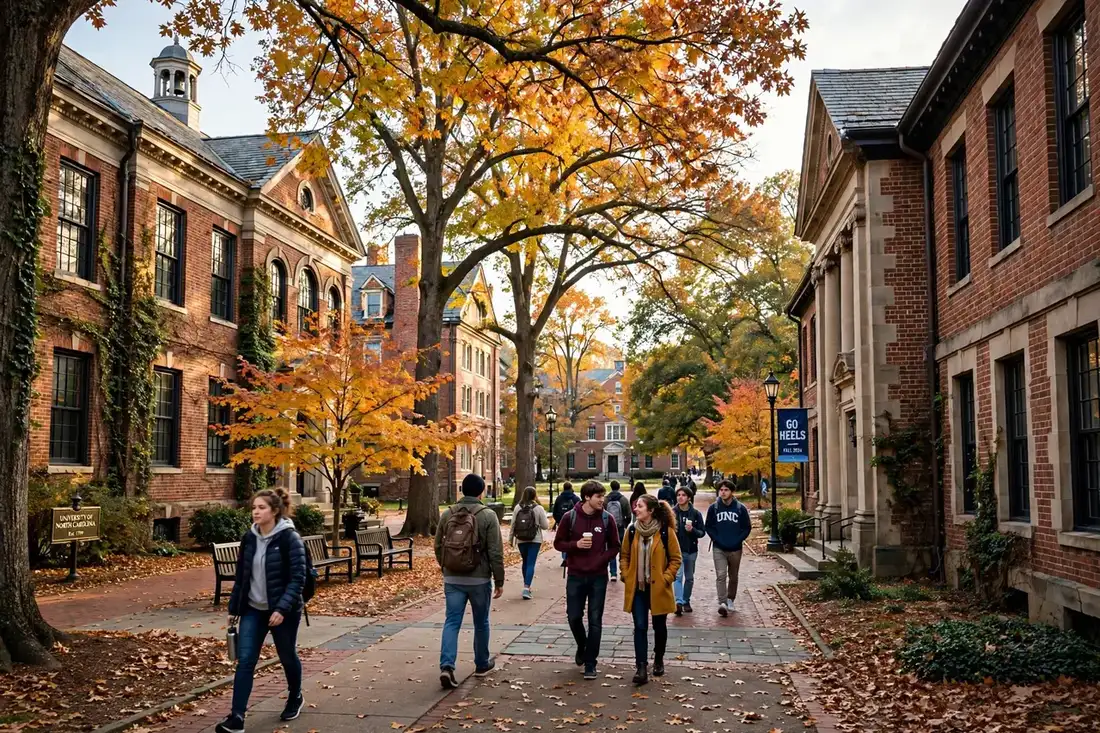
The name “Research Triangle” comes from the triangle formed by three cities and their universities: Raleigh, home to North Carolina State University; Durham, home to Duke University; and Chapel Hill, home to the University of North Carolina at Chapel Hill. Between them sits Research Triangle Park, one of the largest research parks in the world, home to companies and institutions working in technology, biotechnology, pharmaceuticals, and research.
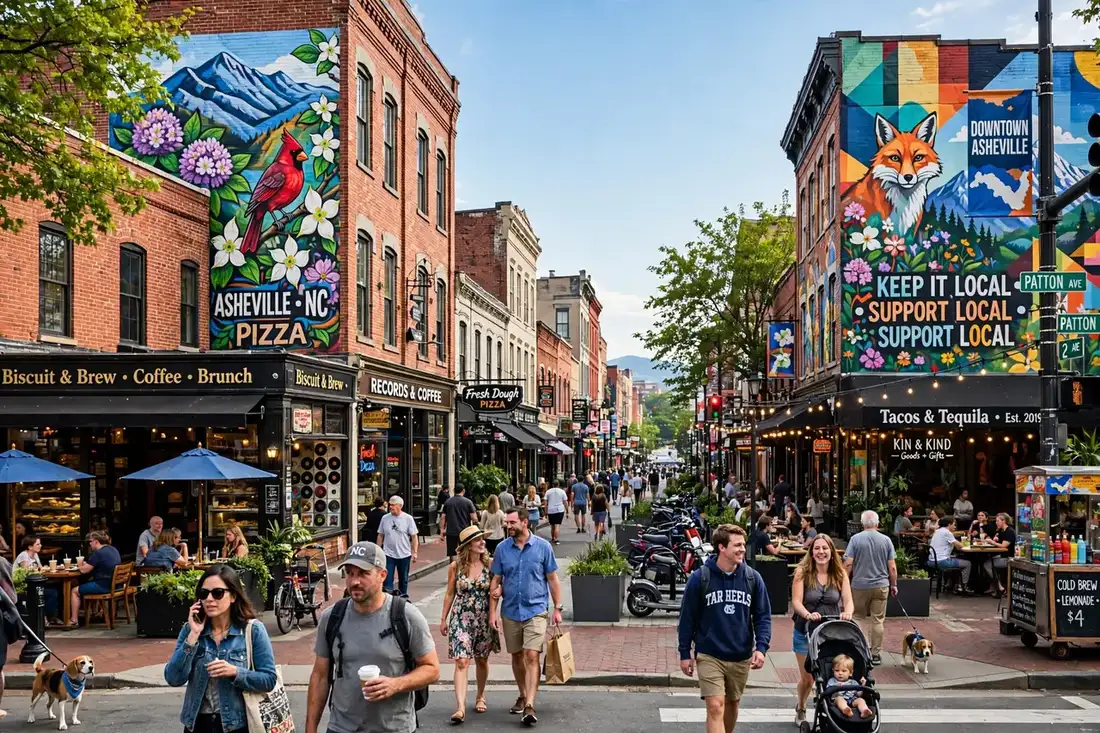
The Triangle is not just a university story, though. Raleigh is the state capital of North Carolina and one of the fastest-growing cities in the United States, with a downtown that has transformed over the past two decades, a growing technology and startup scene, and a reputation for liveability that draws newcomers from across the country. Durham has its own distinct identity, shaped by Duke University, by its history in tobacco and textiles, and by a downtown revival built around food, arts, and entrepreneurship. Chapel Hill and its neighbour Carrboro are college towns with a strong arts and music culture, a walkable downtown, and a loyal local following.
Around those anchor cities are suburbs that have grown rapidly in their own right. Cary, once a small town, is now one of the largest municipalities in the state, known for its planned neighbourhoods, its parks, and the headquarters of the software company SAS. Apex, Morrisville, Holly Springs, Wake Forest, Fuquay-Varina, and Garner are all fast-growing suburbs with their own downtowns, schools, and identities. Further out, the 984 and 919 region reaches towns like Goldsboro to the south-east, Sanford to the south, Oxford to the north, and Mebane to the west, along with smaller communities and rural areas in between.
The region’s economy reflects that mix. Government, education, healthcare, technology, and research are all major employers, and the presence of three major research universities gives the Triangle a depth of talent and innovation that few regions its size can match. That growth is the reason the 984 area code exists at all: a region that adds households, businesses, and mobile phones year after year eventually runs out of numbers in a single area code, and the solution was to add a second one.
History: Why 984 Exists
Key: 919 created. Area code 919 was created in 1954 in a split from area code 704, which originally served all of North Carolina.
Key: splits in the 1990s. Parts of 919 became area code 910 in 1993 and area code 252 in 1998.
Key: 984 added. Area code 984 was added as an overlay on 919 in 2012.
The history of North Carolina’s area codes is a history of growth. When the North American Numbering Plan began, the whole state was a single area code, 704. As demand grew, the state was split, and in 1954, area code 919 was created for the eastern and central parts of the state. Over the following decades, 919 itself was split: the south-eastern part became 910 in 1993, and the north-eastern part became 252 in 1998, leaving 919 covering the Research Triangle and its surrounding area.
By the late 2000s, even that reduced 919 territory was running short of numbers. The Triangle’s growth — new residents, new businesses, new mobile phones, new connected devices — meant that the supply of unused 919 numbers was shrinking. Regulators faced a choice: split the region again, forcing half the residents and businesses to change their numbers, or add an overlay, keeping every existing number unchanged and assigning the new code only to new numbers.
They chose the overlay, and that choice shaped everything that followed. An overlay protects existing customers from a forced number change, which is a significant disruption for businesses in particular: changing a phone number means updating signs, stationery, websites, advertising, and customer records. An overlay avoids all of that. The trade-off is that everyone in the region must dial ten digits for local calls, because the area code is now needed to distinguish between two numbers that share the same seven-digit part but have different area codes.
Area code 984 entered service in March 2012, and ten-digit dialing became mandatory across the 919 and 984 region. Since then, the two codes have coexisted peacefully. A business that opened in 2010 has a 919 number. A business that opened in 2015 might have a 984 number. Both are local, both are legitimate, and neither tells you anything about the quality or trustworthiness of the caller.
Overlay Versus Split: Why It Matters
The overlay-versus-split distinction is worth understanding, because it explains why your dialling habits changed. In a split, a region is divided geographically, and one part keeps the old code while the other part gets a new one. Everyone in the new part must change their number. In an overlay, the region stays whole, and the new code is layered on top. Nobody changes their number, but everybody dials ten digits.
Overlays have become the standard solution for number shortages in growing regions across the United States, precisely because they avoid forced changes. The Triangle’s experience is typical: a brief period of adjustment to ten-digit dialing, followed by a new normal in which 919 and 984 are simply two local codes for the same place.
Cities and Counties in 984
Because 984 overlays 919, the two codes serve exactly the same cities and counties: all or parts of eleven counties in east-central North Carolina, including Wake, Durham, Orange, Johnston, Chatham, Franklin, Granville, Lee, Wayne, Harnett, and Alamance, among others. The cities and communities include Raleigh, Durham, Cary, Chapel Hill, Carrboro, Apex, Morrisville, Holly Springs, Wake Forest, Fuquay-Varina, Garner, Knightdale, Clayton, Smithfield, Goldsboro, Sanford, Hillsborough, Oxford, Pittsboro, Mebane, Zebulon, Wendell, Louisburg, Creedmoor, and Siler City, along with smaller towns and rural areas.
Raleigh, the state capital and the largest city in the region, anchors the eastern side of the Triangle. It is home to state government, to North Carolina State University, to a growing technology sector, and to cultural institutions including museums, theatres, and a lively downtown food scene. Durham, to the west, is home to Duke University and to a medical and research economy centred on Duke University Hospital and Research Triangle Park. Chapel Hill, further west, is home to the University of North Carolina at Chapel Hill, the oldest public university in the United States, and to a college-town culture that blends academics, arts, and sport.
Cary deserves a special mention, because it is often the city newcomers ask about first. Cary sits between Raleigh and Research Triangle Park, and it has grown from a small railroad town into a large, affluent suburb with excellent schools, extensive parks and greenways, and a diverse population drawn by technology and research jobs. Apex, Morrisville, and Holly Springs have followed a similar path, growing rapidly as the Triangle’s economy has expanded.
Goldsboro, to the south-east, is a smaller city with a strong military presence, home to Seymour Johnson Air Force Base, and Sanford, to the south, is a growing city with a manufacturing base and a historic downtown. Oxford, Hillsborough, and Pittsboro are smaller towns with historic character, each serving as a county seat or a local centre for its surrounding rural area. Together, these cities and towns make up a region that is far more varied than the “Raleigh-Durham” shorthand suggests.
The Airport and the Park
Two places in the region deserve a note for visitors and newcomers. Raleigh–Durham International Airport, between Raleigh and Durham, is the region’s main airport, with flights across the United States and to international destinations. Research Triangle Park, between Raleigh, Durham, and Chapel Hill, is not a city but a vast research campus, and it is one of the economic engines of the region. If you are visiting the Triangle for work, there is a good chance your destination is in or near the Park, and if you are calling a 984 number for business, there is a good chance the caller works there or nearby.
Time Zone and Dialing
Key: time zone. Eastern Time: EST (UTC−5) in standard time, EDT (UTC−4) in daylight saving time.
Key: dialing. Ten-digit dialing is mandatory for all local calls in the 919 and 984 region.
Dialling a 984 number follows the standard North American pattern, with one important rule: always include the area code, even for local calls. From within the region, dial 984-XXX-XXXX. From elsewhere in the United States, dial 1-984-XXX-XXXX. From abroad, dial +1 984 XXX XXXX. Seven-digit dialing has not worked in the Research Triangle since the overlay took effect, and any old sign, card, or listing that shows only seven digits is out of date.
The time zone is Eastern Time, the same as New York, Washington, and Charlotte. That means a call to a 984 number at noon Eastern Time reaches someone at 9 a.m. Pacific Time, 10 a.m. Mountain Time, and 11 a.m. Central Time. For callers abroad, the difference is larger: a call at 9 a.m. in London reaches Raleigh at 4 a.m. Eastern Time in winter, which is a good reason to check the clock before dialling internationally.
For businesses, the dialling rules have a practical consequence: every phone number on every sign, vehicle, invoice, and website must show the full ten digits, including the area code. Businesses that updated their materials when the overlay arrived have no problem. Businesses that still show seven digits risk missed calls from customers who do not know to add the area code.
Getting a 984 Number
For a business setting up in the Triangle, a 984 number — or a 919 number, if one is available — signals local presence. Local customers often answer local numbers more readily than out-of-state or toll-free numbers, and a local number on a website or a sign tells a customer that the business is part of the community.
You do not need to live in the Triangle to get a 984 number. Most phone providers and virtual phone services allow you to choose an area code when you sign up, and both 919 and 984 numbers are generally available through those services, though the supply of new 919 numbers is limited because the code is older. The process is usually quick: choose a provider, search for available numbers in the 984 code, pick one, and activate it.
For individuals moving to the Triangle, getting a local number is optional. Mobile numbers are portable, so you can keep your existing number when you move, and many newcomers do. Others get a local number to make it easier for schools, employers, doctors, and local services to recognise their calls, and to avoid the mild confusion that comes from having an out-of-state area code in a new city. There is no requirement either way, and the choice is personal.
As with any phone service, check the terms before signing up. Some virtual number services charge extra for text messaging, call forwarding, or voicemail transcription, and those extras can add up. A reputable provider, a clear monthly price, and a number that works for both calls and texts are the basics to look for.
984 and Scam Calls
A 984 number, like any area code, can be spoofed. Scammers can make a call appear to come from a 984 number even when it does not, and they often use local-looking numbers because people are more likely to answer a call that looks local. That does not mean 984 calls are suspicious. Most are legitimate, from real people and businesses in the Triangle. It means the area code alone tells you nothing about whether a call is genuine.
The rule for any unfamiliar call is the same: judge the request, not the number. A legitimate caller will not ask for your password, your bank details, or payment in gift cards or cryptocurrency. A caller who pressures you to act immediately, who threatens to close your account, or who asks you to keep the call secret is almost certainly a scammer. If you are unsure, hang up and call the organisation back on a number you trust, from its official website or from the back of your card.
If you receive a scam call, report it to the Federal Trade Commission and to your phone provider, and block the number. Blocking helps, but scammers change numbers frequently, so it is not a complete defence. The best protection is habit: never share sensitive information with an incoming caller, and verify important requests through a separate, trusted channel.
Frequently Asked Questions
What state is the 984 area code in?
The 984 area code is in North Carolina. It serves the Research Triangle region, including Raleigh, Durham, Cary, and Chapel Hill.
What cities use the 984 area code?
The main cities are Raleigh, Durham, Cary, Chapel Hill, Apex, Morrisville, Holly Springs, Wake Forest, and Goldsboro, along with many suburbs and smaller towns across east-central North Carolina.
Is 984 the same as 919?
Geographically, yes. Area code 984 overlays area code 919, so the two codes cover exactly the same territory. The difference is only age: 919 is the older code, in service since 1954, and 984 is the newer overlay, added in 2012.
What time zone is the 984 area code in?
The 984 area code is in Eastern Time: Eastern Standard Time (UTC−5) in winter and Eastern Daylight Time (UTC−4) in summer.
When was the 984 area code created?
The 984 overlay entered service in 2012, as an overlay on the existing 919 area code. Ten-digit dialing became mandatory in the region at the same time.
Do I need to dial the area code for local 984 calls?
Yes. Ten-digit dialing is mandatory for all local calls in the 919 and 984 region, even to a neighbour on the same street. Seven-digit dialing no longer works there.
Is a 984 number toll-free?
No, 984 is a geographic area code, not a toll-free prefix. Toll-free prefixes are 800, 833, 844, 855, 866, 877, and 888.
Are calls from 984 numbers safe?
Most 984 calls are legitimate, but caller ID can be spoofed, so a 984 number alone does not prove a call is genuine. Judge the request itself, never share sensitive information with an incoming caller, and call the organisation back on a trusted number if you are unsure.
WRITTEN BY: The adailyinsight360.com editorial team covers technology, geography, and practical guides that help readers make sense of everyday questions.
Reead Also: 409 Area Code: Southeast Texas Cities and Full Guide
For more technology and regional explainers, visit themodernpost.co.uk and the practical guides at homewaterinsights.com.
#984-area-code

Related Articles

HTTP Error 401: What It Means and How to Fix It
HTTP error 401 is the web's way of saying you need to prove who you are…

409 Area Code: Southeast Texas Cities and Full Guide
A 409 number means southeast Texas: the Golden Triangle of Beaumont, Port Arthur, and Orange, plus…
F75 Vaillant Boiler Error Code Explained (2026 Guide)
F75 on a Vaillant boiler usually means the boiler cannot detect the right water pressure, so…
1 Comment