Columbus Day 2026: Date, History, and What Is Open
Columbus Day 2026 is Monday, October 12. This guide explains the date, the history behind the holiday, what closes, what stays open, and why many places now use a second name for the day.
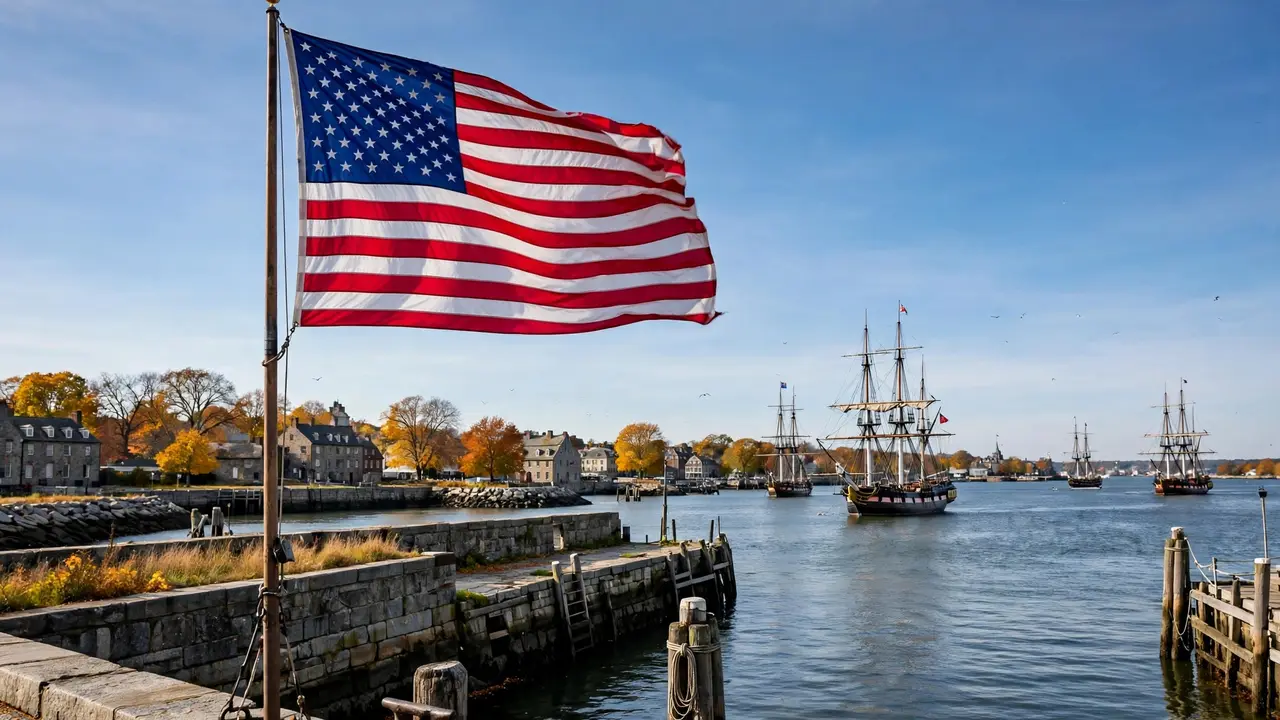
Columbus Day 2026 falls on Monday, October 12, 2026. That is the short answer, and for most people planning the day, it is the only date that matters. But Columbus Day has become a holiday with two stories running side by side: a federal holiday that has been on the calendar for decades, and a day that many cities and states now observe under a different name, for different reasons. Understanding both stories makes the practical questions — is the post office open, is school closed, will the bank be open — much easier to answer.
This guide starts with the date and the practical details, then explains the history, the debate, and how the day is actually marked across the United States in 2026.
In this article
- The Date of Columbus Day 2026
- What Is Open and Closed
- The Two Names of the Day
- A Short History
- How Columbus Day Is Celebrated
- Planning Your Day
- What Columbus Day Is Not
- Frequently Asked Questions
The Date of Columbus Day 2026
Key: date. Columbus Day 2026 is Monday, October 12, 2026.
Key: rule. Columbus Day is observed on the second Monday of October each year in the United States.
The date follows a simple rule, which is why it moves from year to year. Columbus Day is a federal holiday fixed to the second Monday of October, not to a fixed calendar date. In 2026, the second Monday of October happens to be October 12 — the same calendar date as the original 1492 landing, which is a coincidence of the calendar rather than a deliberate choice. In other years the holiday lands on a different October date, anywhere from October 8 to October 14.
That distinction matters for planning. If you are booking travel, checking a school calendar, or scheduling a delivery, the reliable rule is “second Monday in October,” and in 2026 that gives you October 12. It is also worth noting that October 12, 2026 is a Monday, so the holiday creates a three-day weekend for people who have it off, from Saturday, October 10 through Monday, October 12.
Is Columbus Day a Federal Holiday?
Yes. Columbus Day is one of the eleven federal holidays in the United States. That federal status is what drives most of the closures on the day: federal offices close, and the systems that depend on the federal government — the postal service, the Federal Reserve’s payment systems, the bond market — follow the federal calendar.
Federal status does not, however, mean that everyone gets the day off. Private employers are not required to close, and many do not. Retail stores, restaurants, and most service businesses stay open. The split between public and private is the single biggest source of confusion about this holiday, and it is worth keeping in mind as you read the open-and-closed lists below.
What Is Open and Closed
The practical picture for Columbus Day 2026 is consistent with other federal holidays, with one notable exception in the financial markets. Here is the general pattern. Local details can vary, so if a specific office or service matters to you, check its own holiday schedule before you travel.
Closed on Columbus Day 2026
Federal government offices are closed. That includes Social Security Administration field offices, federal courts, and other non-essential federal agencies. If you have an appointment with a federal agency, it will not be on October 12.
The United States Postal Service is closed for regular service. Post office retail counters are closed, and regular mail delivery and collection do not run. Priority Mail Express is the usual exception, with limited delivery continuing on federal holidays.
Most banks are closed. Banks follow the Federal Reserve’s holiday calendar, and the Federal Reserve is closed on Columbus Day. That means branch banking is generally unavailable, and payments that rely on Federal Reserve settlement will not process until the next business day, Tuesday, October 13. Online banking and ATMs still work, but transfers and cheque clearing wait.
The bond market is closed. The Securities Industry and Financial Markets Association recommends a full close for United States bond trading on Columbus Day, so Treasury, municipal, and corporate bond trading sits out the day.
Open on Columbus Day 2026
The stock market is open. This is the exception that catches people out. The New York Stock Exchange and Nasdaq trade a normal session on Columbus Day, from 9:30 a.m. to 4:00 p.m. Eastern Time. Columbus Day and Veterans Day are the two days each year when stocks trade while bonds do not, and the split trips up even experienced investors. If you trade equities, October 12 is a normal trading day. If you trade bonds, it is not.
Most retail stores are open. Major retailers, supermarkets, and shopping centres generally operate on normal hours, and many run Columbus Day sales. Restaurants, cinemas, and attractions are also generally open, though individual businesses set their own hours.
State and local offices vary. This is where the day gets genuinely local. In states and cities that recognise Columbus Day or Indigenous Peoples’ Day as an official holiday, state offices, city halls, and motor vehicle departments may close. In states that do not recognise the day, those offices stay open. Some states, including Texas, keep state offices open on Columbus Day. The only safe approach is to check the specific state or city office you need.
Schools vary too. Some school districts close for Columbus Day, some close for Indigenous Peoples’ Day, and some stay open. New York City schools, for example, have historically closed on the day, while other districts treat it as a regular school day. Your district’s calendar is the authority here, not any national list.
Trash collection and local services also vary by city. Some cities slide collection by a day around the holiday, others run a normal schedule. Again, the city is the source to check.
A Quick Planning Table
| Service | Columbus Day 2026 (Monday, October 12) |
|---|---|
| Federal offices and courts | Closed |
| US Postal Service (regular mail) | Closed |
| Most banks and Federal Reserve | Closed |
| Bond market | Closed |
| Stock market (NYSE, Nasdaq) | Open, normal hours |
| Retail stores and supermarkets | Generally open |
| Schools | Varies by district |
| State and local offices | Varies by state and city |
| Trash collection | Varies by city |
The Two Names of the Day
One of the most confusing things about October 12 is that it carries two names in different places. At the federal level, the legal name remains Columbus Day. That is the name on the federal holiday calendar and in the law that created the holiday. But across much of the country, the same Monday is observed as Indigenous Peoples’ Day, a day honouring the history, cultures, and contributions of Native American peoples.
The two observances share a date but honour different stories. Columbus Day commemorates the 1492 voyage of Christopher Columbus. Indigenous Peoples’ Day centres the peoples who had lived in the Americas for thousands of years before that voyage, and whose history is often left out of the traditional Columbus narrative.
How widespread is each name? The picture is mixed and still changing. A number of states and more than a hundred cities have adopted Indigenous Peoples’ Day in some form, either replacing Columbus Day or observing both names. Some states observe both, some observe only one, and some observe neither as a paid holiday. Hawaii marks Discoverers’ Day on the second Monday of October, and South Dakota marks Native American Day. The result is a patchwork: the name on your city hall’s calendar may be different from the name on the federal calendar, and both can be correct in their own context.
For practical purposes, the name rarely changes what is open or closed at the federal level. Federal offices close on the day regardless of what a particular city calls it, because the federal holiday is Columbus Day. What the name does change is what the day means locally: what events are held, what is taught in schools, and which communities feel recognised by the observance.
A Short History
Key: landing. On October 12, 1492, Christopher Columbus, an Italian explorer sailing for Spain, reached an island in what is now the Bahamas.
Key: first celebration. The first recorded celebration of Columbus Day in the United States took place in New York City in 1792, marking the 300th anniversary of the voyage.
Key: federal holiday. Columbus Day became a federal holiday in the 1930s, and a 1968 law moved it to the second Monday in October, effective in 1971.
Columbus set sail with three ships — the Niña, the Pinta, and the Santa María — and a crew of around ninety people, seeking a westward sea route to Asia. He reached land in the Bahamas, on an island the Indigenous Lucayan people called Guanahani, which Columbus renamed San Salvador. The exact modern location of the landing is still debated by historians.
Two common myths are worth clearing up. First, Columbus was not trying to prove that the Earth was round. Educated Europeans already understood that the Earth was spherical. The disagreement was about distance: Columbus underestimated how far Asia was, and the Americas were in the way. Second, Columbus was not the first person, or even the first European, to reach the Americas. Indigenous peoples had lived in the Americas for thousands of years, and Norse explorers had reached North America centuries before 1492. What Columbus’s voyages did set in motion was sustained European colonisation of the Americas, with consequences that are still felt today.
The holiday itself grew slowly. The 1792 New York celebration marked the tercentenary of the voyage. In the nineteenth and early twentieth centuries, Columbus Day became important to Italian-American communities, who used it to celebrate their heritage and their contributions to the United States at a time when Italian immigrants faced significant prejudice. Colorado became the first state to officially celebrate Columbus Day, in 1907, and national recognition followed in 1934. The Uniform Monday Holiday Act of 1968 then moved several federal holidays, including Columbus Day, to Mondays, creating the three-day weekends that are familiar today.
The Indigenous Peoples’ Day movement is more recent. Berkeley, California, became the first city to adopt Indigenous Peoples’ Day in 1992, the 500th anniversary year of the voyage, and the idea has spread steadily since. Supporters argue that a holiday honouring Columbus overlooks the harm that followed colonisation, including violence, disease, and displacement suffered by Indigenous peoples. Critics of the change argue that Columbus Day honours exploration and Italian-American heritage, and that the holiday should not be replaced. The debate continues, and it is one reason the day now carries two names.
Why the Date Matters to Both Sides
For supporters of Columbus Day, the second Monday in October is a fixed point for heritage celebrations, parades, and school lessons about exploration. For supporters of Indigenous Peoples’ Day, holding their observance on the same date is deliberate: it reframes the day rather than simply adding a separate one. Both groups, in different ways, treat the date as meaningful, which is why the shared date has lasted even as the names have multiplied.
How Columbus Day Is Celebrated
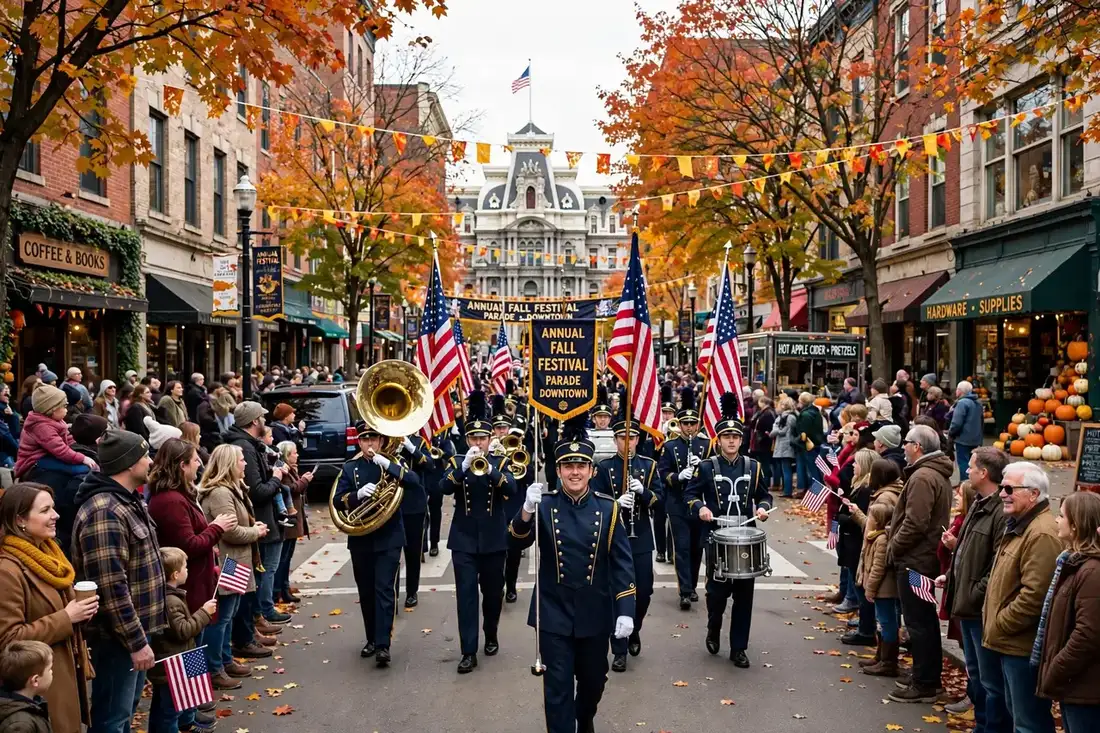
Celebrations vary widely, and that variety is itself part of the story. In some cities, Columbus Day means a parade with marching bands, floats, and Italian-American cultural organisations. New York City’s Columbus Day Parade, held along Fifth Avenue, is the largest and best known, drawing large crowds each year. Other cities hold smaller parades, festivals, or cultural events.
In cities and states that observe Indigenous Peoples’ Day, the day may feature Native American cultural events, educational programmes, art exhibitions, and community gatherings. These events often focus on living cultures — music, dance, food, crafts, and storytelling — rather than only on history, and they are open to the public.
For many Americans, though, the day is simply a day off work or school, or not a day off at all. Families use the long weekend for travel, for autumn activities, or for catching up. Retailers run sales. Schools that stay open may teach lessons about exploration, about Indigenous history, or about both, depending on the district’s curriculum. There is no single national way to mark the day, and that is normal for a holiday whose meaning is still being debated.

Planning Your Day
A little planning goes a long way on Columbus Day 2026, because the open-and-closed picture is genuinely mixed. If you need a federal service, do it on Friday, October 9, or wait until Tuesday, October 13. If you need to send mail, post it early, and remember that regular delivery resumes on Tuesday. If you bank, move any time-sensitive transfer to Friday or Tuesday, since Monday settlement will not happen.
If you are travelling, the long weekend is a popular one for autumn trips, and roads, airports, and hotels can be busy. Booking early helps, and checking whether your destination’s state and local offices are open matters if your trip involves licences, permits, or official business.
If you have children in school, check the district calendar rather than assuming the day is a holiday. The same applies to local government services: a quick check of your city’s website will tell you whether offices and trash collection follow a holiday schedule.
And if you want to attend an event, check what your city actually calls the day. Searching for “Columbus Day parade” in a city that observes Indigenous Peoples’ Day may miss the events that are actually happening, and vice versa. Local listings are the best guide.
What Columbus Day Is Not
A few clarifications help avoid common mix-ups. Columbus Day is not Thanksgiving, and it is not a day when everything closes. It is not a bank holiday in the sense that the whole economy stops; the stock market proves that. It is not celebrated on the same date everywhere in the world. Several countries in Latin America and Spain mark October 12 under different names, including Día de la Raza in some places, but those are separate national observances with their own histories.
Columbus Day is also not the same as Indigenous Peoples’ Day, even though they share a date in the United States. Treating them as interchangeable misses the point of both. One commemorates a voyage; the other honours the peoples who were already here. Understanding that distinction is the key to understanding the modern debate about the day.
Frequently Asked Questions
When is Columbus Day 2026?
Columbus Day 2026 is Monday, October 12, 2026. It is always observed on the second Monday of October, so the calendar date changes from year to year.
Is Columbus Day 2026 a federal holiday?
Yes, Columbus Day is a federal holiday. Federal offices close, the Postal Service suspends regular delivery, and the bond market closes. The stock market, however, stays open.
Is the post office open on Columbus Day 2026?
No, regular Postal Service retail and delivery services are closed on Monday, October 12, 2026. Priority Mail Express delivery generally continues, and regular service resumes on Tuesday, October 13.
Are banks open on Columbus Day 2026?
Most banks are closed, because the Federal Reserve is closed on Columbus Day. ATMs and online banking still work, but branch services and Federal Reserve settlement wait until Tuesday.
Is the stock market open on Columbus Day 2026?
Yes. The New York Stock Exchange and Nasdaq trade a normal session on Columbus Day, from 9:30 a.m. to 4:00 p.m. Eastern Time. The bond market is closed, which is the unusual split to remember.
What is the difference between Columbus Day and Indigenous Peoples’ Day?
Columbus Day commemorates Christopher Columbus’s 1492 voyage, while Indigenous Peoples’ Day honours the history and cultures of Native American peoples. Both are observed on the second Monday of October in the United States, but in different states and cities, and the federal holiday’s legal name remains Columbus Day.
Do schools close on Columbus Day 2026?
It varies by district. Some districts close for Columbus Day or Indigenous Peoples’ Day, and others stay open. Check your school district’s calendar for the correct answer in your area.
Why is Columbus Day on a Monday?
A 1968 law, the Uniform Monday Holiday Act, moved Columbus Day and several other federal holidays to Mondays, effective in 1971, to create three-day weekends. Before that, Columbus Day was often observed on October 12 itself.
WRITTEN BY: The adailyinsight360.com editorial team covers news, public holidays, and practical guides that help readers plan their week with confidence.
Reead Also: Whippets: The Gentle Speedster Dog Breed (2026 Guide)
For more news and everyday explainers, visit the team at themodernpost.co.uk and the astronomy guides at astronomy101.co.uk.
#columbus-day-2026

Related Articles

763 Area Code Guide to Minnesota Cities and Dialing
Area code 763 covers the northwestern suburbs of Minneapolis, Minnesota, including cities like Brooklyn Park, Maple…
Turks- és Caicos-szigetek: Teljes Utazási Útmutató 2026
A Turks- és Caicos-szigetek a Karib-térség egyik legnyugodtabb és legszebb úti célja, türkiz tengerrel, fehér homokkal…

2025 Lincoln Corsair SUV Review and Buying Guide (2026)
The 2025 Lincoln Corsair SUV blends quiet comfort, a refined cabin and useful technology into a…
1 Comment