How to Wash a Wool Blanket (2026 Guide): Hand Wash and Machine Steps
Wool blankets need gentle care to stay soft and shrink-free. This guide covers hand washing, machine washing, drying, stain removal, and storage, step by step.

A good wool blanket can last for decades — staying warm, soft, and beautiful year after year. But only if you know how to wash wool blanket the right way. Wool is a natural fiber with a mind of its own: treat it gently and it rewards you with years of comfort; blast it with hot water and rough agitation and it will shrink, stiffen, and felt into something that barely resembles the blanket you bought.
The good news is that learning how to wash wool blanket at home is simpler than most people think. You do not need a dry cleaner for most blankets, and you do not need special equipment — just the right detergent, the right water temperature, and a little patience. This guide walks you through everything: how to hand wash a wool blanket step by step, when machine washing is safe (and the exact settings to use), how to dry it without shrinking, how to remove stains, the mistakes that ruin wool, and how to store your blanket so it stays fresh between seasons.
In this article
- Can You Wash a Wool Blanket at Home?
- What You’ll Need Before You Start
- How to Hand Wash a Wool Blanket (Step by Step)
- How to Machine Wash a Wool Blanket Safely
- How to Dry a Wool Blanket Without Shrinking It
- Removing Stains from a Wool Blanket
- Mistakes That Ruin Wool Blankets
- How to Store a Wool Blanket
- FAQs
Can You Wash a Wool Blanket at Home?
The short answer: yes — most wool blankets can be washed at home, either by hand or in a washing machine, as long as you follow a few non-negotiable rules about water temperature, detergent, and agitation.
Before anything else, check the care label. It is the final authority on your specific blanket. If the label says “dry clean only,” respect it — some blankets have weaves, dyes, or finishes that truly cannot handle water. If it says “hand wash” or shows a machine-wash symbol, you are clear to proceed. When in doubt, hand washing is always the safer choice.
It also helps to understand why wool is fussy. Wool fibers are covered in tiny overlapping scales. Heat, moisture, and agitation together cause those scales to lock together — a process called felting. Once wool felts, the change is permanent: the blanket shrinks, thickens, and loses its softness. Every rule in this guide exists to prevent those three triggers from combining.
How Often Should You Wash a Wool Blanket?
Less often than you think. Wool is naturally odor-resistant and dirt-repellent thanks to lanolin, the waxy oil that coats the fibers. Many wool blankets only need a full wash once every few months, or when visibly soiled. Between washes, a good shake and a few hours airing outdoors in fresh air (out of strong direct sunlight) is usually enough to keep a blanket fresh. Over-washing wears wool out faster than almost anything else.
What You’ll Need Before You Start
Gather these before the blanket gets wet — scrambling for supplies mid-wash is how accidents happen:
- Wool-safe detergent: a liquid detergent formulated for wool and delicates. Regular laundry detergent is too harsh and can strip lanolin from the fibers. Never use bleach or fabric softener on wool.
- A large basin, bathtub, or clean sink: big enough for the blanket to move freely. Cramped quarters mean more friction.
- Clean white towels: several large ones for pressing out water and drying flat. Colored towels can transfer dye to a damp blanket.
- A mesh laundry bag: essential if you are machine washing, to reduce friction and snagging.
- A soft-bristle brush: for lifting surface dust before washing.
- White vinegar (optional): a small splash in the rinse water can help remove detergent residue and soften fibers naturally.
Before washing: take the blanket outside, give it a vigorous shake, and brush it gently with the soft brush, always stroking in the direction of the fibers. This removes surface dust and loose dirt so you are not grinding grime into the wet wool.
How to Hand Wash a Wool Blanket (Step by Step)
Hand washing is the gentlest method and the one recommended for most wool blankets, especially heirloom pieces, hand-woven blankets, and anything with a “hand wash” label. It takes about 30 minutes of active work plus drying time.
Step 1: Fill with lukewarm water
Fill your bathtub or basin with lukewarm water — comfortably warm to the touch, never hot. Aim for around 30°C (86°F) or cooler. Add a small amount of wool-safe detergent and swish it through the water until dissolved. Too much detergent is worse than too little; excess soap is hard to rinse out and leaves residue that stiffens fibers.
Step 2: Submerge and soak
Gently lower the blanket into the water, pressing it down so every part is saturated. Let it soak for 10 to 15 minutes. Do not leave it for hours — prolonged soaking can weaken some weaves and encourage dye bleeding.
Step 3: Agitate gently
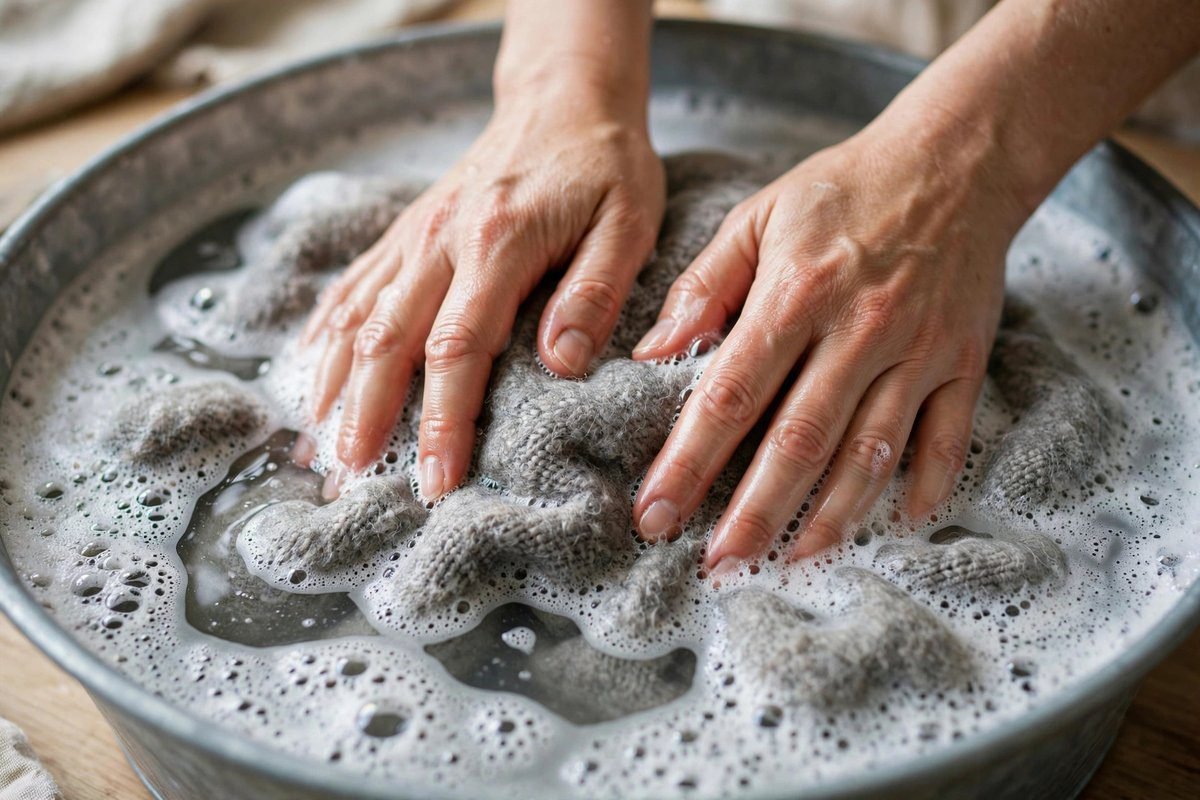
Using your hands, gently squeeze and press the blanket in the water, working the soapy water through the fibers. Think of it as kneading, not scrubbing. Never wring, twist, or rub the fabric against itself — that friction is exactly what causes felting. Spend a few minutes on this, paying attention to any visibly dirty areas.
Step 4: Drain and rinse
Drain the soapy water (support the blanket’s weight as you do — a soaking-wet wool blanket is surprisingly heavy, and letting it hang stretches the fibers). Refill with clean lukewarm water at the same temperature. Sudden temperature changes can shock wool fibers and encourage shrinkage, so keep the rinse water close to the wash temperature. Gently press the blanket in the rinse water, drain, and repeat until the water runs clear and no suds remain. This may take two or three rinses.
Step 5: Press out the water
Do not wring. Instead, lift the blanket (supporting it fully) and gently press it against the side of the tub to squeeze out water. Then lay it flat on clean dry towels, roll the whole thing up like a Swiss roll, and press firmly on the roll. The towels will wick out a remarkable amount of water. Repeat with dry towels if the blanket is still dripping.
How to Machine Wash a Wool Blanket Safely
Machine washing is fine if the care label allows it and if you use the right settings. Get either wrong and you risk a shrunken blanket.
The safe machine-wash checklist
- Machine type: a front-loader is ideal. If you have a top-loader, it should be one without a central agitator — agitators are brutal on wool. Never wash wool in a machine with an aggressive agitator.
- Cycle: the dedicated wool, delicates, or hand-wash cycle. These use slow tumbling and minimal agitation.
- Temperature: cold — 30°C (86°F) maximum. Cold is always safer than warm for wool.
- Spin speed: low — 600 to 800 rpm at most. High spin stretches and stresses wet wool fibers.
- Detergent: liquid wool-safe detergent only, in a small dose. No powder (it may not dissolve fully in cold water), no bleach, no fabric softener.
- Load: wash the blanket alone, or at most with one other similar delicate item. Place it in a large mesh laundry bag to limit friction and stretching.
Key rule: never wash a wool blanket with heavy items like jeans or towels. The weight and friction of a mixed load is one of the fastest ways to felt wool.
What if your blanket is too big for the machine?
Do not force it. An overstuffed drum means the blanket cannot move freely, which increases friction and the risk of uneven felting. Oversized or very heavy blankets belong in the bathtub, hand-washed — or at a laundromat with large-capacity front-loaders.
How to Dry a Wool Blanket Without Shrinking It
Drying is where most wool disasters happen — and it is entirely avoidable. The rules are simple: no heat, no hanging by the edges, no direct sun.
The towel-roll method
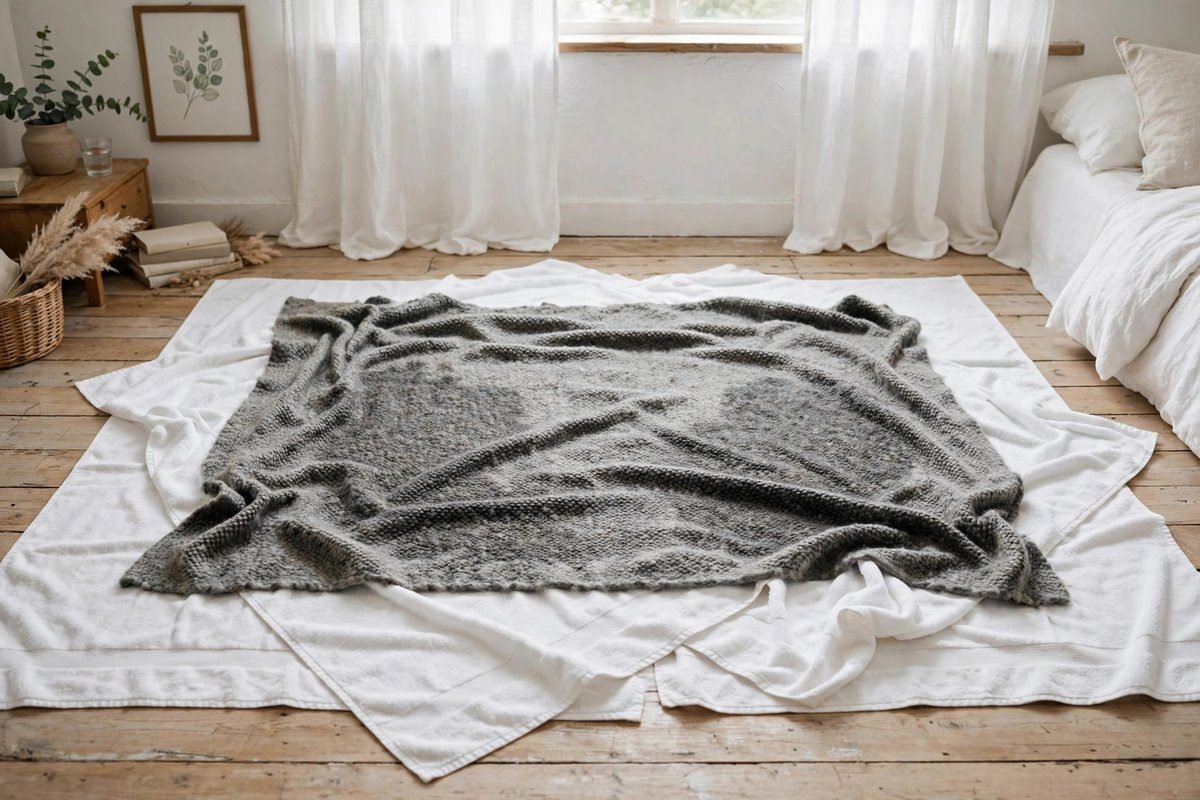
After pressing out the excess water as described above, lay the blanket flat on fresh dry towels spread over a clean floor or a large table. Gently reshape it to its original dimensions while it is still damp — smooth out any stretched areas and straighten the edges. Wool has a memory of sorts, and shaping it now prevents it from drying into a distorted shape.
Dry flat, in the shade
Leave the blanket to air-dry flat in a well-ventilated room, away from radiators, heaters, and direct sunlight. Heat is wool’s enemy: it accelerates shrinkage dramatically. Direct sun can fade dyes and, on a hot day, heat the fibers enough to start the felting process. If you dry outdoors, choose a shady spot with a breeze — fresh air is wonderful for wool, scorching sun is not.
Flip the blanket and replace damp towels underneath once or twice during drying to speed things up. A thick blanket can take 24 to 48 hours to dry completely. Be patient: packing away a blanket that is even slightly damp invites mildew and musty smells.
Can you put a wool blanket in the dryer?
No. The combination of heat and tumbling is the fastest route to a shrunken, felted blanket. Even a “low heat” or “air fluff” cycle involves tumbling that can distort the weave. The one partial exception: some dryer-safe wool products exist, but unless the care label explicitly says tumble drying is allowed, keep the blanket out of the dryer entirely.
Can you hang a wool blanket to dry?
Only with care. A heavy wet blanket hung by its edges or from a single line will stretch under its own weight, leaving you with a longer, narrower blanket. If you must hang it, drape it over several parallel lines or a clean railing so the weight is distributed — and only once most of the water has been pressed out. Flat drying remains the gold standard.
Removing Stains from a Wool Blanket
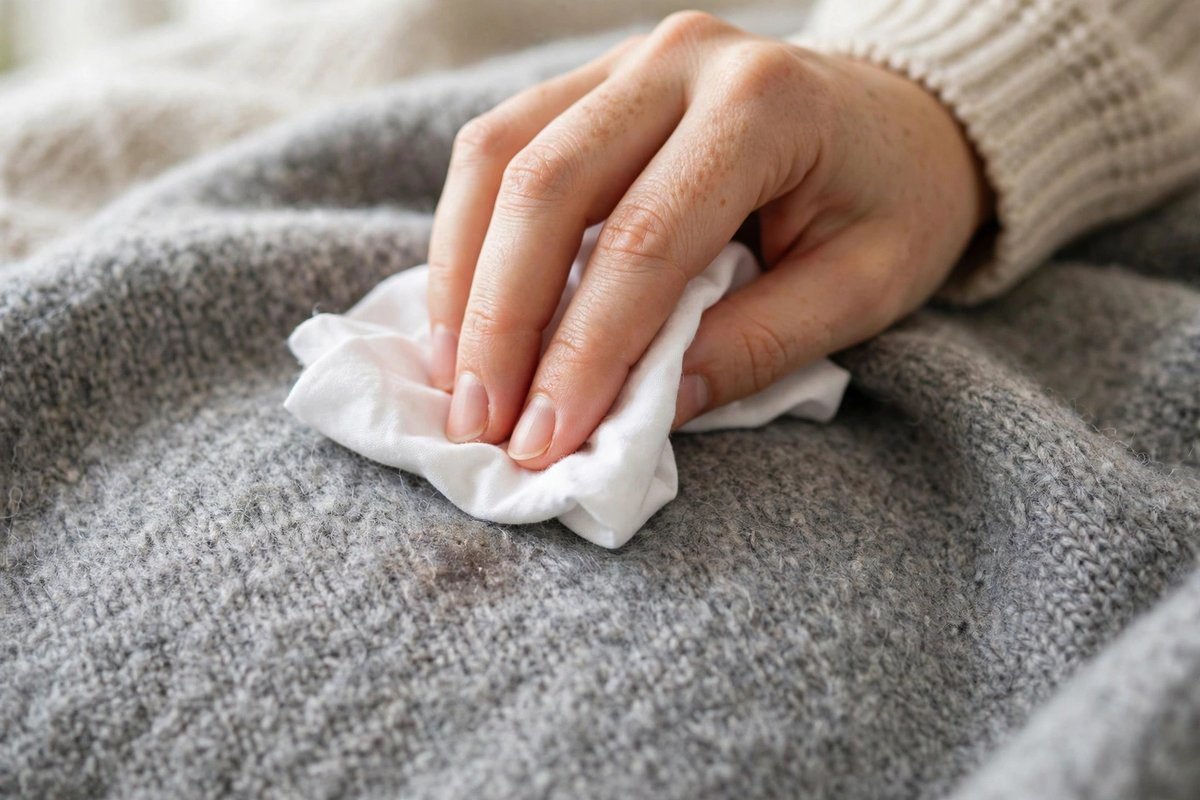
Act fast and stay gentle. The golden rule of wool stain removal: blot, never rub. Rubbing drives the stain deeper and roughs up the fibers.
Fresh spills
Blot immediately with a clean white cloth or paper towel, pressing straight down to absorb as much liquid as possible. Then dab the area with cold water and a tiny amount of wool-safe detergent, working from the outside of the stain inward so it does not spread. Rinse by blotting with a damp cloth, and let the spot air-dry.
Dried or set stains
Dampen the stained area with cold water and apply a small amount of diluted wool-safe detergent or a paste of baking soda and water. Let it sit for 15 to 20 minutes, then blot and rinse as above. For oil-based stains, sprinkle cornstarch or baking soda on the spot first to absorb the grease, brush it off after 30 minutes, then treat with detergent.
What to avoid
- Hot water on stains: heat can set protein-based stains (blood, milk, egg) permanently.
- Bleach or harsh stain removers: they destroy wool fibers and can leave yellow marks.
- Scrubbing: it felts the spot, leaving a rough patch even if the stain comes out.
Always test first: try any cleaning solution on a hidden corner of the blanket and check for color change before treating a visible stain.
Mistakes That Ruin Wool Blankets
| Mistake | Why it damages wool | Do this instead |
|---|---|---|
| Washing in hot water | Heat + moisture locks the fiber scales together (felting) | Use cold or lukewarm water, max 30°C |
| Wringing or twisting | Friction felts and stretches the fibers | Press water out gently; roll in towels |
| Using regular detergent or bleach | Strips lanolin; bleach destroys the fiber | Use liquid wool-safe detergent only |
| Tumble drying | Heat + tumbling shrinks and felts rapidly | Dry flat in shade with good airflow |
| Hanging a soaking-wet blanket | Weight stretches the weave permanently | Press out water first; dry flat |
| Washing with jeans or towels | Heavy items create friction and felting | Wash the blanket alone in a mesh bag |
| Storing in plastic bags | Trapped moisture causes mildew and odor | Use breathable cotton storage bags |
How to Store a Wool Blanket
Proper storage keeps a clean blanket fresh and protects it from wool’s two great enemies: moths and moisture.
- Make sure it is completely dry before storing — even slight dampness leads to mildew in an enclosed space.
- Use breathable storage: cotton storage bags or clean pillowcases are ideal. Avoid airtight plastic, which traps humidity.
- Store cool and dry: away from sunlight, heat sources, and damp basements or attics.
- Deter moths naturally: cedar blocks, cedar rings, or dried lavender sachets repel clothes moths without chemicals. Replace them yearly as the scent fades.
- Fold loosely rather than compressing the blanket tightly, and refold it differently each season to avoid permanent creases.
- Air it out for a few hours before first use each season — fresh air revives wool beautifully.
With this kind of care, a quality wool blanket genuinely becomes an heirloom: softer with age, warmer with wear, and still going strong decades after synthetic blankets have been replaced twice over. For more practical home guides, visit our sister site Home Water Insights, and for a change of pace, explore the night sky with Astronomy 101.
FAQs
Can you wash a wool blanket in the washing machine?
Yes, if the care label allows it. Use a front-loader (or a top-loader without a central agitator), the wool or delicates cycle, cold water at 30°C or below, low spin speed (600–800 rpm), liquid wool-safe detergent, and a mesh laundry bag. Wash the blanket alone.
Will a wool blanket shrink in the wash?
It can, if exposed to heat, agitation, and moisture together — that combination causes felting, which is permanent. Washing in cold or lukewarm water with minimal agitation and drying flat prevents shrinkage in the vast majority of cases.
How do you dry a wool blanket?
Press out excess water with towels (never wring), reshape the blanket while damp, and lay it flat on dry towels in a ventilated room away from heat and direct sunlight. Flip it occasionally. Never tumble dry unless the care label explicitly permits it.
What detergent is safe for wool blankets?
A liquid detergent formulated for wool and delicates. Avoid regular laundry detergent, bleach, and fabric softener — all three damage wool fibers or strip their natural protective oils.
How often should you wash a wool blanket?
Only when needed — typically every few months or when visibly soiled. Wool naturally resists odors and dirt. Between washes, shake the blanket out and air it outdoors in fresh air.
Can you use fabric softener on a wool blanket?
No. Fabric softener coats wool fibers with chemicals that reduce their natural breathability and water resistance, and can leave residue that attracts dirt. A splash of white vinegar in the rinse water is a safer natural softening alternative.
Read Also: Elliott Gould (Complete Guide): Life, Career, Films and TV Roles Explained
Reead Also: Elliott Gould (Complete Guide): Life, Career, Films and TV Roles Explained
#howtowashwoolblanket

Related Articles

How to Clean an Oven (2026 Guide): Natural & Commercial Methods That Actually Work
A grimy oven doesn't have to stay that way. This guide walks you through natural and…

What Sleep Science Says About the Perfect Nap
Twenty minutes can sharpen your whole afternoon. Ninety minutes can wreck your night. Sleep researchers explain…

Elliott Gould (Complete Guide): Life, Career, Films and TV Roles Explained
Elliott Gould went from 1970s leading man to beloved TV dad. This guide covers his life,…