Famous Landmarks (2026 Guide): The World’s Most Iconic Places to Know
From ancient wonders to modern icons, famous landmarks tell the story of human ambition. Here are the world's most celebrated places and what makes each one special.
In this article
- What Makes a Landmark “Famous”?
- Europe’s Icons: Eiffel Tower, Colosseum & More
- Asia’s Wonders: Great Wall, Taj Mahal & More
- The Americas: Statue of Liberty, Christ the Redeemer & More
- Modern Marvels: Burj Khalifa, Sydney Opera House & More
- Natural Landmarks Worth the Trip
- Planning a Landmark Visit: Practical Tips
- Visiting in Person vs. Virtual Tours: Pros and Cons
- Frequently Asked Questions
Some places you recognize instantly, even if you’ve never been within a thousand miles of them. A tower in Paris. A wall snaking across Chinese mountains. A statue in a New York harbor. Famous landmarks are the shared reference points of human civilization — the places that show up in films, on postcards, and in our collective imagination long before we ever see them in person.
But what actually makes a landmark “famous”? And which ones are truly worth the journey? This guide walks through the world’s most iconic places — ancient wonders, modern marvels, and natural icons — with the stories behind them, practical tips for visiting, and honest advice on managing expectations. Whether you’re planning a trip or just armchair traveling, consider this your field guide to the places that define our world.
What Makes a Landmark “Famous”?
Fame, for a landmark, is a curious thing. It isn’t just about size or age — plenty of enormous, ancient structures sit in obscurity while smaller ones become global icons. A landmark becomes famous through a mix of visual distinctiveness, historical weight, and cultural repetition. The Eiffel Tower’s iron lattice is unlike anything else on a skyline; the Pyramids carry four and a half millennia of mystery; and both have appeared in so many films, photographs, and artworks that recognizing them feels almost instinctive.
There’s also an emotional component that’s hard to quantify. The best landmarks aren’t just impressive — they mean something. The Statue of Liberty isn’t famous merely because it’s a big copper statue; it’s famous because it stood for hope and new beginnings to millions of people. The Berlin Wall’s remnants matter because of what happened there, not because concrete is interesting. When you visit a great landmark, you’re not just looking at a structure — you’re standing inside a story that millions of people already know.
That said, fame comes with a side effect every traveler should know about: crowds. The most famous landmarks on Earth attract millions of visitors a year, and the experience of seeing them involves queues, ticket slots, and selfie sticks. Part of this guide’s job is helping you navigate that reality — because the landmarks are absolutely worth it, as long as you arrive prepared.
Europe’s Icons: Eiffel Tower, Colosseum & More
Europe packs an almost unfair concentration of world-famous landmarks into a relatively small area, thanks to a couple of thousand years of empires showing off. Here are the essential ones.
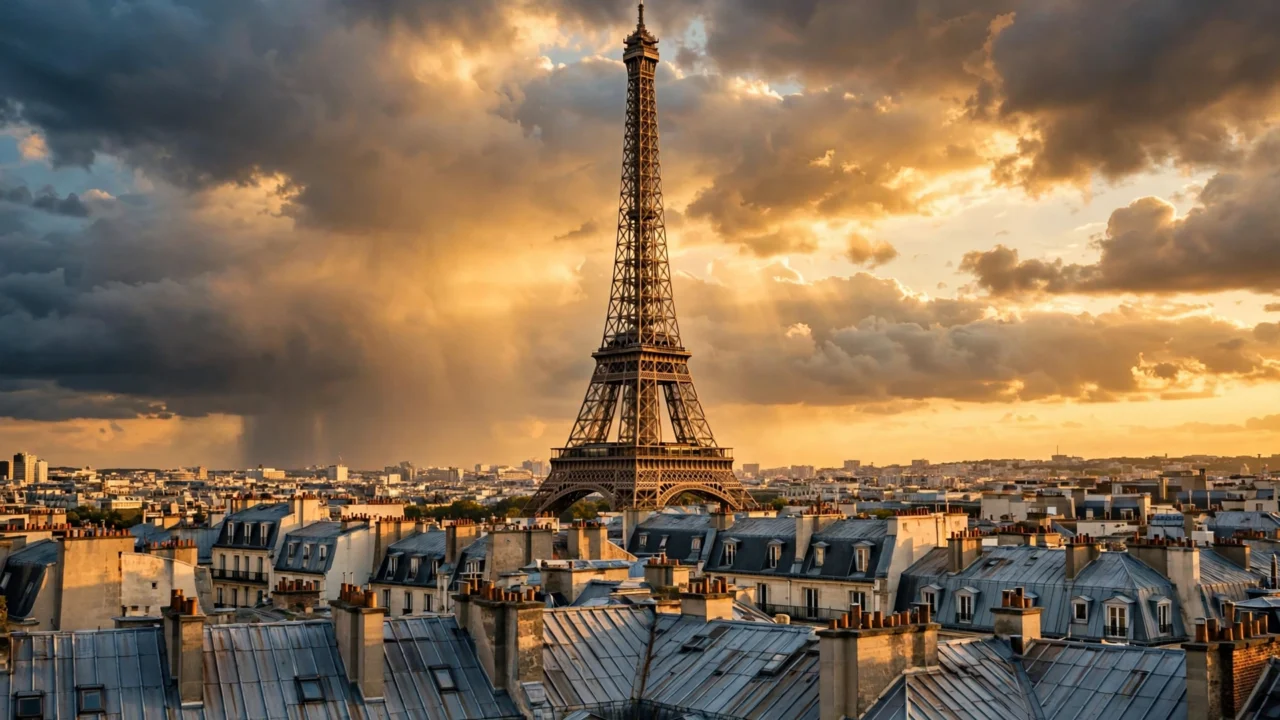
The Eiffel Tower, Paris
Built for the 1889 World’s Fair, the Eiffel Tower was originally meant to be temporary — and Parisians initially hated it. Artists called it a monstrosity; one famous critic supposedly ate lunch in its restaurant because it was the only place in Paris where he couldn’t see the thing. Today it’s arguably the most recognized structure on the planet, drawing around seven million visitors a year in normal times.
The experience is better than the clichés suggest. Yes, the queues can be long (book tickets online well in advance), but the view from the top at sunset — Paris spreading out in every direction, the Seine glittering below — genuinely earns its reputation. Go early in the morning or late in the evening to dodge the worst crowds, and don’t skip the first-floor glass floor if you’re brave.
The Colosseum, Rome
Nearly two thousand years old and still dominating Rome’s skyline, the Colosseum is the largest ancient amphitheater ever built. Gladiatorial contests, mock sea battles, wild animal hunts — the spectacles staged here were as grand as the architecture. Walking through its arches, you can still feel the scale of imperial Rome in your bones.
Book the underground and upper-tier tour if you can; the standard ticket only covers part of the structure, and the restricted areas are where the best stories live. Pair it with the Roman Forum next door, and wear proper shoes — Rome’s ancient stones are beautiful and merciless on feet.
Big Ben and the Houses of Parliament, London
Technically, “Big Ben” is the great bell, not the tower (the tower is the Elizabeth Tower), but nobody lets facts get in the way of a good nickname. This neo-Gothic masterpiece has been the visual shorthand for London — and often for Britain itself — for over 160 years. It photographs beautifully from Westminster Bridge at dusk, and the chimes are one of those sounds that make a city feel like itself.
The Rest of the European A-List
Sagrada Família: Gaudí’s unfinished basilica in Barcelona — part cathedral, part fever dream, still under construction after more than a century.
The Acropolis, Athens: The Parthenon has watched over Athens for 2,500 years; go at opening time to experience it before the tour buses arrive.
St. Basil’s Cathedral, Moscow: Those candy-colored onion domes on Red Square look like something from a storybook, which is exactly why they’re unforgettable.
Asia’s Wonders: Great Wall, Taj Mahal & More
Asia’s landmarks tend toward the monumental — structures built on a scale that still beggars belief, often centuries or millennia ago, without modern machinery.
The Great Wall of China
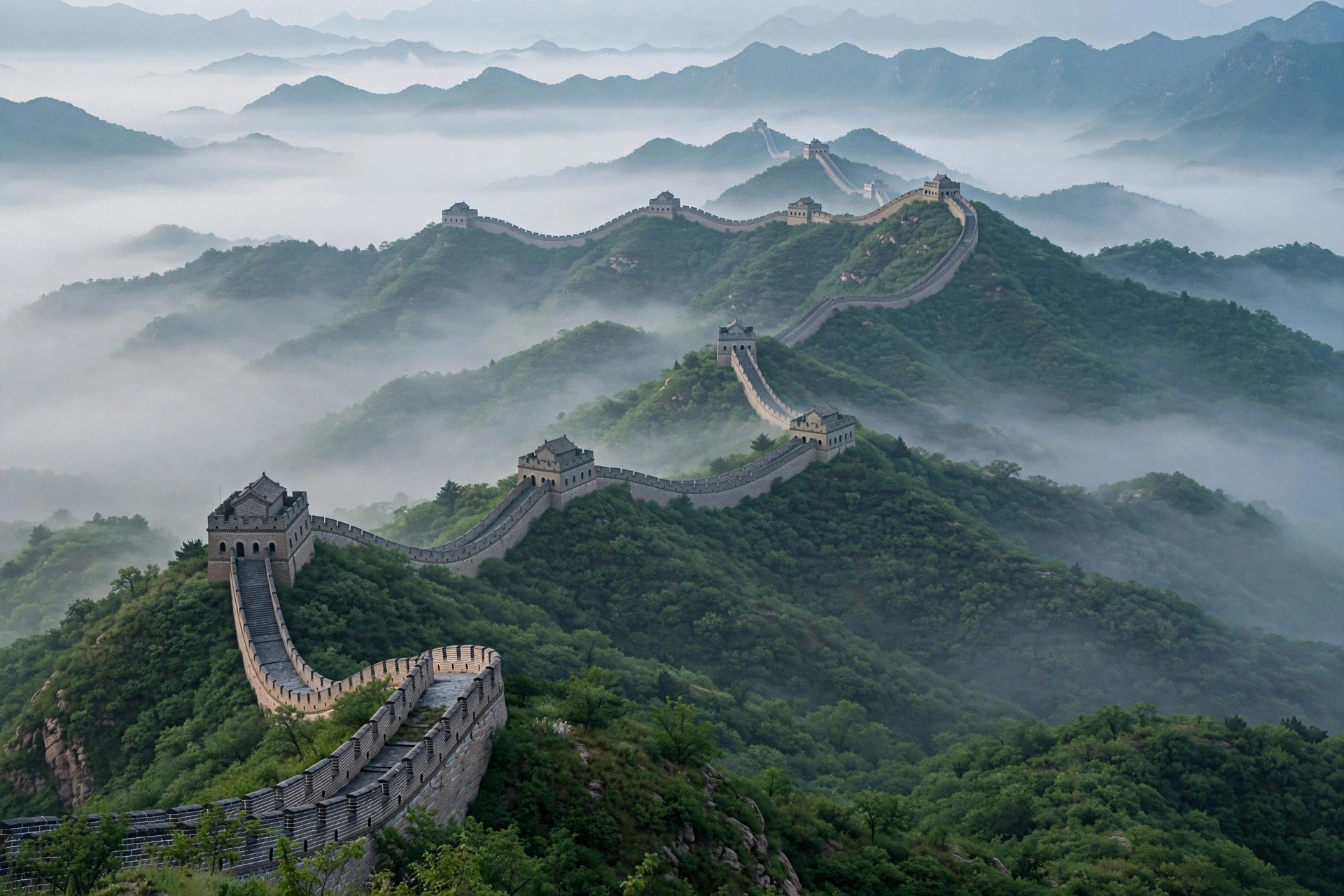
Let’s clear up the myth first: no, it isn’t visible from the Moon with the naked eye. What it actually is turns out to be far more impressive than the myth — a network of walls and fortifications stretching over 20,000 kilometers across mountains, deserts, and grasslands, built and rebuilt over many centuries by successive Chinese dynasties. Standing on a remote section with the wall snaking over ridge after ridge to the horizon is one of travel’s great humbling moments.
Most visitors go to Badaling (easy access, big crowds) or Mutianyu (slightly harder to reach, more scenic, fewer people). If you’re reasonably fit and adventurous, the unrestored “wild wall” sections offer an unforgettable experience — but go with a guide, bring water, and take the crumbling masonry seriously.
The Taj Mahal, Agra
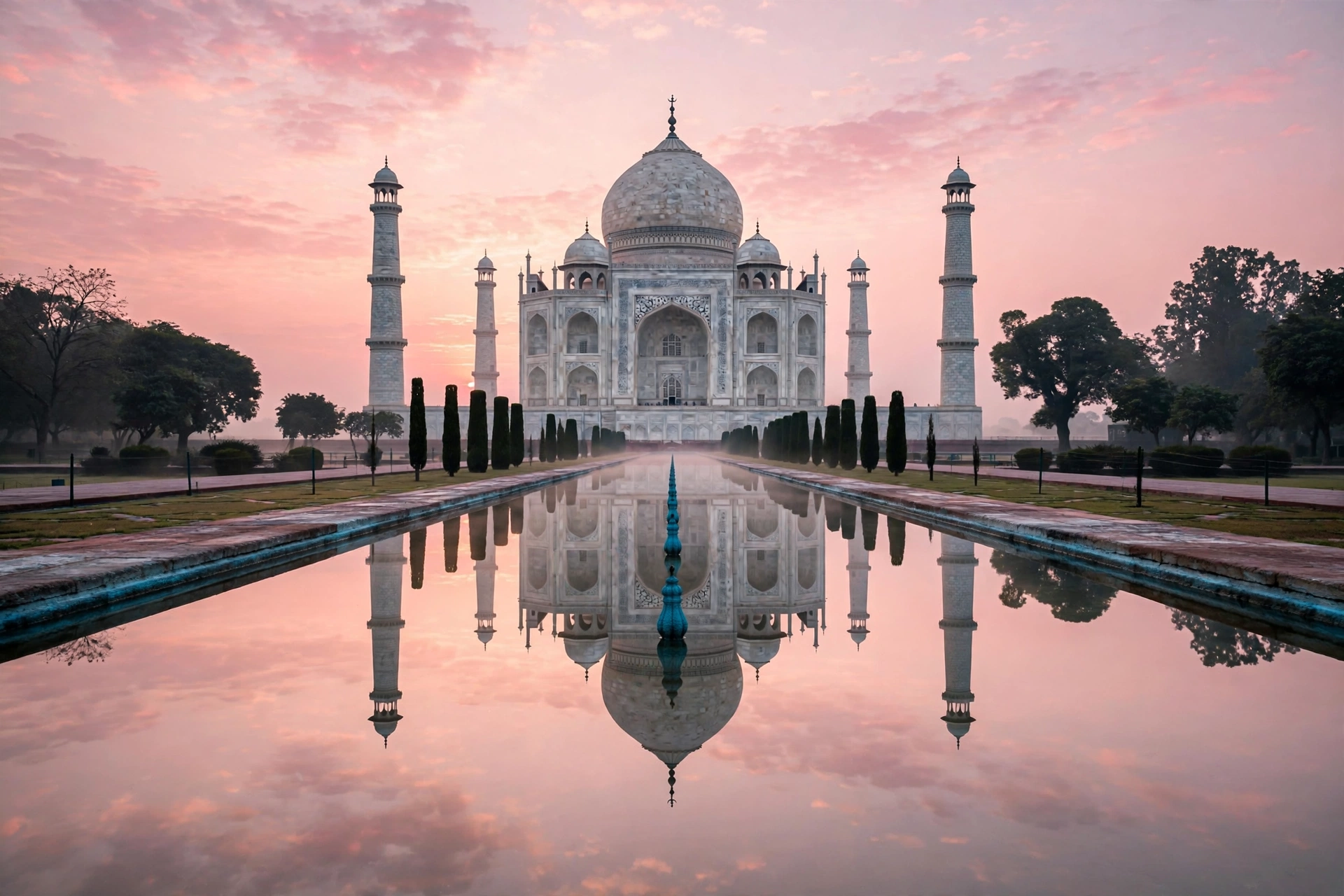
A monument to love, built by the Mughal emperor Shah Jahan for his wife Mumtaz Mahal — you’ve heard the story, but nothing prepares you for the building itself. The white marble seems to change color with the light: pinkish at dawn, brilliant white at noon, golden at sunset. The symmetry is absolute, the inlay work impossibly delicate, and the reflecting pool does exactly what every photograph promises.
Arrive at sunrise — the gates open early, the light is magical, and you’ll be inside before the day’s biggest crowds. Note that the Taj is closed on Fridays. And give yourself time to just sit in the gardens; rushing the Taj Mahal is like speed-reading a love letter.
Mount Fuji, Japan
Japan’s highest peak and most sacred mountain is almost perfectly symmetrical, which is why it appears in countless artworks — most famously Hokusai’s woodblock prints. Climbing it in the official season (typically July to early September) is a well-organized undertaking, with mountain huts along the trails. Or simply view it from Lake Kawaguchi or the Chureito Pagoda viewpoint, one of the most photographed scenes in Japan.
The Rest of the Asian A-List
Angkor Wat, Cambodia: The largest religious monument in the world, a 12th-century temple city swallowed and reclaimed by jungle. Sunrise over its five towers is a pilgrimage for photographers.
The Forbidden City, Beijing: The world’s largest imperial palace complex — 980 buildings of Ming and Qing dynasty splendor. Book tickets online; same-day entry is often impossible.
Petra, Jordan: The Treasury carved into rose-red cliffs is the money shot, but the real magic is the two-kilometer walk through the narrow Siq canyon to reach it.
The Americas: Statue of Liberty, Christ the Redeemer & More
The Americas’ landmarks skew younger than Europe’s and Asia’s, but what they lack in antiquity they make up for in symbolism.
The Statue of Liberty, New York
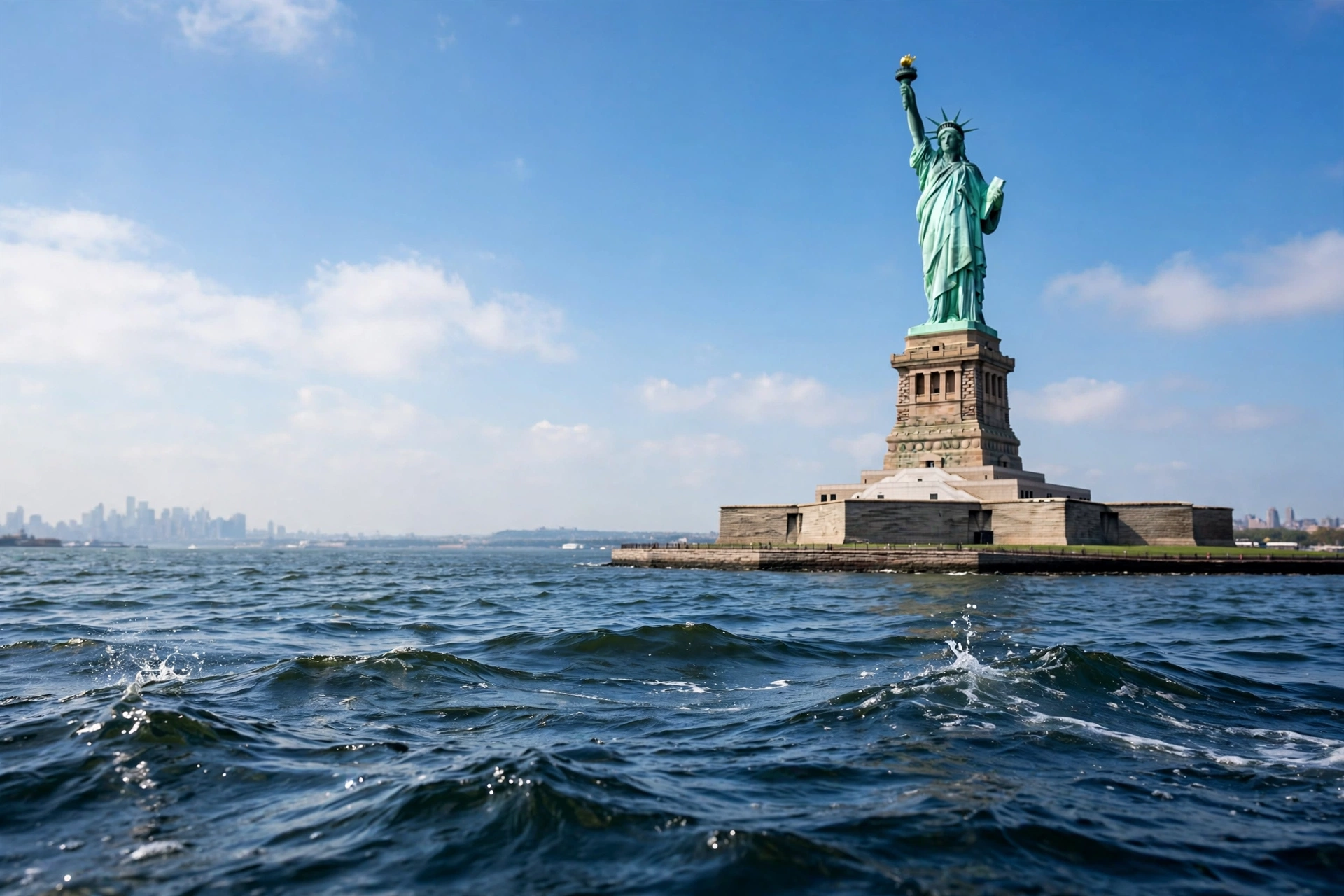
A gift from France dedicated in 1886, Lady Liberty became the defining symbol of immigration to America — the first sight of the new world for millions arriving by ship. The copper has long since oxidized to its famous green, and the torch she holds has been replaced with a gold-leafed replica that catches the light beautifully.
Take the ferry from Battery Park; the ride itself offers spectacular harbor views. If you want to climb to the crown, book months ahead — those tickets are strictly limited. Even from the pedestal or just the island grounds, though, the statue’s scale and presence are striking.
Christ the Redeemer, Rio de Janeiro
Standing 30 meters tall atop Corcovado mountain with arms outstretched over Rio, this Art Deco statue is one of the New Seven Wonders of the World. The setting is half the experience — the cog-train ride up through tropical forest, then the sudden reveal of Rio’s beaches, Sugarloaf Mountain, and the sprawling city below. Go on a clear morning; clouds love to photobomb this particular landmark.
Machu Picchu, Peru
The 15th-century Inca citadel perched on a mountain ridge 2,430 meters up in the Andes is the kind of place that silences people. How the Incas built it — massive stones fitted without mortar, aligned with astronomical events — remains partly mysterious, which only adds to the aura. Whether you hike the Inca Trail over four days or take the train to Aguas Calientes, arrive early and climb Huayna Picchu for the classic postcard view down over the ruins.
The Rest of the Americas A-List
The Golden Gate Bridge, San Francisco: That International Orange color was originally just the primer — it looked so good they kept it. Walk it on a clear day; the fog has its own moody charm.
Chichen Itza, Mexico: The great Maya pyramid of El Castillo, where the equinox sun creates a serpent of light slithering down the staircase. Ancient astronomy in stone.
Niagara Falls: Technically a natural landmark, but the Horseshoe Falls’ thundering curtain of water earns its place on any icons list. Take the boat ride — you will get soaked, and you’ll love it.
Modern Marvels: Burj Khalifa, Sydney Opera House & More
Not all famous landmarks are old. The 20th and 21st centuries produced icons every bit as recognizable as the ancient ones — proof that the landmark-making impulse is alive and well.
Burj Khalifa, Dubai: At 828 meters, the world’s tallest building — a needle of glass and steel that redefined what a skyscraper could be. The observation decks on the 124th, 125th, and 148th floors offer views that stretch to the desert on a clear day. Book the sunset slot; watching the city lights come on from half a mile up is something else.
Sydney Opera House, Australia: Those white sail-like shells on Sydney Harbour are among the most distinctive buildings ever designed. Architect Jørn Utzon’s masterpiece took 14 years to build and nearly ended his career — then became Australia’s defining image. Take the backstage tour if you’re curious how the magic works, or just admire it from the ferry.
The Guggenheim Museum Bilbao, Spain: Frank Gehry’s titanium-clad marvel didn’t just put Bilbao on the map — it coined the term “the Bilbao effect” for how a single building can transform a city’s fortunes. Even if modern art isn’t your thing, the building itself is the exhibit.
Marina Bay Sands, Singapore: Three towers topped by a ship-shaped skypark with an infinity pool overlooking the city. It’s become Singapore’s visual signature in barely over a decade — landmark fame can happen fast in the social media age.
If the engineering behind these modern giants fascinates you, you’ll enjoy the science writing over at astronomy101.co.uk — different subject, same sense of wonder at what humans (and the universe) can build.
Natural Landmarks Worth the Trip
Humans don’t have a monopoly on icons. Some of the world’s most famous landmarks were built by geology, not architects — and they’re often the most humbling to visit.
The Grand Canyon, USA: 446 kilometers long, up to 1.8 kilometers deep, and nearly two billion years of Earth’s history exposed in its layered walls. Photographs genuinely don’t prepare you; the scale short-circuits your brain a little. Sunrise and sunset paint the canyon in impossible colors — the midday view, while still vast, is comparatively flat.
Mount Everest / Sagarmatha: The world’s highest peak needs no introduction. Most visitors experience it from base camp treks or scenic flights rather than the summit, and honestly, seeing that wall of ice and rock looming over the Khumbu valley is plenty.
The Great Barrier Reef, Australia: The largest living structure on Earth, visible from space, built by billions of tiny coral polyps. Snorkeling or diving here is like visiting another planet — though it’s worth knowing the reef faces serious environmental pressures, which makes seeing it sooner rather than later feel more urgent.
Victoria Falls: On the Zambia-Zimbabwe border, the largest curtain of falling water in the world. The local name, Mosi-oa-Tunya — “the smoke that thunders” — tells you everything. Visit in high-water season for maximum drama.
Planning a Landmark Visit: Practical Tips
Seeing famous landmarks well is a skill. Here’s what experienced travelers have learned, condensed:
Book ahead: Timed entry is now standard at most major landmarks. Booking online days or weeks in advance saves hours of queuing — sometimes literally.
Go early or late: Opening time and the last hour before closing are consistently the quietest. Midday is when tour buses converge.
Shoulder season wins: The weeks just before or after peak season often bring decent weather with a fraction of the crowds. Research each destination’s specific sweet spot.
Hire a guide (sometimes): At historically rich sites like the Colosseum, Angkor Wat, or Machu Picchu, a good guide transforms stones into stories. At purely visual icons like the Eiffel Tower, you can happily go solo.
Manage the photo pressure: Take your pictures, then put the camera away and actually look. The travelers who remember landmarks most vividly are the ones who spent time being present, not the ones with the most complete photo albums.
Respect the site: Stay on paths, don’t carve initials into ancient stones, follow local customs at religious sites (covering shoulders, removing shoes where asked). These places survived centuries; let’s keep it that way.
Visiting in Person vs. Virtual Tours: Pros and Cons
Can’t travel right now? Virtual tours — 3D walkthroughs, live webcams, and documentary footage — have become genuinely good. Here’s the honest trade-off:
| Pros | Cons | |
|---|---|---|
| In person | Scale, atmosphere, and sensory detail no screen can reproduce; the journey itself becomes part of the memory | Expensive; time-consuming; crowds; weather and logistics can disappoint |
| Virtual | Free or cheap; no queues; accessible to everyone; great for planning or revisiting | No sense of scale or presence; passive experience; you’ll still want to go eventually |
The best approach? Use virtual tours to decide where to go and to deepen your appreciation afterward — but treat them as the trailer, not the film.
Frequently Asked Questions
What is the most visited landmark in the world?
Rankings vary by how you count, but the Eiffel Tower, the Great Wall of China, and the Taj Mahal consistently top the lists for paid-entry landmarks, each drawing millions of visitors annually. Free-to-view icons like Times Square or the Las Vegas Strip see even bigger foot traffic, depending on the source.
What are the New Seven Wonders of the World?
The 2007 global poll named: the Great Wall of China, Petra, Christ the Redeemer, Machu Picchu, Chichen Itza, the Colosseum, and the Taj Mahal. The Pyramids of Giza were given honorary status as the only surviving wonder of the original ancient list.
Which famous landmark should I visit first?
It depends on where you live and what moves you — but a good rule of thumb is to start with the one you’ve dreamed about longest. The landmarks that live up to expectations most consistently, by traveler consensus, tend to be the Taj Mahal, Machu Picchu, and the Grand Canyon: places where scale and setting do the heavy lifting.
How far in advance should I book landmark tickets?
For the biggest draws — Eiffel Tower summit, Statue of Liberty crown, Alhambra, Machu Picchu entry — book as soon as your dates are firm, ideally weeks to months ahead. Timed-entry slots for popular hours sell out fast, especially in peak season.
Are famous landmarks worth visiting despite the crowds?
Yes — with the right strategy. Go early or late, book ahead, visit in shoulder season, and accept that some queuing is part of the deal. The crowds exist because these places are extraordinary; a little planning lets you experience why.
What’s the best famous landmark for kids?
Natural landmarks often win with children — Niagara Falls, the Grand Canyon, and the Great Barrier Reef offer wow-factor without demanding historical patience. Among built landmarks, the Eiffel Tower and the Tower of London tend to hold young attention spans well, especially with a guide who tells good stories.
Read Also: CBR1000RR (Explained): Honda’s Legendary Fireblade Superbike
#famous-landmarks

Related Articles

How to Drive a Manual Car: Complete Beginner’s Guide to Manual Transmission Driving
I remember the first time I sat behind the wheel of a manual car. My palms…

Why Lifelong Learning Beats a Single Degree
The half-life of skills keeps shrinking. Why the people who keep learning, deliberately and continuously, end…

How to Wash a Wool Blanket (2026 Guide): Hand Wash and Machine Steps
Wool blankets need gentle care to stay soft and shrink-free. This guide covers hand washing, machine…
1 Comment