651 Area Code: Saint Paul Minnesota Complete Guide
The 651 area code serves Saint Paul and the eastern Twin Cities in Minnesota. This guide explains where it covers, how it began, and how to dial it correctly.
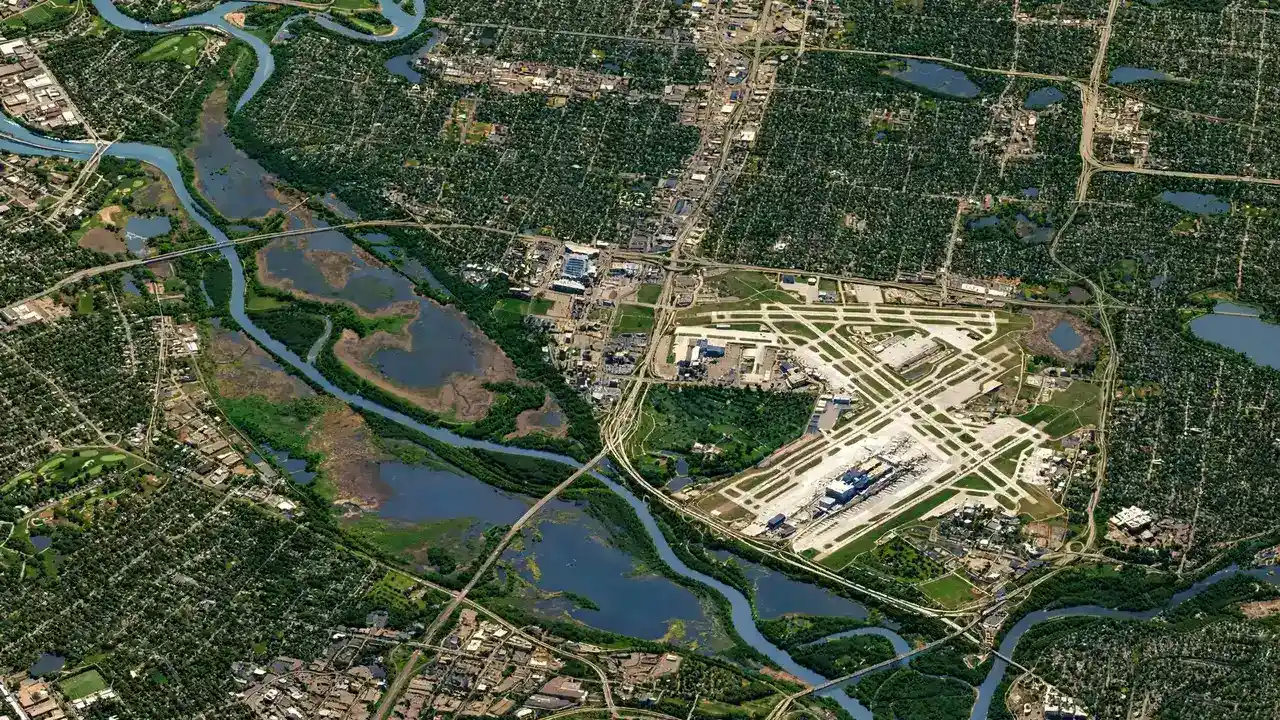
If a number on your phone starts with 651, it almost certainly points to the eastern side of the Twin Cities in Minnesota. The code belongs to Saint Paul, the state capital, and to the suburbs that stretch east from the Mississippi River. It is a familiar sight on business cards, school directories, clinic reminders, and local government notices across Ramsey, Washington, and much of Dakota County. For people who live there, 651 is simply home. For callers from elsewhere, it is a useful clue: the person or business on the other end is based in or near Saint Paul, not Minneapolis, even though the two cities sit only a short drive apart.
That distinction matters more than it might seem. Minneapolis and Saint Paul are often spoken of as one place, the Twin Cities, but they have separate downtowns, separate city governments, and, since 1998, separate area codes. Minneapolis kept 612. Saint Paul and its eastern neighbours received 651. The Mississippi River, which winds between the two downtowns, became a rough dividing line in everyday conversation, even if the actual numbering boundary follows rate centers and county lines rather than the riverbank itself. When you see 651, think east metro, state government, and the older, river-shaped neighbourhoods of the capital city.
This guide answers the questions people most often ask about the code: where exactly it covers, when it was created and why, which cities and counties fall inside it, how to dial a number correctly, what to do about unknown or suspicious calls, and whether a business outside Minnesota can use a 651 number. It keeps the facts plain and avoids guesswork about individual phone owners, because an area code tells you about a region, not about a person.
In this article:
- What the 651 area code is
- Where the 651 area code covers
- A short history of the 651 area code
- Cities and counties in the 651 area
- Dialing a 651 number
- 651 and the other Minnesota area codes
- Business and virtual 651 numbers
- Scam calls and unknown 651 numbers
- Pros and cons of a 651 number
- Frequently asked questions
What the 651 Area Code Is
Key: location. Saint Paul, Minnesota, and the eastern suburbs of the Twin Cities metropolitan area.
Key: state. Minnesota, in the north-central United States.
Key: time zone. Central Time, which is UTC-6 in standard time and UTC-5 during daylight saving time.
Key: created. July 12, 1998, in a split from area code 612.
Key: overlay. None. The 651 region has a single area code, so neighbouring codes do not share the same ground.
An area code is the first three digits of a ten-digit North American phone number. In the North American Numbering Plan, which covers the United States, Canada, and several other territories, those digits route a call to a numbering plan area, a geographic region with its own pool of numbers. The 651 numbering plan area is one of seven in Minnesota. It is not a postcode, a ZIP code, or a local exchange, and it does not by itself identify a street address. Two neighbours on the same block can have different area codes if one kept an old mobile number from another city, and a person who moves away can keep a 651 number for years. The code is best read as a strong regional signal, not as proof of a caller’s present location.
That said, the signal is strong for a reason. Most landlines and many mobile numbers issued in Saint Paul and the east metro still begin with 651, because carriers assign numbers from the pool for that region. Schools, hospitals, state offices, and long-established businesses in the area commonly use it. If you are sorting out whether a clinic, contractor, or council office is local, a 651 prefix is a good first check, to be confirmed with the organisation’s official address or website.
Where the 651 Area Code Covers
The 651 area covers Saint Paul and the eastern suburbs of the Minneapolis-Saint Paul metropolitan area, then runs southeast along the Mississippi River toward Hastings. In practical terms, that means the state capitol, the older east-side neighbourhoods of Saint Paul, and a ring of suburbs that grew up around them: Woodbury, Maplewood, Roseville, Oakdale, Cottage Grove, Stillwater, White Bear Lake, Inver Grove Heights, Eagan, and several smaller communities. The region is anchored by Ramsey County, extends into Washington County to the east, and takes in much of Dakota County to the south.
The river is the story of this region. Saint Paul developed as a river town, and the Mississippi still shapes its neighbourhoods, parks, and commuter routes. Head east from downtown and you pass through suburbs that blend older housing, newer retail centres, and large employers. Head southeast and the landscape opens out toward Hastings, a smaller river city that marks the southern reach of the code. The boundary is not a straight line drawn on a map for tourists; it follows the way telephone exchanges were organised, which in turn followed settlement, county lines, and the growth of the suburbs. That is why some places near the edge can feel ambiguous, and why a map of area codes always looks a little messier than a map of counties.
For everyday purposes, the simplest description works: if the place is Saint Paul or an eastern Twin Cities suburb, and it is not in Minneapolis or the western suburbs, there is a good chance its local numbers start with 651. People who need an exact boundary, for example to set up a phone system, should check with their carrier or the North American Numbering Plan Administrator, rather than relying on a general guide.
A Short History of the 651 Area Code
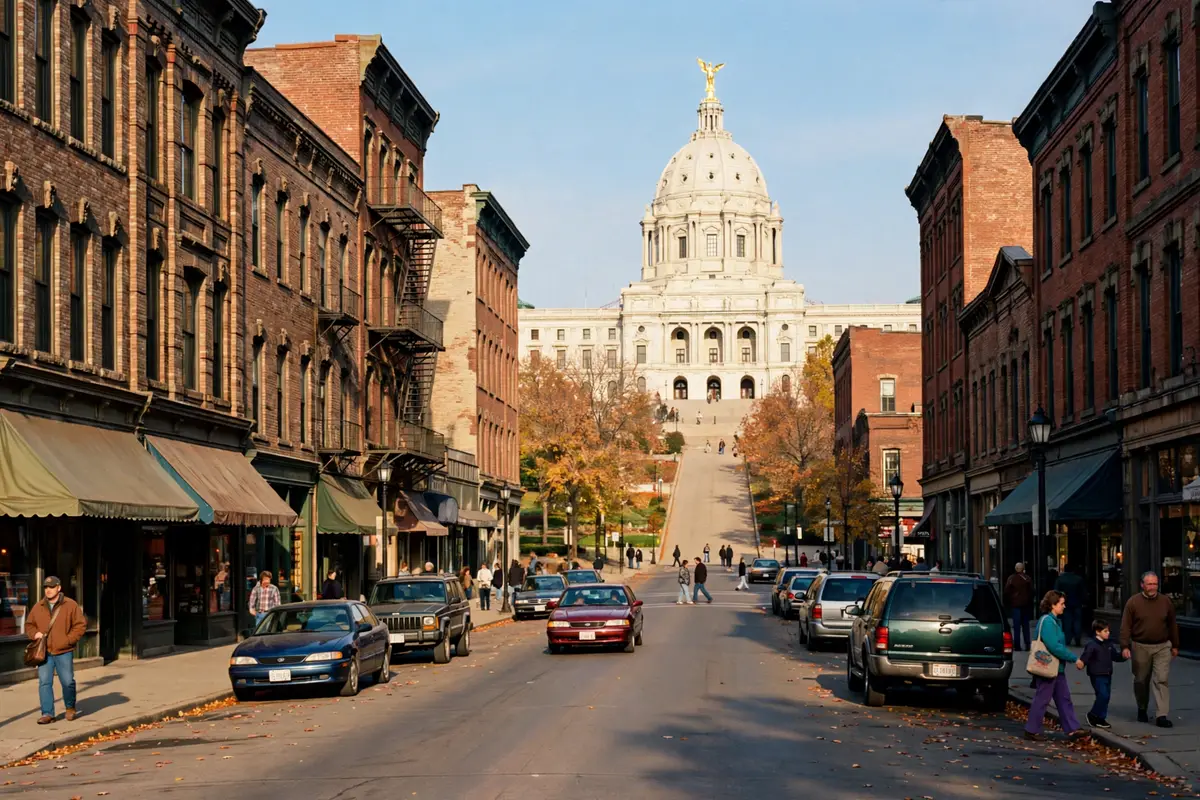
Minnesota began with two area codes in 1947, when the first nationwide numbering plan was created. Area code 612 covered the Twin Cities and the southeast of the state, while 218 covered the rest. As phones multiplied, first in homes and offices and later in pockets, 612 was split again and again. The southern part became 507 in 1954. The central part became 320 in 1996. By the late 1990s, the remaining Twin Cities territory under 612 was itself running short of numbers, and regulators faced a choice familiar to every growing metro: split the region, or overlay a second code on top of the first.
They chose a split. On July 12, 1998, the eastern portion became 651, and Minneapolis and its immediate surroundings kept 612. People and businesses on the Saint Paul side changed their area code, while their seven-digit local numbers stayed the same. That is the normal pattern in a split: the familiar part of the number survives, and only the prefix changes. Later splits created 763 for the northwestern suburbs and 952 for the southwestern suburbs, both in 2000, leaving the Twin Cities with four codes that still map, roughly, to compass directions around the two downtowns.
The split also explains why 651 feels like a Saint Paul identity rather than a technical label. A whole city changed its prefix at once, and the new code became shorthand for the east metro in local news, advertising, and conversation. More than twenty-five years later, that identity has stuck, even as mobile phones and number portability have blurred the old geography. A Saint Paul business that has used the same number since the late 1990s carries a small piece of that history every time it answers the phone.
Cities and Counties in the 651 Area
The largest city in the 651 area is Saint Paul itself, the capital of Minnesota and the county seat of Ramsey County. The capitol complex, the cathedral, the riverfront, and the downtown business district all sit inside the code. Around it, the suburbs each add their own character. Maplewood and Roseville offer retail and healthcare employment close to the capital. Woodbury, one of the fastest-growing suburbs in the metro, mixes housing, offices, and shopping centres. Stillwater, on the St. Croix River to the east, draws visitors for its historic downtown and river views. White Bear Lake, Cottage Grove, Oakdale, and Inver Grove Heights round out a region that is suburban in feel but closely tied to the capital’s jobs and services.
County lines help to make sense of the map. Ramsey County is the urban core, home to Saint Paul and its closest suburbs. Washington County stretches east to the St. Croix River and the Wisconsin border. Dakota County reaches south toward Hastings and the Mississippi. Parts of other nearby counties also fall inside the numbering plan area at its edges, which is why lists of covered cities can differ slightly from source to source. The safest way to read any city list is as a guide to the main places, not as a legal boundary.
It is also worth noting what the 651 area is not. It does not cover Minneapolis, which remains 612, nor the northwestern suburbs under 763 or the southwestern suburbs under 952. It does not cover Rochester or southern Minnesota, which use 507, nor Duluth and the north, which use 218, nor St. Cloud and central Minnesota, which use 320. If you are unsure whether a particular town belongs to 651, the area code of a local school, library, or city hall is usually a reliable check.
Dialing a 651 Number
Dialing a 651 number is straightforward, and the same habits that work for any United States number work here. Inside the region, where there is no overlay, seven-digit local dialing has traditionally worked for calls within the same rate center, but ten-digit dialing is the safer default everywhere now, especially on mobile phones. Save every number with its area code and you remove a whole class of misdials.
Key: local ten-digit format. 651-XXX-XXXX.
Key: long-distance format within the United States. 1-651-XXX-XXXX.
Key: international format. +1 651 XXX XXXX, where +1 is the United States country code.
Key: time zone reminder. The 651 area runs on Central Time, so a morning call from the East Coast lands an hour earlier in Saint Paul, and an evening call from the West Coast lands two hours later.
If you are calling from outside the United States, drop any trunk zero from your own system, dial your international access code or the plus sign on a mobile, then 1, then the ten-digit number. If you are texting, the same ten-digit format applies. Most failed calls to a 651 number come down to a missing digit, a transposed pair, or an old number that has been disconnected or reassigned, rather than anything special about the code itself. When a number does not connect, double-check it against the organisation’s official listing before trying variations.
651 and the Other Minnesota Area Codes
Minnesota has seven area codes, and together they tell the story of how the state grew. The original pair from 1947 were 612 and 218. The splits that followed carved out 507 for the south, 320 for the centre, and then 651, 763, and 952 for the Twin Cities metro, with a newer overlay, 924, added for the 507 region in 2024. Each code still corresponds, broadly, to a region, which makes Minnesota easier to read than states where overlays stack several codes on the same streets.
For readers who want a broader sense of how American area codes work in general, the everyday guides on 9bio cover practical topics in plain language, while The Modern Post carries news and explainers that put local details into a wider context. Both are useful starting points when a single code raises a wider question, such as why some cities have two codes and others have one.
The comparison that matters most for 651 is with its Twin Cities neighbours. A 612 number points to Minneapolis proper. A 763 number points to the northwestern suburbs, such as Brooklyn Park, Plymouth, and Maple Grove. A 952 number points to the southwestern suburbs, such as Bloomington, Eden Prairie, and Burnsville. A 651 number points east, to Saint Paul and its suburbs. Keeping those four directions in mind is enough to place most Twin Cities numbers at a glance, and it explains why a short drive across the river can change the prefix on a shop window.
Business and Virtual 651 Numbers
A local number still carries weight for a business, even in an age when most calls arrive on mobile phones. Customers tend to answer a familiar prefix more readily than an unknown one, and a Saint Paul address paired with a 651 number looks consistent in a way that a distant code does not. That is why new businesses in the east metro usually request a 651 number, and why established businesses guard theirs when they move offices or change phone systems.
It is also possible to obtain a 651 number without a Saint Paul office. Virtual phone providers and cloud phone systems can assign numbers from a chosen area code to a business anywhere, routing calls to mobiles or office handsets over the internet. This is legitimate and common, but it weakens the geographic signal: a 651 number obtained this way proves only that the owner wanted a Saint Paul presence, not that the business sits there. Customers should therefore treat the area code as one clue among several, alongside a street address, reviews, and an official website, rather than as proof of location.
For a business weighing the choice, the trade-off is simple. A genuine local number builds trust with local customers and fits naturally into local advertising. A virtual number offers flexibility for remote teams and lower setup costs. Either way, the number should be answered promptly, listed consistently across directories, and kept up to date when staff or premises change, because an unanswered local number damages trust faster than a distant one.
Scam Calls and Unknown 651 Numbers
An unknown 651 number is not automatically a scam, and a familiar-looking number is not automatically safe. Scammers routinely spoof area codes, displaying a local prefix to increase the chance that the call is answered, a practice sometimes called neighbour spoofing. The number on the screen can therefore belong to a real Saint Paul resident or business that has no connection to the caller. That is one reason why calling back an unknown number immediately is not always wise: you may reach an innocent stranger, or a premium-rate trap, rather than the person who called you.
The safer routine is calm and boring, which is exactly why it works. Let unknown calls go to voicemail when you can. Listen to the message before deciding. If the caller claims to be a bank, a government agency, a utility, or a delivery company, hang up and contact that organisation through a number you already trust, not through a number left in the message. Never share passwords, one-time codes, or payment details with an unsolicited caller, however urgent the story sounds. If a number keeps calling and harassing you, block it on your phone and report it through your carrier’s spam-reporting tool where one is offered.
There is also a quieter point worth making. Area codes do not reveal personal information about the owner of a number, and ordinary people should not use lookup sites to chase down strangers. If you need to reach a business or public office, use its official listing. If you are worried about a call, your carrier and, for fraud, the relevant consumer protection channels are better next steps than a web search for a private individual.
Pros and Cons of a 651 Number
| Aspect | Advantage | Drawback |
|---|---|---|
| Local identity | Instantly signals Saint Paul and the east metro to local customers | Means little to callers outside Minnesota who do not know the code |
| Dialing | No overlay in the region, so local dialing stays simple | Ten-digit saving is still the safest habit on mobiles |
| Business trust | A matching local number and address look consistent and credible | A virtual 651 number can be bought from anywhere, so it is not proof of location |
| History | Carries the Saint Paul identity created in the 1998 split from 612 | Older residents and businesses had to change numbers during that split |
| Scam risk | No higher inherent risk than any other code | Spoofers exploit the familiar local prefix to win answers |
Frequently Asked Questions
Where is the 651 area code?
The 651 area code is in Minnesota, covering Saint Paul and the eastern suburbs of the Twin Cities, extending southeast along the Mississippi River toward Hastings. It sits in the Central Time Zone.
When was the 651 area code created?
The 651 area code was created on July 12, 1998, when the Twin Cities territory under area code 612 was split. Saint Paul and the eastern suburbs took the new code, while Minneapolis kept 612.
Does the 651 area code have an overlay?
No. The 651 region has no overlay code, which means 651 is the only area code for its geographic territory. Neighbouring Twin Cities suburbs use different codes because they were split off, not overlaid.
What cities use the 651 area code?
Saint Paul is the largest city, followed by suburbs including Woodbury, Maplewood, Roseville, Oakdale, Cottage Grove, Stillwater, White Bear Lake, Inver Grove Heights, and Eagan, along with smaller communities in Ramsey, Washington, and Dakota Counties.
How do I dial a 651 number from abroad?
Dial your international access code or the plus sign, then 1 for the United States, then 651 and the seven-digit local number, for example +1 651 XXX XXXX. Remember the Central Time difference when choosing when to call.
Can I get a 651 number if I do not live in Minnesota?
Yes, through a virtual or cloud phone provider that offers numbers in that area code. The number will display as a Saint Paul number, but it does not prove the business is physically located there.
Is a 651 call always from Saint Paul?
Not necessarily. Number portability lets people keep a 651 number after moving, and scammers can spoof a 651 prefix. Treat the code as a regional clue, and verify important callers through a trusted number.
Read Also: Location of Area Code 609 (Complete Guide): Where Is 609 and What You Need to Know

Related Articles
Columbus Day 2026: Date, History, and What Is Open
Columbus Day 2026 is Monday, October 12. This guide explains the date, the history behind the…
763 Area Code Guide to Minnesota Cities and Dialing
Area code 763 covers the northwestern suburbs of Minneapolis, Minnesota, including cities like Brooklyn Park, Maple…
Turks- és Caicos-szigetek: Teljes Utazási Útmutató 2026
A Turks- és Caicos-szigetek a Karib-térség egyik legnyugodtabb és legszebb úti célja, türkiz tengerrel, fehér homokkal…
1 Comment