Carnauba Wax (2026 Guide): What It Is, Uses, Types, and How to Use It Safely
Carnauba wax is a natural plant wax known for its hard finish and high shine. This guide explains where it comes from, where it is used, and how to pick and apply it with confidence.

What Is Carnauba Wax?
If you have ever run your hand over a freshly waxed car and felt that smooth, slick surface, or bitten into a shiny coated candy, there is a good chance carnauba wax played a part. Carnauba wax is a natural wax taken from the leaves of the carnauba palm, a tree that grows in Brazil. It is widely valued because it creates a hard, glossy, and water-resistant finish, which is why it shows up in so many different products, from car wax and furniture polish to lip balm and food coatings.
Despite its wide use, carnauba wax is often misunderstood. Some people think it is a synthetic chemical, while others assume every product labelled "carnauba" contains the same thing in the same amount. The truth is more interesting. Carnauba wax is a plant-based material with a long history of practical use, and the way it is processed and blended changes how it performs. A pure carnauba product behaves differently from a blended car polish, just as a food-grade coating behaves differently from an industrial wax.
This guide explains carnauba wax in plain language. You will learn where it comes from, how it is made, what makes it different from other waxes, where it is used, and how to use it safely at home. You will also find practical buying tips, common mistakes to avoid, and answers to the questions people ask most often.
In This Article
- What carnauba wax is and where it comes from
- How carnauba wax is harvested and processed
- The main types and grades you will see on labels
- Everyday uses: cars, wood, leather, food, and cosmetics
- Carnauba wax vs. beeswax vs. synthetic wax
- How to apply carnauba wax for the best result
- Safety, storage, and shelf life
- Buying guide: what to look for and what to avoid
- Pros and cons
- Frequently asked questions
Where Carnauba Wax Comes From
Key: origin. Carnauba wax comes from the leaves of the carnauba palm, scientifically known as Copernicia prunifera, which is native to northeastern Brazil.
The palm grows in a hot, dry climate, and its leaves naturally develop a waxy coating. That coating helps the leaves hold on to moisture and protects them from the sun and dry air. In other words, the wax is the plant’s own defence system, refined by nature over a long time. People learned to collect that coating and turn it into a usable wax, and that traditional knowledge became the basis of a modern industry.
Harvesting is generally done by cutting selected leaves, drying them in the sun, and then loosening the wax from the leaf surface. The dried leaves are beaten or processed so the powdery wax falls away, and that material is then melted, filtered, and cooled into flakes or blocks. The exact method can vary, and the care taken at each stage affects the colour and purity of the finished wax. Lighter, more refined wax is often used where appearance matters, such as in cosmetics, while less refined wax may be used for industrial purposes.
It is worth noting that carnauba palms are not cut down just to get the wax. The leaves can be harvested while the tree keeps growing, which is one reason carnauba wax is often described as a renewable, plant-based material. That said, quality and sustainability can vary between suppliers, so buyers who care about sourcing should look for clear information from the brand they choose rather than assuming every product meets the same standard.

What Makes Carnauba Wax Special?
Key: texture. In its raw form, carnauba wax is hard and brittle, and it usually appears as yellowish flakes or a solid block.
Key: finish. When it is melted and applied in a thin layer, carnauba wax dries to a hard, glossy finish that feels smooth to the touch.
Several qualities explain why manufacturers keep choosing it even though synthetic alternatives exist. First, it is hard. Compared with many softer natural waxes, carnauba holds its shape and resists softening, which helps a finish last longer under normal use. Second, it produces a deep, warm shine rather than a flat or plastic-looking gloss. That is one reason car enthusiasts and woodworkers often prefer it. Third, it repels water reasonably well, so rain or spills are more likely to bead on the surface than soak straight in.
Carnauba wax also blends well with other ingredients. On its own it can be difficult to spread because it is so hard, so it is often mixed with softer waxes, oils, or solvents to make a paste or liquid that is easier to apply. That blending is normal and useful. A product that says "contains carnauba wax" is not necessarily pure carnauba, and that is not automatically a bad thing. The blend is what makes the product practical to use.
Types and Grades of Carnauba Wax
You will not always see a grade printed on a consumer product, but understanding the basic categories helps you read labels with more confidence.
Food-Grade Carnauba Wax
Food-grade carnauba wax is refined for use on or in food products, such as coatings for sweets, chewing gum, and some fruits. When you see a shiny coating on a candy, that shine often comes from a food-grade wax coating. Food-grade material is processed to meet food-safety standards, and it should only be used for food purposes when the supplier clearly states that it is suitable for that use. Never assume an industrial wax is safe to eat.
Cosmetic-Grade Carnauba Wax
Cosmetic-grade carnauba wax is used in products such as lipsticks, lip balms, mascaras, and creams. In cosmetics, it helps products hold their shape, adds structure, and gives a smooth feel on the skin or lips. Because it is plant-based, it is also popular in products marketed as natural or vegan-friendly, although shoppers should still check the full ingredient list, since a finished cosmetic product may contain other ingredients as well.
Industrial and Technical Grades
Industrial grades are used for polishes, coatings, and manufacturing applications where appearance and food safety are less important than hardness and durability. These grades may be darker in colour and less refined. They are useful for car polishes, floor waxes, and similar products, but they are not interchangeable with food or cosmetic grades.
Pure vs. Blended Products
Key: purity. A "pure carnauba wax" product is mainly carnauba wax, while a blended product mixes carnauba with other waxes or oils to improve spreadability.
Pure flakes are hard and need heat to melt, which makes them better suited to people who are making their own balms, polishes, or coatings. Blended pastes and sprays are easier for everyday use, especially on cars and furniture. Neither is automatically better. The right choice depends on what you plan to do with it.
Everyday Uses of Carnauba Wax
Car Care
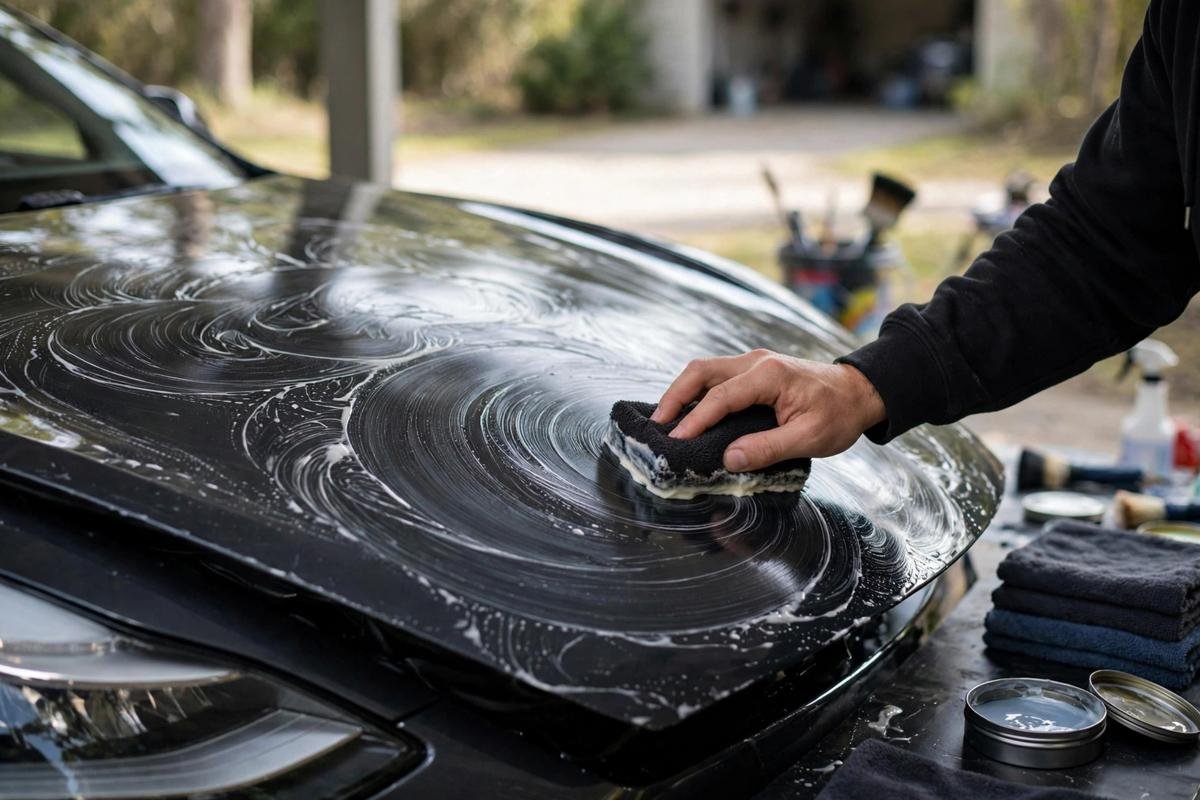
Carnauba wax is perhaps best known in car care. Car waxes containing carnauba are applied over clean paint to add shine and a protective layer. The wax helps water bead on the surface, makes dirt easier to wash off, and can make the paint look deeper and richer. It does not repair scratches or replace proper washing, but as a finishing step it is popular with both casual drivers and detailing enthusiasts.
For best results, carnauba car wax should be applied to a clean, cool surface, in the shade, in a thin and even layer. Thick layers do not give a better shine and are harder to remove. After the wax hazes, it is buffed off with a clean, soft cloth. How long the finish lasts depends on weather, washing habits, and how the car is stored, so reapplication is a normal part of car care rather than a sign that the product failed.
Wood and Furniture Care
Woodworkers and furniture owners also use carnauba wax, often blended with beeswax or oils, to polish wooden surfaces. A thin coat can bring out the grain, add a soft shine, and give the surface a smooth feel. It works best on wood that is already finished or sealed, rather than on raw, unfinished wood that needs a penetrating oil first. As with cars, less is more. A thin coat, buffed well, looks better and lasts longer than a thick, sticky layer.
Leather Care
Some leather balms and conditioners include carnauba wax to add a light protective finish and a gentle shine. It is not a substitute for a proper leather conditioner, which nourishes the leather itself, but it can be a useful finishing ingredient in a well-formulated product. Always test a new product on a small, hidden area first, especially on light-coloured or delicate leather.
Food and Sweets
In food, carnauba wax is used as a coating agent. It gives sweets, chocolate-coated items, and some fruits a shiny, attractive finish and helps protect them from moisture. The amounts used in food are small, and food-grade carnauba wax is regulated as a food ingredient in many countries. If you are checking ingredients, you may see it listed simply as carnauba wax.
Cosmetics and Personal Care
In cosmetics, carnauba wax helps lipsticks keep their shape in warm conditions, gives lip balms a smooth texture, and helps mascaras coat lashes evenly. Because it is hard at room temperature, it adds structure without feeling heavy when blended correctly. People with sensitive skin should still patch-test new products, as with any cosmetic ingredient, because sensitivity is usually about the whole formula rather than one ingredient alone.
Candles and Other Products
Carnauba wax is also used in some candles, polishes, and coatings, where its hardness helps the product hold its shape and burn or wear more evenly when blended with softer waxes. You may also find it in shoe polish, floor polish, and surfboard wax blends. Its versatility is part of its appeal: one natural material, refined in different ways, can serve many purposes.
Carnauba Wax vs. Beeswax vs. Synthetic Wax
Choosing between waxes is easier when you compare them side by side in general terms.
Carnauba Wax vs. Beeswax
Beeswax comes from honeybees, while carnauba wax comes from a plant. Beeswax is softer, stickier, and easier to spread at room temperature, which makes it popular for candles, balms, and wood finishes. Carnauba wax is harder and gives a glossier, more durable surface finish, but it usually needs to be blended or heated to be easy to apply. Many recipes use both, combining the softness of beeswax with the hardness and shine of carnauba.
Carnauba Wax vs. Synthetic Wax
Synthetic waxes are made in a laboratory or factory rather than harvested from plants or bees. They can be designed for a specific job, such as long-lasting car protection or heat resistance, and they often last longer on a car than a natural wax finish. However, some people prefer carnauba for its natural origin and the warm, deep shine it gives. There is no single winner. A synthetic sealant may last longer, while a carnauba wax may look better to the eye. Many detailers use a synthetic base layer and a carnauba top layer to get both benefits.
Which One Should You Choose?
Key: choice. Choose carnauba when you want a natural, high-gloss finish and do not mind reapplying it regularly. Choose beeswax when you want a softer, easy-to-work material for balms and candles. Choose synthetic when durability and low maintenance matter most.
How to Apply Carnauba Wax: A Simple Method
The exact steps vary by product, so always follow the instructions on the label. The general method below works for most paste and liquid carnauba products used on cars and furniture.
First, clean the surface. Wax applied over dirt traps that dirt underneath and can cause scratches when you buff. Wash and dry a car, or dust and clean furniture, before you start. Second, work in the shade on a cool surface. Heat makes wax dry too fast and harder to remove. Third, apply a thin, even layer with a clean applicator pad or soft cloth, working in small sections. Fourth, let the wax haze according to the product instructions. Fifth, buff it off with a clean, soft microfibre cloth, turning the cloth often so you are always using a clean side.
Common mistakes include using too much product, applying wax in direct sunlight, and buffing with a dirty cloth. All three can leave streaks, smears, or fine scratches. If a finish looks cloudy, it is often because too much wax was applied or it was not buffed thoroughly. A second, light buff with a clean cloth usually helps.
For homemade balms or polishes using pure carnauba flakes, heat is needed to melt the wax, and it should be blended with a softer wax or oil. This is best done with care, away from open flames, using a double-boiler method and following a tested recipe. Beginners should start with a ready-made product rather than melting pure wax on their own.
Safety, Storage, and Shelf Life
Carnauba wax itself is generally considered safe for its intended uses when the correct grade is used. Food-grade wax is for food, cosmetic-grade wax is for cosmetics, and industrial wax is for non-food, non-skin uses. Mixing up grades is the main safety mistake to avoid. Keep industrial products away from food preparation areas and out of reach of children.
Store carnauba wax in a cool, dry place, away from direct sunlight and heat. Flakes and blocks keep well when stored properly, while finished products such as car wax pastes and cosmetics should be used within the period stated on the packaging. If a product smells unusual, separates badly, or changes colour or texture, it is best to stop using it and replace it.
When working with melted wax, take care with heat. Melted wax can cause burns, and wax should never be heated over a direct flame. Work in a ventilated area when using solvent-based polishes, and follow the safety instructions on the product label.
Buying Guide: What to Look For
When you shop for carnauba wax, start with the purpose. A car owner needs a different product from someone making lip balm, and a woodworker needs something different again. Check that the product is made for your intended use, and that the grade is appropriate for that use.
Next, read the ingredient list. A product that lists carnauba wax among its main ingredients is different from one that mentions it only in small amounts for marketing purposes. That does not mean a blended product is bad, but it helps to know what you are buying. Look for clear labelling, a reputable brand, and instructions that are easy to follow.
Colour can also be a clue. Lighter, more refined wax is often used for cosmetics and food, while darker wax is common in industrial products. Colour alone does not prove quality, but a product that looks dirty or inconsistent may be poorly refined.
Price is another factor, but the cheapest option is not always the best value. Very cheap "carnauba" products may contain little actual carnauba wax. On the other hand, a high price does not guarantee a better finish. Reviews, clear labelling, and a brand with a good reputation are usually better guides than price alone.
For readers interested in other practical guides, the natural-ingredient topics covered by our sister site at 9bio.co.uk offer a useful starting point for comparing plant-based materials.
Pros and Cons of Carnauba Wax
| Aspect | Pros | Cons |
|---|---|---|
| Finish | Hard, high-gloss, warm shine | Needs buffing for best result |
| Origin | Natural, plant-based, renewable leaves | Sourcing quality varies by supplier |
| Versatility | Cars, wood, food, cosmetics, leather | Different grades for different uses |
| Ease of use | Blended products are easy to apply | Pure wax is hard and needs heat |
| Durability | Good protection under normal use | Needs reapplication over time |
Frequently Asked Questions About Carnauba Wax
Is carnauba wax natural?
Yes. Carnauba wax is a natural plant wax taken from the leaves of the carnauba palm. It is not a synthetic chemical, although finished products may blend it with other ingredients, so checking the full label is always wise.
Is carnauba wax vegan?
Carnauba wax itself is plant-based and does not come from animals. A finished product can only be called vegan if all of its ingredients are vegan, so shoppers who follow a vegan lifestyle should check the complete ingredient list rather than one ingredient alone.
Is carnauba wax safe to eat?
Food-grade carnauba wax is used as a coating on some foods and sweets in small amounts. Industrial or cosmetic grades should not be eaten. Only use a product for food when the supplier clearly states that it is food-grade and suitable for that purpose.
Does carnauba wax protect car paint?
Carnauba wax adds a protective layer over clean paint, helps water bead, and can make washing easier. It does not repair damage, remove scratches, or replace washing and proper paint care, and it needs to be reapplied over time.
How long does carnauba wax last on a car?
How long a carnauba finish lasts depends on weather, washing, storage, and driving conditions. As a general guide, it is a finish that needs regular reapplication rather than a one-time treatment, and many car owners reapply it as part of routine detailing.
Can I use carnauba wax on wood furniture?
Yes, in many cases, especially when it is part of a furniture polish or wax blend made for wood. Apply a thin coat to a clean surface and buff well. Test first on a hidden area, and avoid using a car product on furniture unless the label says it is suitable for wood.
What is the difference between carnauba wax and beeswax?
Beeswax comes from bees and is softer and stickier, while carnauba wax comes from a palm and is harder and glossier. They are often blended together to combine softness with hardness and shine.
Read Also: Blue Is a Hot Color: Why Blue Is Everywhere Right Now

Related Articles

Lucipara: Indonesia Banda Sea Islands Guide (2026)
Lucipara most often means the remote Lucipara Islands in Indonesia's Banda Sea, a small atoll group…

Blue Is a Hot Color: Why Blue Is Everywhere Right Now
Why is blue a hot color right now? The science of our attraction to blue, the…
Quartz (2026 Guide): What This Common Mineral Is, Its Properties, Types & Uses
Everything you need to know about quartz - the silicon dioxide mineral behind glass, gemstones, and…