5 Pillars of Muslim Faith Explained Simply (2026 Guide)
The Five Pillars of Islam — Shahada, Salah, Zakat, Sawm and Hajj — are the foundation of Muslim faith and practice. This respectful guide explains what each one means and how Muslims live it.
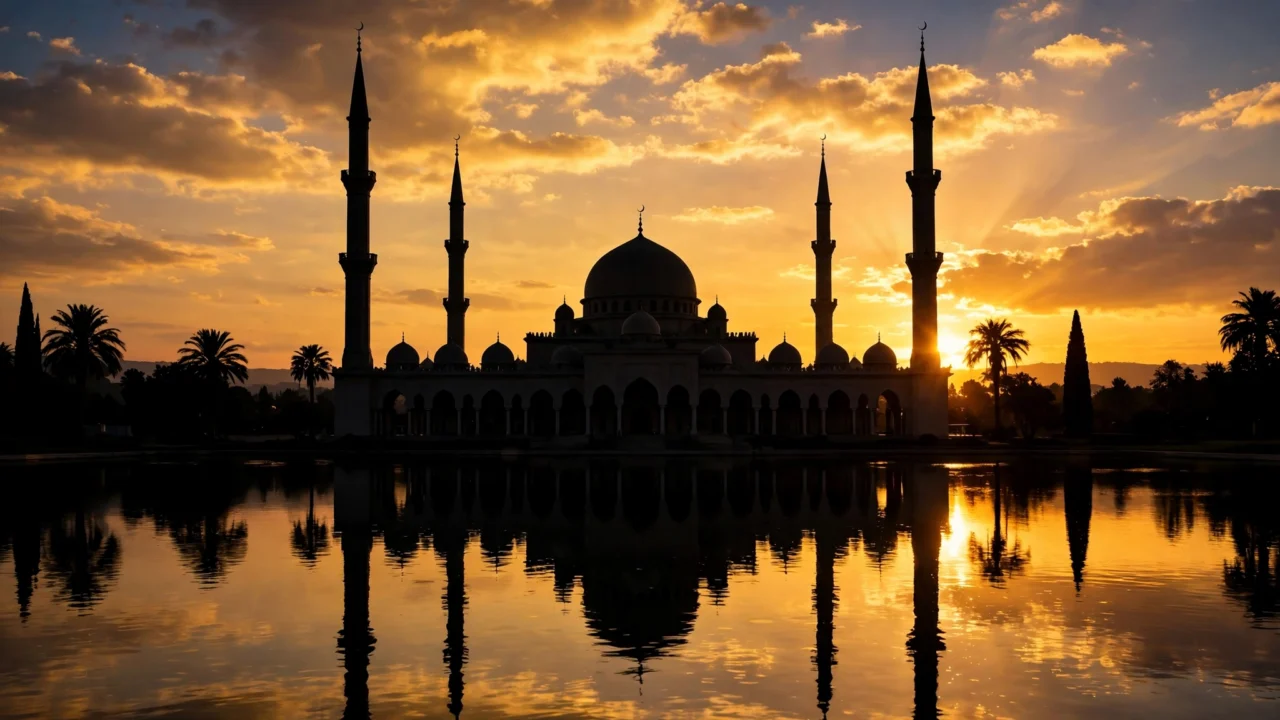
Ask a Muslim what holds their faith together, and many will point to the same answer: the Five Pillars. These are not five rules added on top of Islam, nor are they a checklist to be ticked off and forgotten. They are the foundation itself, the practices that give Muslim life its shape, rhythm, and direction. A well-known teaching compares Islam to a building raised on five supports. Take the supports away, and the structure cannot stand. Keep them strong, and everything else in a Muslim’s spiritual life has something solid to rest on.
That image is useful because it explains why the pillars matter so much, and why they are so often the first thing people want to understand when they learn about Islam. The pillars cover belief, worship, generosity, self-discipline, and pilgrimage. Together, they touch every part of life: what a person believes in their heart, how they spend their day, how they treat their wealth, how they master their appetites, and how they connect with a global community of fellow believers. This guide explains each pillar in turn, in respectful and plain language, so that readers of any background can understand what Muslims believe and practise, and why these five acts carry such weight.
In this article
- What the Five Pillars are
- Shahada: the declaration of faith
- Salah: prayer
- Zakat: charitable giving
- Sawm: fasting
- Hajj: pilgrimage
- How the pillars fit together
- Common misunderstandings
- Frequently asked questions
What the Five Pillars Are
Key: Five Pillars — the five foundational acts of worship in Islam: Shahada, Salah, Zakat, Sawm, and Hajj.
The Five Pillars are the core acts of worship that every Muslim is expected to observe. They are drawn from the teachings of the Qur’an, the holy book of Islam, and from the practice and sayings of the Prophet Muhammad, peace be upon him. Muslims regard the Prophet as the final messenger of God, and his example, known as the Sunnah, shows how the pillars are to be lived out in practice.
It is important to understand that the pillars are acts of worship, not merely cultural customs. A Muslim may also observe many other practices, from daily kindness and honesty to extra prayers and voluntary charity, but the pillars are the non-negotiable foundation. They are also universal. A Muslim in Indonesia, Nigeria, Turkey, Britain, or Pakistan observes the same five pillars, even if local customs, languages, and foods differ. That shared foundation is one reason Muslims often speak of a worldwide community, the ummah, bound together by common belief and practice.
The pillars also follow a logical order, from the inward to the outward. Shahada begins with belief itself. Salah turns that belief into daily action. Zakat extends worship into how a person handles wealth and cares for others. Sawm trains self-control and empathy. Hajj gathers believers together in a single act of pilgrimage that embodies equality and devotion. Understanding that progression makes each pillar easier to grasp, because each one builds on the one before it.
One more point matters for any respectful discussion of the pillars. Muslims do not regard them as burdens imposed from outside. They are understood as a gift and a discipline: a way to stay close to God, to keep faith alive amid the distractions of daily life, and to live with purpose. Many Muslims describe the pillars as anchors. On a busy or difficult day, the rhythm of prayer, the discipline of fasting, or the habit of giving can bring a person back to what matters most.
Shahada: The Declaration of Faith
Key: Shahada — the Muslim declaration of faith: there is no god but God, and Muhammad is the Messenger of God.
The first pillar is Shahada, the declaration of faith. In Arabic it is: “Ashhadu an la ilaha illallah, wa ashhadu anna Muhammadan rasulullah.” In English, it means: “I bear witness that there is no god but God, and I bear witness that Muhammad is the Messenger of God.” The word Allah is the Arabic name for God, the same God whom Jews and Christians worship, understood in Islam as one, without partners, and without equal.
Shahada is the doorway into Islam. A person becomes a Muslim by sincerely declaring it, understanding what it means, and intending to live by it. It is spoken by new Muslims, repeated in daily prayers, whispered into the ear of a newborn in many families, and often among the last words a Muslim hopes to utter at the end of life. Its simplicity is part of its power. It does not require wealth, learning, or status. It requires sincere belief.
The declaration has two parts, and both matter. The first part affirms monotheism, the belief in one God alone, worthy of worship. The second part affirms that Muhammad is God’s messenger, the one through whom God’s final revelation was delivered. Together, they define the heart of Muslim belief: God alone is to be worshipped, and the Prophet’s guidance shows how that worship is to be lived. Everything else in Islam flows from these two affirmations.
Shahada is also a daily reminder. Muslims repeat its meaning in prayer, and its words appear in the call to prayer heard from mosques around the world. For a Muslim, saying it is not a one-time event but a living commitment, renewed every day through belief, worship, and conduct. That is why it stands first among the pillars. It is the foundation on which the other four are built.
Salah: Prayer
Key: Salah — the five daily ritual prayers performed by Muslims at set times of day.
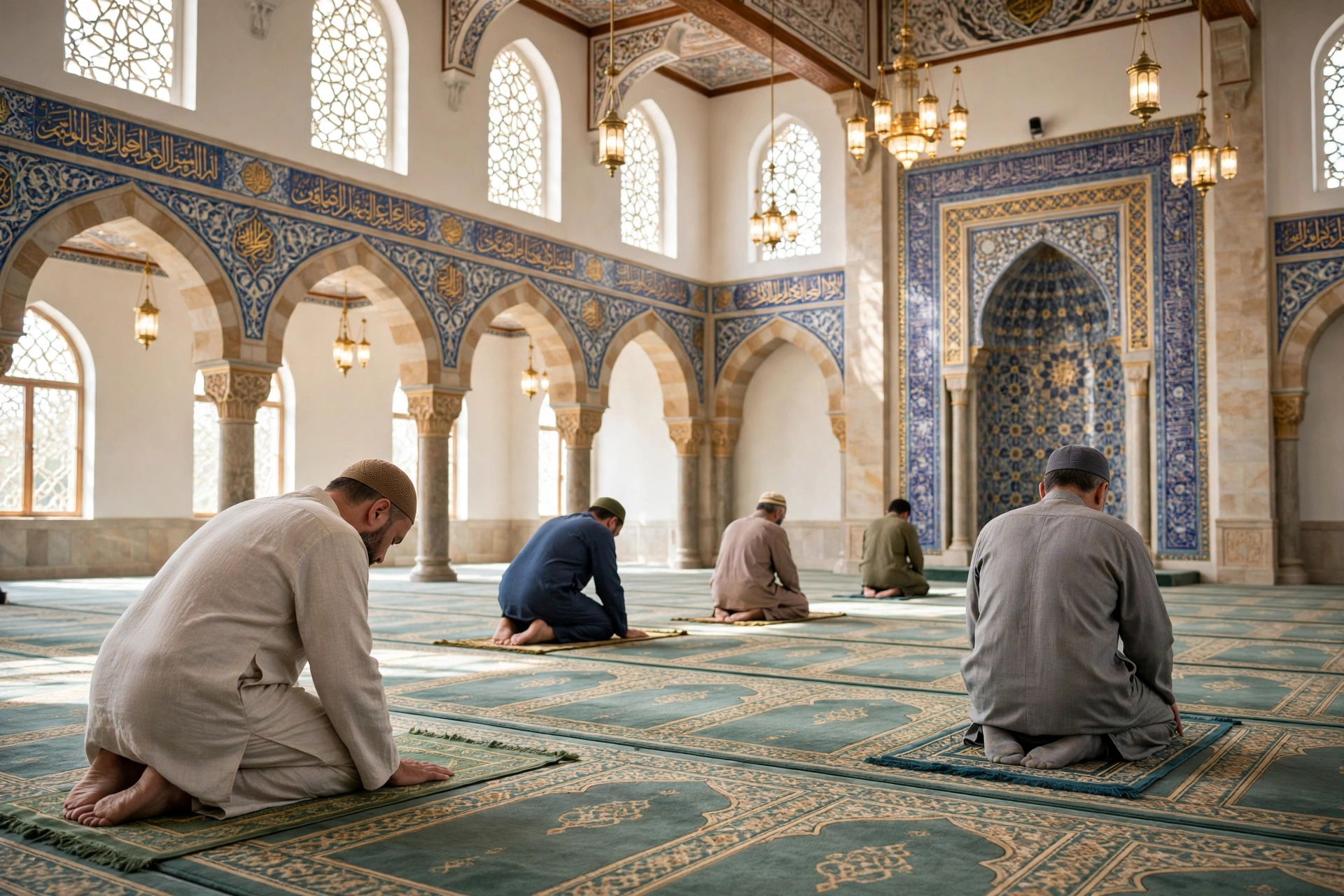
The second pillar is Salah, the ritual prayer performed five times each day: before dawn, at midday, in the afternoon, just after sunset, and at night. Each prayer follows a set pattern of standing, bowing, and prostrating, with recitations from the Qur’an, including its opening chapter, Al-Fatiha. Before praying, Muslims perform wudu, a ritual washing of the hands, face, arms, and feet, which prepares both body and mind for worship.
The five daily prayers give Muslim life a distinctive rhythm. Whatever else is happening, work, study, travel, or family life, the day is punctuated by moments of pause and worship. Many Muslims find that this rhythm keeps faith present rather than letting it fade into the background. Prayer is also communal. While Muslims may pray alone, praying together in a mosque, especially the Friday midday prayer, is highly valued, and congregational prayer is a central part of Muslim community life.
Prayer in Islam is direct. Muslims pray to God without any intermediary, and they face the Kaaba in Makkah during prayer, a direction known as the qibla. That shared direction is a powerful symbol of unity: millions of people around the world, in every time zone, turning toward the same point in worship. It is a daily, physical reminder that a Muslim belongs to a global community of faith.
For those unfamiliar with Salah, it is worth noting that it is both structured and personal. The set movements and recitations give it consistency, so that a Muslim travelling anywhere in the world can join a congregation and pray in the same way. At the same time, Muslims may also make personal supplications, known as dua, in their own words, asking God for help, guidance, or forgiveness. Structure and spontaneity sit side by side, and both are valued.
Zakat: Charitable Giving
Key: Zakat — obligatory almsgiving, usually calculated as a proportion of qualifying wealth held for a full lunar year, given to those in need.
The third pillar is Zakat, obligatory charitable giving. Muslims who meet a minimum wealth threshold, known as nisab, and who have held that wealth for a full lunar year, give a set proportion of it, commonly described as two and a half percent of qualifying wealth, to those in need. The recipients include the poor, the needy, those in debt, and others specified in Islamic teaching. Zakat is not a voluntary donation or a tax paid to a government. It is an act of worship, and it is regarded as a right of the poor over the wealth of those who have more.
The word zakat itself carries a beautiful meaning. It is related to purification and growth. Giving zakat is understood to purify a person’s wealth and heart, removing greed and attachment, and to allow wealth to grow in blessing even as it decreases in amount. That perspective changes how giving is understood. It is not a loss to be regretted, but a duty to be fulfilled with sincerity and humility.
In practice, zakat is calculated on savings, cash, investments, and trade goods, with detailed rules that scholars explain for different kinds of wealth. Many Muslims pay it during Ramadan, when the spiritual reward of good deeds is believed to be greater, although it is due whenever a person’s zakat year completes. Mosques and charities often help with collection and distribution, ensuring that funds reach people who qualify.
Zakat is distinct from sadaqah, voluntary charity, which Muslims are also encouraged to give at any time and in any amount. Sadaqah can be money, food, time, or even a kind word. Zakat, by contrast, is fixed and obligatory. Together, the two create a culture of generosity that is both structured and spontaneous. A Muslim community that takes zakat seriously is one in which caring for the vulnerable is built into the economic life of the community, not left to chance.
This pillar also speaks to a wider social vision. Islam teaches that wealth is a trust from God, not an absolute possession. A person may earn, save, and enjoy wealth, but part of it belongs, by right, to those who have less. Zakat puts that teaching into practice every year, in a concrete and measurable way. Readers interested in everyday learning guides will find similar plain-language explainers at HomeWaterInsights, while 9bio covers a wide range of general knowledge topics.
Sawm: Fasting
Key: Sawm — fasting, most notably during the month of Ramadan, from dawn until sunset.
The fourth pillar is Sawm, fasting. Its most famous form is the fast of Ramadan, the ninth month of the Islamic lunar calendar, during which Muslims fast from dawn until sunset. Fasting means abstaining from food, drink, and marital relations during daylight hours, and it is observed by adult Muslims who are physically able to do so. Children, travellers, pregnant and nursing women, people who are ill, and others with valid reasons are exempt or may make up fasts later, according to Islamic teaching.
Ramadan is much more than a month without lunch. It is a month of heightened worship, reflection, and community. Muslims gather for special night prayers, read the Qur’an, share meals at sunset, known as iftar, and rise before dawn for a pre-fast meal, known as suhoor. The fast itself is a spiritual discipline. By abstaining from things that are normally lawful, a Muslim practises self-control, gratitude, and awareness of God. Hunger becomes a teacher, reminding a person of dependence on God and of empathy for those who go hungry not by choice but by poverty.
The effects of fasting are often described by Muslims as transformative. A person who can control appetite for a month may find it easier to control anger, speech, and habits for the rest of the year. Ramadan is therefore seen as a training ground, a time to reset priorities and strengthen character. It ends with Eid al-Fitr, the Festival of Breaking the Fast, a celebration marked by communal prayer, festive meals, new clothes, and giving to the poor, so that everyone can share in the joy of the day.
Fasting is also observed at other times of the year on a voluntary basis, but Ramadan is the obligatory fast and the one that shapes the Muslim calendar most visibly. Because the Islamic calendar is lunar, Ramadan moves about ten or eleven days earlier each year in the solar calendar, so over a lifetime a Muslim will fast in every season, from long summer days to short winter ones. That movement is part of the pillar’s character: it is not tied to convenience, but to obedience and trust.
Hajj: Pilgrimage
Key: Hajj — the pilgrimage to Makkah, required once in a lifetime for Muslims who are physically and financially able.
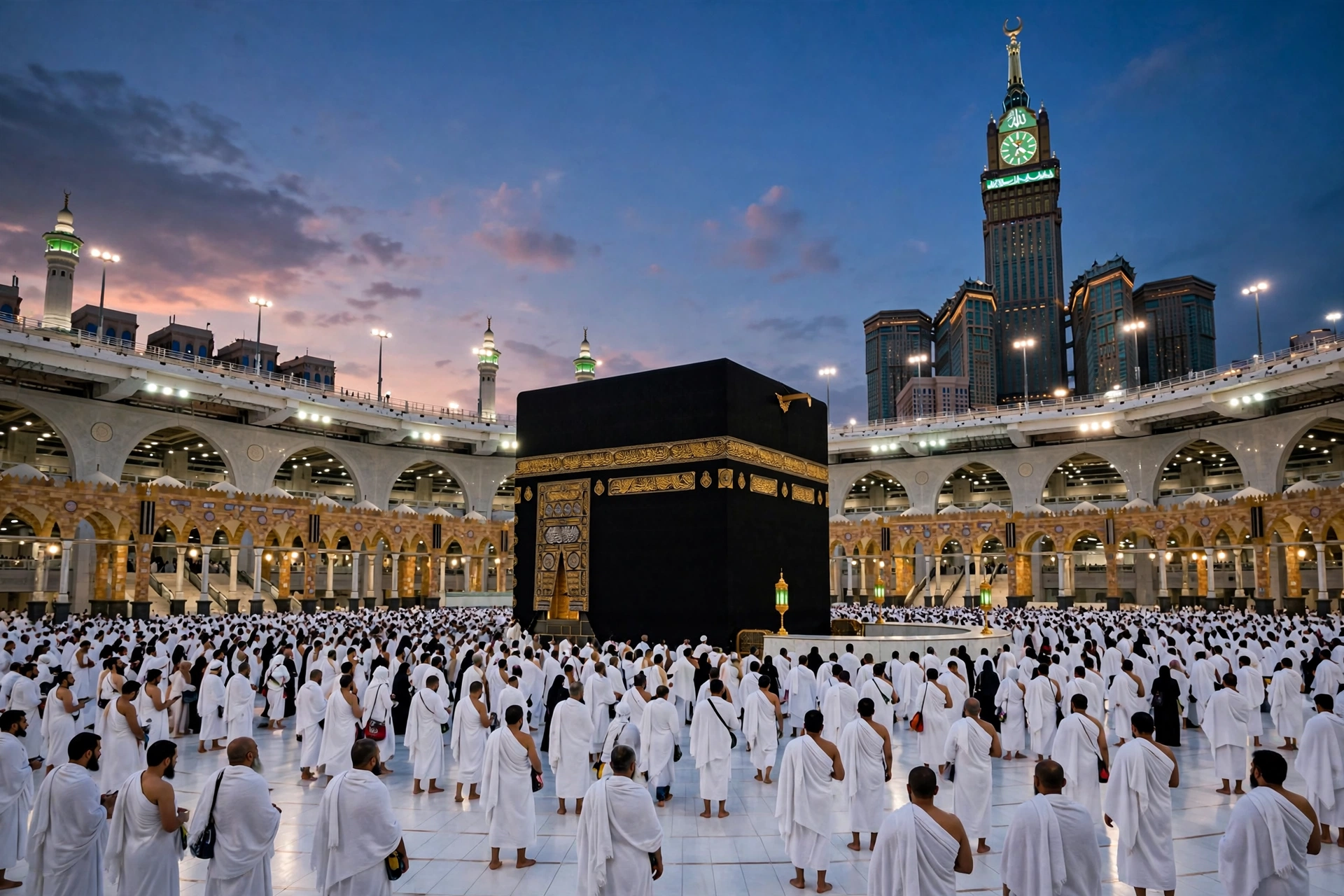
The fifth pillar is Hajj, the pilgrimage to Makkah in Saudi Arabia. Every Muslim who is physically and financially able is required to perform Hajj once in a lifetime. It takes place during specific days of the Islamic month of Dhul-Hijjah, and it follows a series of rites that trace the story of the Prophet Abraham and his family, as well as the life of the Prophet Muhammad. Pilgrims wear simple white garments, known as ihram, which erase distinctions of wealth, nationality, and status. Kings and labourers stand side by side, dressed alike, before God.
The rites of Hajj include circling the Kaaba, the cube-shaped building at the heart of Makkah’s Grand Mosque, walking between the hills of Safa and Marwa, standing in prayer on the plain of Arafat, and other acts spread over several days. Each rite carries deep meaning, commemorating obedience, trust, sacrifice, and devotion. The standing at Arafat is often described as the climax of Hajj, a day of prayer and repentance that pilgrims remember for the rest of their lives.
Hajj ends with Eid al-Adha, the Festival of Sacrifice, which commemorates Abraham’s willingness to obey God. Muslims around the world who are not on pilgrimage also celebrate this festival, with prayers, festive meals, and the sharing of meat with family, neighbours, and the poor. The connection between pilgrimage and festival means that Hajj is not only an experience for those who travel. Its spirit touches Muslim communities everywhere.
For many pilgrims, Hajj is a life-changing journey. It brings together people from every continent, speaking every language, united by the same rites and the same faith. It is also physically demanding, involving long walks, crowds, and heat, which is why the requirement applies only to those who are able. Muslims who cannot perform Hajj may still support others, save for a future journey, or perform the lesser pilgrimage, Umrah, which can be undertaken at any time of year and shares some of Hajj’s rites.
How the Pillars Fit Together
| Pillar | What it involves | When it happens |
|---|---|---|
| Shahada | Declaration of faith | At entry to Islam; renewed daily |
| Salah | Five ritual prayers | Daily, at set times |
| Zakat | Obligatory giving | Yearly, on qualifying wealth |
| Sawm | Fasting | Ramadan, dawn to sunset |
| Hajj | Pilgrimage to Makkah | Once in a lifetime, if able |
Seen together, the pillars cover the whole of a Muslim’s life. Shahada shapes belief. Salah shapes the day. Zakat shapes wealth. Sawm shapes character. Hajj shapes community and ultimate purpose. None of them stands alone. A person who declares faith but never prays has a belief without practice. A person who prays but never gives has worship without social responsibility. A person who gives but never fasts may miss the inner discipline that fasting teaches. The pillars balance one another, and together they form a complete way of life.
That balance is also why the pillars are a helpful starting point for anyone learning about Islam. They are not the whole of Islam. Islamic teaching also covers ethics, family life, law, spirituality, and much more. But if you understand the pillars, you understand the foundation, and from there, everything else becomes easier to place. They are the first chapter of a much longer story, and a chapter worth reading carefully.
Common Misunderstandings
One common misunderstanding is that the pillars are only about ritual. In fact, each pillar has a social and moral dimension. Prayer is meant to restrain wrongdoing. Zakat is meant to reduce poverty. Fasting is meant to build empathy. Hajj is meant to teach equality. Ritual and morality are not separate in Islam. They reinforce each other, and a pillar observed without its moral spirit is considered incomplete.
Another misunderstanding is that Islam is only for Arabs, or only for people from certain countries. In reality, the majority of Muslims live outside the Arab world, in countries such as Indonesia, Pakistan, India, and Bangladesh, as well as in Europe, Africa, and the Americas. The pillars are the same everywhere, but the cultures that carry them are wonderfully diverse. A mosque in London, a mosque in Jakarta, and a mosque in Dakar may look different, but the prayers inside them follow the same pattern.
A third misunderstanding is that the pillars are harsh or joyless. Muslims themselves often describe them very differently: prayer as peace, fasting as clarity, giving as joy, pilgrimage as a homecoming. Discipline and joy are not opposites here. The discipline of the pillars is what makes the joy possible, because it gives faith a shape that survives busy days, hard times, and changing moods.
Frequently Asked Questions
What are the 5 pillars of Muslim faith?
The Five Pillars are Shahada (declaration of faith), Salah (prayer), Zakat (charitable giving), Sawm (fasting), and Hajj (pilgrimage). Together they form the foundation of Muslim belief and practice.
Do all Muslims follow the Five Pillars?
The pillars are the core obligations of Islam, and observant Muslims strive to follow all five. Individual practice varies, and some pillars, like Hajj, apply only to those who are able, while others, like fasting, include exemptions for illness and other valid reasons.
Why are there five pillars and not more?
The five pillars are drawn from Islamic scripture and the Prophet’s teachings, which present them as the foundation of the faith. Other practices are also important, but these five are the essential supports on which Muslim life is built.
What is the difference between Zakat and Sadaqah?
Zakat is obligatory giving, calculated on qualifying wealth, while sadaqah is voluntary charity given at any time and in any amount. Both are valued, but zakat is a fixed duty and sadaqah is a free act of generosity.
Must every Muslim perform Hajj?
Hajj is required once in a lifetime, but only for Muslims who are physically and financially able to undertake it. Those who cannot are not held accountable for what is beyond their ability.
Can non-Muslims learn from the Five Pillars?
Many people, whatever their beliefs, find the pillars thought-provoking: a daily pause for reflection, regular generosity, disciplined self-control, and a sense of global community are values that resonate far beyond one faith.
Reead Also: F75 Vaillant Boiler Error Code Explained (2026 Guide)

Related Articles

Location Isle of Man: Where Is It and Why Visit It
The Isle of Man sits in the middle of the Irish Sea, between Great Britain and…

Conferences 2024: Education Events Guide and Lessons
Conferences in 2024 gave educators a busy year of in-person and hybrid events. This guide looks…
Felony Explained: What It Means, Types, and Consequences
A plain-English explainer on what a felony is: the definition, felony vs. misdemeanor, common types and…
1 Comment