tozymagazine.com USA Guide for American Readers (2026)
Searching for tozymagazine.com usa raises a fair question: is there a separate American edition? This guide explains what the site actually is, what US readers can expect, and how to read it with a critical eye.

If you searched for tozymagazine.com usa, you were probably trying to answer a simple question: what is this site, and is there an American version of it? The short answer is that Tozy Magazine is a general-interest online publication, and the phrase tozymagazine.com usa describes a search, not a separate website. There is no clearly identified USA edition, no separate American domain, and no US-only section in the site’s public navigation. American readers can still visit and read the main site, and some of its articles touch on American topics, but the site itself is international in scope rather than an American publication.
That distinction matters, because it changes how you should read the site. A national news outlet can be judged on its reporting standards, its named editors, and its corrections policy. A young, general-interest content site should be judged differently: on whether individual articles are accurate, useful, and honest about what they are. This guide explains what Tozy Magazine presents itself as, how its content has changed over time, what American readers are likely to find there, and the checks worth running before you trust, share, or act on anything you read on it.
In this article
- What Tozy Magazine is
- Is there a separate tozymagazine.com usa edition?
- What the site publishes now
- How the site has changed since it launched
- What American readers will and will not find
- How to judge an unfamiliar content site
- Pros and cons for US readers
- Frequently asked questions
What Tozy Magazine Is
Key: Tozy Magazine — a general-interest online publication at tozymagazine.com that began with messages and quotes for special occasions and later broadened into lifestyle, technology, business, and other informational topics.
The site’s own tagline, “Crafting Sentiments for Every Occasion,” still points to its original idea: helping people find the right words for birthdays, anniversaries, weddings, and thank-you notes. Its early categories reflected that purpose, with sections for birthday, marriage, anniversary, and thank-you messages. That is a recognizable kind of website. Millions of people search for a good way to phrase a birthday wish or an anniversary message, and a site that collects those wordings serves a real, modest need.
Over time, though, the site’s front page broadened well beyond messages and quotes. Recent articles have covered subjects as varied as technology, business, finance, health, home improvement, travel, and consumer topics. That shift is common among small content sites. A narrow topic eventually runs out of easy articles, and broadening the range is a way to keep publishing. The trade-off is that breadth often comes at the expense of depth. A site that writes about everything rarely has specialist knowledge of anything, and readers should keep that in mind when an article touches a subject where accuracy matters, such as money, health, or legal questions.
It is also worth being honest about what cannot be verified. The site’s ownership, editorial team, and location are not clearly disclosed in its public pages, and its domain registration details are hidden behind a privacy service. That is not unusual for a small website, and on its own it proves nothing bad. But it does mean you cannot check the site’s credentials the way you could with an established newspaper, and you should weigh its claims accordingly.
Is There a Separate tozymagazine.com usa Edition?
No, not as far as its public pages show. The primary website remains tozymagazine.com, and searches for a USA edition appear to reflect how people look for the site rather than a real regional version.
Several things can create that impression. Search engines localise results, so an American searching for the site may see it framed in American terms. The site’s language is set to US English, which is a common default for WordPress sites and says little about where the publisher sits. And the site does publish some articles on American subjects, such as retirement topics for US workers and a piece about motorcycle accident claims in Washington, DC, which can make it look like a US-focused outlet to someone who lands on one of those pages first.
Key: tozymagazine.com usa — a search phrase used by people looking for Tozy Magazine from a United States perspective, not the name of a separate American edition or domain.
None of that adds up to a USA edition. A genuine regional edition would normally have its own section, its own branding, or a subdomain, and a clear statement that it serves a particular country. Tozy Magazine’s public navigation shows no such thing. So if you arrived here wondering whether you need a different address to read the American version, you do not. The main site is the site, and American readers use the same pages as everyone else.
That also means you should be careful with copycat or lookalike sites. When a search phrase becomes popular, other sites sometimes build pages around it, and some of those pages describe themselves as the official USA version without any real connection to the original. If a page claims to be the official Tozy Magazine USA site but lives on a different domain, treat that claim as unverified. The main domain is the one the site itself presents.

What the Site Publishes Now
Today’s Tozy Magazine is best described as a mixed bag. Its original message and quote collections are still part of its identity, and its newer informational articles sit alongside them. A reader browsing the homepage may move from a piece about home décor to one about investment management, then to something about gaming utilities or coffee blends. That variety is the point of a general-interest site, but it also means quality varies from article to article. Some pieces are straightforward and harmless, such as a collection of birthday wishes. Others deal with subjects where a wrong detail could cost a reader money or mislead a decision, and those deserve more scepticism.
One pattern worth noticing is authorship. Much of the site’s recent output appears under a single byline, which suggests a small operation rather than a staffed newsroom. Again, that is not a verdict on any individual article. A single writer can produce good work. But it does mean there is no visible layer of specialist editors checking technical subjects, and readers should not assume an article passed through the kind of review a specialist publication would give it.
The site’s About page adds to this picture. It has not kept pace with the site’s changing content, so it still describes the original messages-and-occasions idea more than the broad publication the site has become. An outdated About page is a small thing, but it is a useful signal. Sites that take accuracy seriously usually keep their own description current, because it is the first thing a new reader checks.
How the Site Has Changed Since It Launched
The site is young. Its domain was registered in late December 2024, which makes it roughly a year old at the time of writing, and its first year was mostly devoted to wishes, quotes, and messages. The broadening into technology, business, finance, and other topics came later, and by late 2026 its newest posts ranged widely across those areas.
That timeline explains a lot about what a reader encounters. A site that young has not had time to build a reputation, a corrections record, or a body of work a reader can compare against. It may improve, and many small sites do. But right now, its track record is short, and a short track record calls for a lighter touch: enjoy the harmless content, verify anything important, and do not treat the site as an authority on technical or financial subjects.
It is also worth noting that the site’s current homepage mixes genuinely different kinds of content without clearly labelling them. A birthday message collection, an opinion-style lifestyle piece, and an informational article about a product or service can sit side by side. Readers used to newspapers, where news, opinion, and advertising are labelled, may find that blurring confusing. The practical response is to judge each article on its own: what does it actually claim, does it show its working, and would you act on it without checking elsewhere?
What American Readers Will and Will Not Find
American readers will find a site they can open and read without any regional barrier, and they will find some articles written with American subjects in mind. What they will not find is a publication built around American news, American reporting, or American editorial standards as its organising principle. The site does not present itself as a US news outlet, and treating it as one would set up the wrong expectations.
For everyday browsing, that distinction barely matters. Birthday wishes, home ideas, and general lifestyle reading travel well across borders. For anything with real-world consequences, it matters a great deal. An article about pensions or retirement for US workers, for example, touches a system with specific American rules, and a general-interest site is not the safest place to take such rules from. The same applies to legal topics, such as accident claims in a particular city, and to financial topics, such as investment management. In those cases, use Tozy Magazine, if you use it at all, as a starting point for questions, and confirm the details with an authoritative source for that subject.
Another practical point is language and spelling. The site uses US English, so American readers will not trip over unfamiliar spelling. But some articles show signs of being written for a global audience rather than an American one, and cultural references may not always land the way a US publication’s would. That is a minor point, but it helps explain why the site can feel slightly off to an American reader even when nothing is factually wrong.

How to Use the Site Well as a US Reader
Use it for what it is good at. If you need wording for a card, a toast, or a message, browse the collections and pick phrasing that sounds like you. If an informational article catches your eye, read it for general orientation and then verify any claim that matters before acting on it. If an article makes a strong claim about money, health, or law, treat that claim as unverified until a second, authoritative source confirms it.
And if a page asks you to buy something, download something, or hand over personal details, pause and check whether the site actually sells or provides that thing directly. As a content site, it generally does not sell products itself, so a page pushing a purchase deserves extra scrutiny.
How to Judge an Unfamiliar Content Site
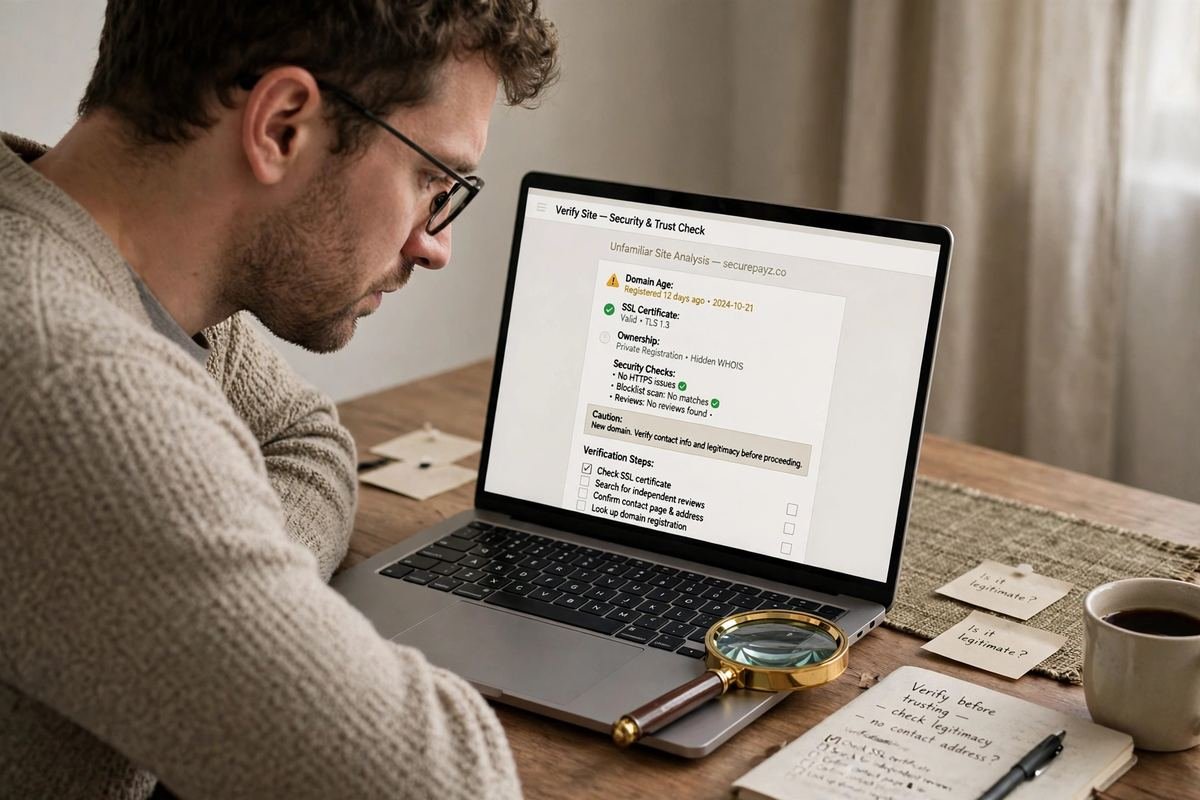
The checks below work for Tozy Magazine and for any small site you have not encountered before. They take a few minutes and they prevent most disappointments.
First, look at the About page and the author information. A site that names its people, explains its purpose, and keeps that description current is showing its working. A site with a stale About page and a single unexplained byline is not necessarily dishonest, but it is asking you to trust it on less evidence.
Second, check whether the article shows its sources or reasoning. A trustworthy informational article explains where its key facts come from or walks through its logic in a way you can follow. An article that states technical claims without any support is asking for blind trust, and blind trust is the wrong response to an unfamiliar site.
Third, look for signs of freshness. Dates, references to current rules or products, and corrections all signal that someone maintains the content. Undated articles on fast-changing subjects, or articles that still describe an old version of a product or rule, suggest the content was published and left alone.
Fourth, be careful with advertising and affiliate-style content. Small content sites often earn money through advertisements or links that pay a commission when readers buy something. That is a legitimate business model, but it means some articles may be written to encourage a purchase rather than to give neutral advice. If an article recommends a specific product or service enthusiastically without discussing alternatives or downsides, read it as marketing-influenced content, not as an independent review.
Fifth, protect your own information. A content site should not need your personal details for you to read an article. Be wary of pop-ups or forms that ask for an email address, phone number, or payment details in exchange for content that should be freely readable, and never enter sensitive information on a site you have only just discovered.
Pros and Cons for US Readers
| Pros | Cons |
|---|---|
| Free to read, no regional barrier for US visitors | No separate USA edition, despite the search phrase suggesting one |
| Useful message and quote collections for occasions | Young site with a short track record and no established reputation |
| Broad range of general-interest topics to browse | Quality varies widely across topics, with no visible specialist editing |
| US English throughout, easy to read for Americans | Ownership and editorial team not clearly disclosed |
| Harmless light content for everyday browsing | Outdated About page that no longer describes the current site |
| Some articles address American subjects | Technical, financial, and legal articles should be verified elsewhere |
Frequently Asked Questions
What is tozymagazine.com usa?
It is a search phrase people use when looking for Tozy Magazine from a United States perspective. It is not a separate website or a dedicated American edition. The main site is tozymagazine.com, and American readers use the same pages as readers elsewhere.
Is Tozy Magazine a US-based website?
There is no strong public evidence confirming that it is a US-based operation. Its language is set to US English and its pages are reachable from the United States, but neither fact establishes where the publisher is based, and its registration details are hidden behind a privacy service. It is best understood as an international general-interest site with some American-relevant content.
Is tozymagazine.com safe to browse?
Browsing the site as a reader appears low-risk in the ordinary sense: it is a content site that does not sell products directly. That is not the same as trusting everything it publishes. Treat informational claims, especially on money, health, and legal subjects, as unverified until confirmed elsewhere, and do not hand over personal or payment details to an unfamiliar site.
What kind of content does Tozy Magazine publish?
It began with birthday wishes, quotes, anniversary messages, and thank-you notes, and it has since broadened into lifestyle, technology, business, finance, health, home improvement, travel, and consumer topics. The original occasion-based content remains part of its identity, but its current output is much broader.
Why do people search for a USA version?
People often search with a country name when they want content relevant to their own country, or when they want to confirm whether a site has a local edition. Search engines also localise results, which can make an international site look like a local one. In this case, the searches reflect that habit rather than a real regional edition.
Should I trust financial or legal advice from Tozy Magazine?
No, not on its own. Use it as a starting point for questions if you wish, but confirm financial, legal, and health information with authoritative sources for that subject, such as official guidance, a qualified professional, or an established specialist publication. A general-interest site without visible specialist editing is not the right final authority for decisions with real consequences.
For American readers, the honest summary of tozymagazine.com usa is refreshingly simple. There is no separate American edition to find, and no secret US site hiding behind the search phrase. There is a young, general-interest publication that started with messages for special occasions, grew into a broad magazine-style site, and now offers a mix of light content and informational articles to anyone who visits. Enjoy the light content, browse the rest with curiosity, and keep your critical eye switched on for anything that matters. That approach lets you get whatever value the site offers without handing it trust it has not yet earned.
Read Also: www.gmail.com Login Help, Sign-In and Recovery Guide

Related Articles

Columbus Day 2026: Date, History, and What Is Open
Columbus Day 2026 is Monday, October 12. This guide explains the date, the history behind the…
763 Area Code Guide to Minnesota Cities and Dialing
Area code 763 covers the northwestern suburbs of Minneapolis, Minnesota, including cities like Brooklyn Park, Maple…

Turks- és Caicos-szigetek: Teljes Utazási Útmutató 2026
A Turks- és Caicos-szigetek a Karib-térség egyik legnyugodtabb és legszebb úti célja, türkiz tengerrel, fehér homokkal…
1 Comment