Fortmyerswa.com: What It Is and How to Use the Site
Fortmyerswa.com explained honestly: what this domain-style search term means, how to check the real site, and how to use it safely.
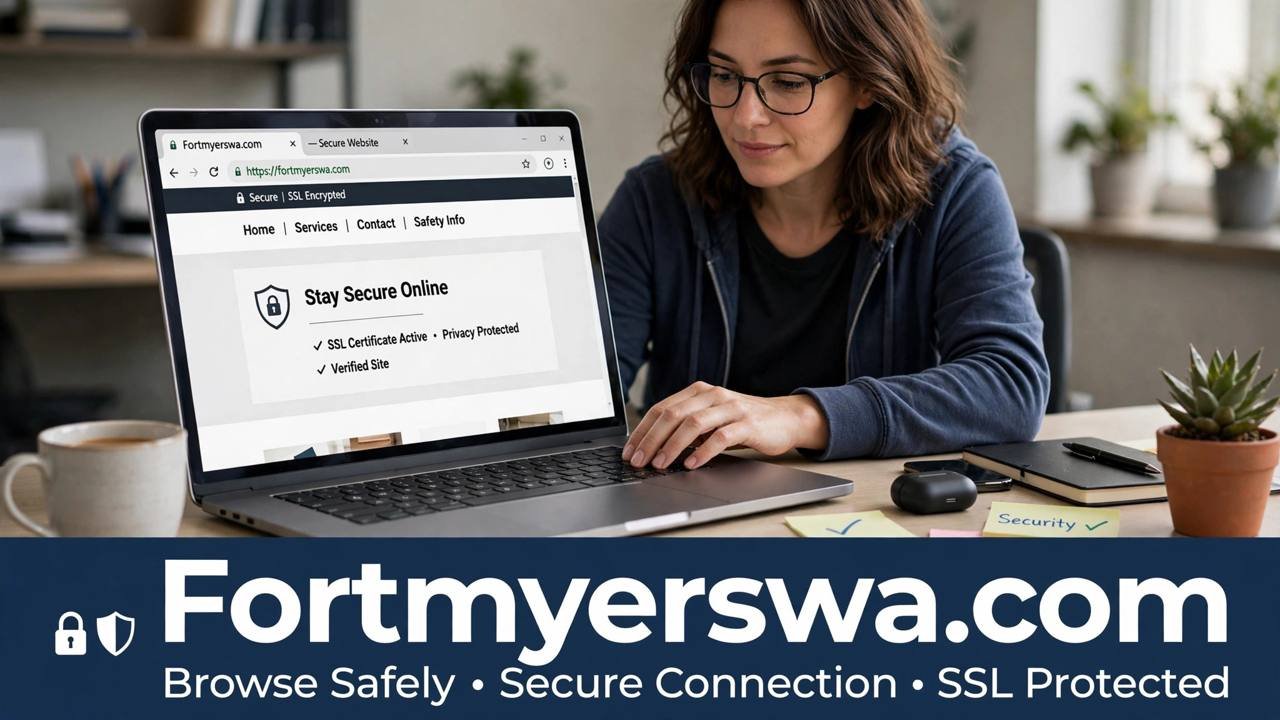
If you have typed fortmyerswa.com into a search engine or a browser address bar, you are probably trying to answer a simple question: what is this site, and is it the site you are actually looking for? That is a sensible question to ask before clicking further, signing up for anything, or trusting information you find there. Domain-style search terms like this one appear all the time, and they do not always lead where people expect. This guide explains, honestly and without guessing, what a term like fortmyerswa.com usually means, how to check what the site really is, and how to use it safely once you land on it.
Let us be clear from the start: this article does not claim to know the current owner, services, prices, or features of fortmyerswa.com, because websites change hands, change design, and sometimes go offline altogether. What looks like one kind of site today may have been something different a year ago, and may change again. Instead of inventing details that could be wrong by the time you read this, this guide gives you a reliable way to find out for yourself, in a few minutes, and to decide whether the site is useful, trustworthy, or simply not what you wanted.
What Does a Search Term Like Fortmyerswa.com Mean?
When someone searches for a term that looks like a web address, they are usually doing one of a few things. They may have seen the address somewhere — on a letter, a flyer, a business card, a social media post, or a message — and want to visit it directly. They may have heard the name spoken aloud and are trying to reconstruct the spelling. Or they may be checking whether a site they found is legitimate before they use it. In all of these cases, the search itself is a navigation attempt: the person already has a destination in mind and is trying to reach it.
The name itself offers a clue, but only a clue. “Fort Myers” is the name of a city in Florida, in the United States, and “WA” is a common abbreviation that can stand for several things, including the state of Washington. Put together, “fortmyerswa” could be read in more than one way, and that ambiguity is exactly why you should not assume too much from the name alone. A domain name does not guarantee that a site is official, local, or connected to the place or organisation its name suggests. Anyone can register many domain names, and similar-looking names are often owned by entirely different people.
Domain name: the human-readable address of a website, such as example.com, which points to a server where the site’s pages are stored.
Search intent: the reason behind a search — in this case, usually navigation (reaching a specific site) or verification (checking whether a site is real and safe).
How to Visit the Site and See What It Actually Is
The most reliable way to find out what fortmyerswa.com is right now is to visit it directly and look carefully. Type the address into your browser yourself, rather than clicking a link in an unexpected email or message, and watch what loads. A genuine, maintained site usually has a clear homepage that explains, in plain language, what it offers and who it is for. Look for an “About” page, a contact page, and some indication of who runs the site — a company name, an organisation, or at least a contact form or email address that matches the domain.
Pay attention to the details that signal a real, cared-for website. Does the homepage load properly, with working menus and readable text, or is it full of broken images, placeholder text, or aggressive pop-ups? Does the site explain its purpose in its own words, or does it rely on vague promises and stock phrases? Is there a privacy policy, terms of use, or other basic pages that a serious site normally provides? None of these signs alone proves that a site is trustworthy, but together they give a useful first impression.
Also check the address bar itself. A secure site address begins with “https” and usually shows a padlock icon in the browser. That padlock means the connection between your browser and the site is encrypted, so information you send is harder for others to intercept. It does not, however, prove that the site itself is honest or that its owners are who they claim to be. A scam site can also use https. Think of the padlock as a locked door on a shop: it tells you the door is secure, not that the shop is reputable.
How to Use Fortmyerswa.com Safely
Once you are on the site, use it the way you would approach any unfamiliar website: slowly, and without handing over personal information straight away. Start by reading, not by signing up. Browse the main pages, see what the site actually offers, and ask yourself whether it matches what you were looking for. If you arrived expecting a local service, a community organisation, or a specific business, and the site shows something completely different, trust that mismatch — you may have the wrong address, or the domain may now belong to someone else.
If the site asks you to create an account, enter payment details, or download software, pause and verify first. Ask yourself a few practical questions: does the site explain clearly what you get in return? Is there a real contact address or phone number? Can you find independent mentions of the site or organisation elsewhere — for example, in a local directory, on an official page, or in reviews from real users? If you cannot find anything outside the site itself, be cautious, especially before paying or sharing sensitive details.
- Read the homepage and About page before signing up for anything.
- Check for a contact page with an address, email, or phone number that matches the site.
- Look for a privacy policy that explains what happens to your data.
- Never reuse a password you use for email or banking on an unfamiliar site.
- If a download is offered, check what it is and whether you actually need it.
- Be wary of urgent messages, prizes, or demands for immediate payment.
These habits are not about being suspicious of every website. Most sites you visit are ordinary and harmless. They are about giving yourself a moment to check, so that the rare site that is misleading, outdated, or impersonating something else does not catch you off guard.
What If the Site Does Not Load?
Sometimes a domain-style search leads nowhere: the page does not load, the browser shows an error, or the site looks completely different from what you expected. There are several ordinary explanations. The site may be temporarily down for maintenance. The domain may have expired and not been renewed. The owner may have moved the content to a new address. Or you may have a slightly wrong spelling — one letter can send you to a different site, or to no site at all.
If the site does not load, try a few simple steps before assuming anything. Check your internet connection by loading a well-known site. Try the address again, carefully, checking each letter. Try both with and without “www” at the start. Try a search for the name together with other words you remember — for example, the name of a business, a city, or a service you associate with it. If you first saw the address in a letter or message, go back to that source and compare the spelling character by character.
If the site loads but shows a parked page — a page full of advertisements, a “domain for sale” notice, or a generic placeholder — that usually means the domain is registered but no real website is currently hosted there. In that case, the site is not currently offering a service, and there is nothing to sign up for. The best next step is to search for the organisation or service you were actually looking for by name, rather than by this address alone.
What If the Site Looks Different From What You Expected?
It is common for a domain to change purpose over time. A site that once belonged to a local business might later be bought by someone else and turned into something unrelated. A community project might close and leave its domain to expire, after which the name is registered again for a different purpose. That is why older links, printed materials, and memories of a site can be misleading: they describe what the site was, not necessarily what it is now.
When the site you find does not match your expectation, do not force it to fit. If you were looking for a specific service, search for that service by its full name and location, and compare the official address you find with the one you typed. If you were following a recommendation from a friend or a document, check back with that source. And if you are unsure whether you have found the right site, it is perfectly reasonable to stop and ask — a quick message to the organisation or person who gave you the address can save a lot of confusion.
Common Reasons People Search for Fortmyerswa.com
People search for domain-style terms for many different reasons, and it helps to recognise which one applies to you. You might be trying to visit a site you have used before and want to return to. You might be following up on something you received in the mail or by message. You might be checking a site before doing business with it. Or you might simply be curious about what the address leads to. Each reason calls for a slightly different approach, but all of them benefit from the same first step: look at the actual site, rather than assuming what it must be.
It is also worth noting that search engines sometimes show results for a domain name that are not the site itself: advertisements, directories, or pages that merely mention the name. If the top result does not look like the official site, scroll a little, check the addresses shown in the results, and prefer the result whose address exactly matches the domain you searched for. Be cautious with lookalike addresses that add extra words, hyphens, or different endings — those are often different sites entirely.
Protecting Your Privacy on Unfamiliar Sites
Privacy is a practical concern whenever you visit a site you do not know well. Before entering personal details, read the site’s privacy policy if one is provided, even briefly. It should explain what information is collected, why, and whether it is shared with others. If there is no privacy policy at all, or if the policy is vague about sharing data, that is a reason to share less, not more.
In general, share only what the site genuinely needs for the task at hand. A site that only needs to show you public information should not need your full address, date of birth, or phone number. If a form asks for more than seems necessary, consider whether you need to complete it at all, or whether you can contact the organisation another way. Using a unique password, and turning on two-factor authentication where it is offered, also reduces the risk if an account on an unfamiliar site is ever compromised.
Another simple habit is to keep your browser and device software up to date. Updates often fix security issues that could be exploited by malicious pages. You do not need to become a security expert to browse safely — up-to-date software, a moment of checking before sharing details, and a healthy scepticism toward urgent or too-good-to-be-true messages cover most everyday situations.
Safe Versus Risky: A Quick Comparison
| Sign | Usually reassuring | Worth a second look |
|---|---|---|
| Homepage | Clearly explains what the site is for | Vague promises, no clear purpose |
| Contact information | Real address, email, or contact form | No contact details at all |
| Connection | https with a padlock icon | Browser warnings or no https on a form page |
| Account or payment requests | Explained clearly, with terms and privacy policy | Urgent, unexplained, or asking for unusual details |
| Independent mentions | Found in directories or official pages elsewhere | Nothing outside the site itself |
No single row in this table proves a site is good or bad. It is the pattern that matters. A site that is clear about its purpose, easy to contact, and consistent with what you find elsewhere is generally a safer bet than one that is vague, unreachable, and impossible to verify. When in doubt, slow down, verify through another channel, and do not share anything you would regret sharing.
Alternatives If This Is Not the Site You Wanted
If fortmyerswa.com turns out not to be the site you were looking for, you still have good options. Search for the organisation, business, or service by its full name, together with its city or a distinctive detail you remember. Check official directories, local government pages, or the organisation’s social media profiles, which often link to the correct current website. If a friend or colleague recommended the site, ask them to share the link directly rather than relying on memory of the spelling.
Be careful, in this process, not to jump to the first similar-looking result. Typosquatting — registering a domain that is one letter different from a popular site — is a real practice, and those lookalike sites can be misleading. Always compare the address in the browser bar with the address you intended to visit, letter by letter, before entering any personal information. A few seconds of checking can prevent a frustrating mistake.
Frequently Asked Questions
Is fortmyerswa.com an official website?
That cannot be confirmed from the name alone. An official site usually identifies its organisation clearly, provides contact details, and is linked to from other official sources. Check the site’s About and contact pages, and look for independent mentions elsewhere, before treating it as official for any purpose.
What should I do if the site asks me to sign up or pay?
Pause and verify first. Read what you are signing up for, check the terms and privacy policy, and confirm the contact details. Use a unique password, never reuse a banking or email password, and avoid paying on a site you cannot verify through another source.
Why does the site not load?
Common reasons include temporary downtime, an expired domain, a move to a new address, or a spelling mistake. Check your connection, retype the address carefully, and search for the organisation or service by name to see whether it has moved.
What does the padlock icon in my browser mean?
It means your connection to the site is encrypted. It does not prove the site is honest, official, or safe to trust with personal information. Always combine the padlock check with a look at the site’s purpose, contact details, and reputation elsewhere.
What if the site shows only ads or a “domain for sale” page?
That usually means the domain is registered but no active website is hosted there right now. There is nothing to use or sign up for in that case. Search for the service or organisation you wanted by name instead.
How can I find the correct site if this is the wrong one?
Search by the full name of the business or organisation plus its location or a distinctive detail. Compare addresses carefully, prefer links from official directories or social profiles, and ask the person who recommended the site to share the exact link if you are still unsure.
The honest answer to “what is fortmyerswa.com?” is that only the live site itself, checked carefully, can tell you what it is today. Domain names change hands, sites close, move, and reinvent themselves, and a name that sounds local or official is not proof of anything on its own. The approach in this guide — visit directly, read before signing up, check the contact details and privacy policy, verify through another source when it matters, and slow down before sharing personal or payment information — works for this site and for any unfamiliar site you meet online. Use it, and you will rarely go wrong, whether fortmyerswa.com turns out to be exactly what you wanted, something different, or nothing at all right now.
Read Also: Como Organizar a Mesa de Trabalho: Guia Prático 2026

Related Articles
Rickystokes.com: What It Is and How to Use the Site
A plain, practical guide to rickystokes.com — what the site offers, how to use it, and…
Justonlineclub.com: What It Is and How to Use the Site
A plain, practical guide to justonlineclub.com — what the site offers, how to navigate it, and…

GamerAfter.com: What It Is and How Gamers Use It Daily
GamerAfter.com explained: what this gaming search term means, how gamers use such sites daily, and how…
1 Comment