127.0.0.1:14444 Localhost Port Explained (2026 Guide)
Seeing 127.0.0.1:14444 usually means a program on your own computer is running a local service. This guide explains localhost addresses, ports, and what to do when one does not work.
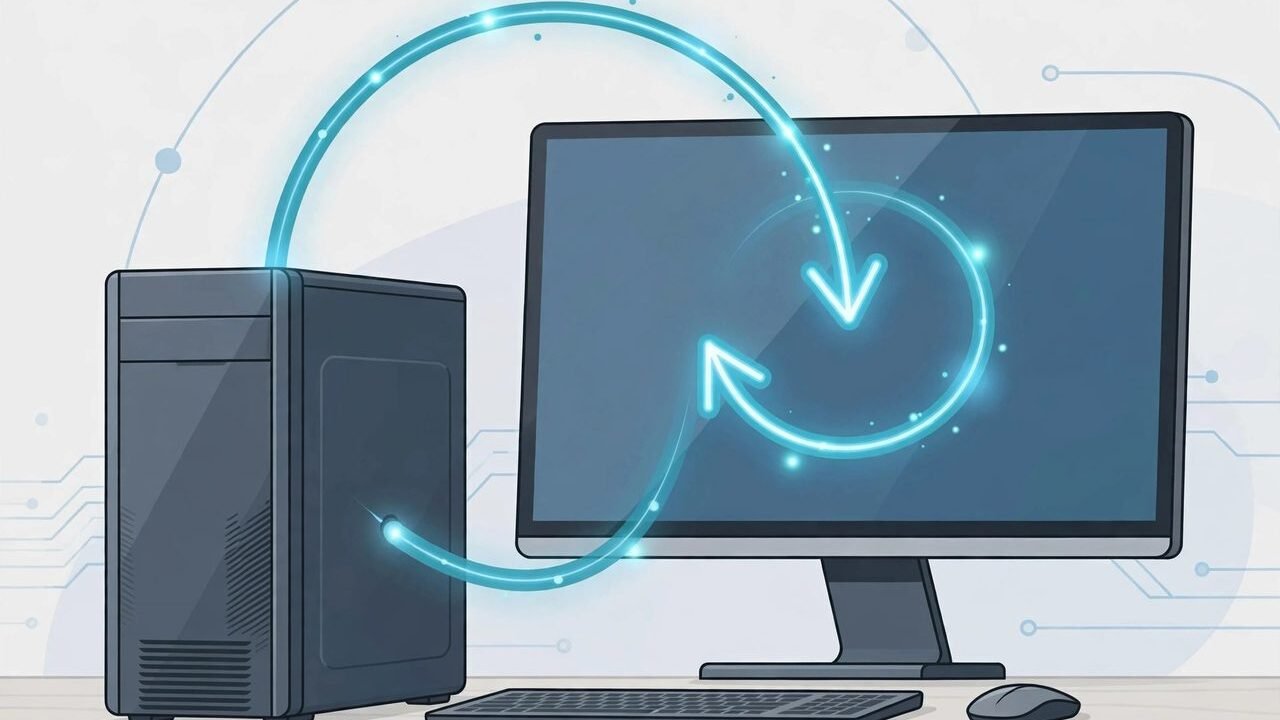
You type an address into your browser, or a program opens one for you, and instead of a familiar website you see a string of numbers: 127.0.0.1:14444. Nothing loads, or a plain-looking page appears, and there is no obvious explanation of what you are looking at. It looks like a website address, but it does not behave like one.
That string is a localhost address with a port number, and it points to your own computer rather than to a server somewhere on the internet. Understanding the two halves of the address — the numbers before the colon and the numbers after it — turns a confusing sight into something quite ordinary. This guide explains what http://127.0.0.14444 means, why it appears, and what to do when it does not work.
In this article
- What 127.0.0.1 means
- What the :14444 port number means
- Why you might see this address
- Is a localhost address safe?
- How to tell what is using a port
- Troubleshooting a localhost address that will not load
- Localhost versus a live website
- Frequently asked questions
What 127.0.0.1 Means
127.0.0.1 is the standard loopback address, better known as localhost. When a program connects to 127.0.0.1, it connects to the same computer it is running on. The connection never leaves the machine. It loops back internally, which is why it is called a loopback address.
Key: Address. 127.0.0.1.
Key: Common name. Localhost.
Key: What it points to. Your own computer.
Key: Network traffic. None leaves the machine.
Key: Works without internet. Yes, because the connection is entirely internal.
Every computer understands 127.0.0.1 the same way. It does not matter whether you are on a home network, an office network, or completely offline — 127.0.0.1 always means “this computer.” That consistency is what makes it so useful for development and testing. A programmer can run a website on their own machine, open it in a browser through localhost, and test it thoroughly before anyone else ever sees it.
The name “localhost” is simply a friendly label for the same address. Typing localhost into a browser usually takes you to the same place as typing 127.0.0.1, because the computer’s own name records map the word to the number. Some programs use one form and some use the other, but they refer to the same destination.
It is worth clearing up a common misunderstanding: 127.0.0.1 is not a public website, and it is not the same computer for everyone. When you visit 127.0.0.1 on your laptop, you reach your laptop. When someone else visits 127.0.0.1 on their machine, they reach their own machine. Nobody can visit your localhost from their computer over the internet, because the address always resolves locally. If a friend sends you a link to their localhost address, opening it on your computer will not show you their project — it will try to connect to a service on your computer instead, and most likely fail.
What the :14444 Port Number Means
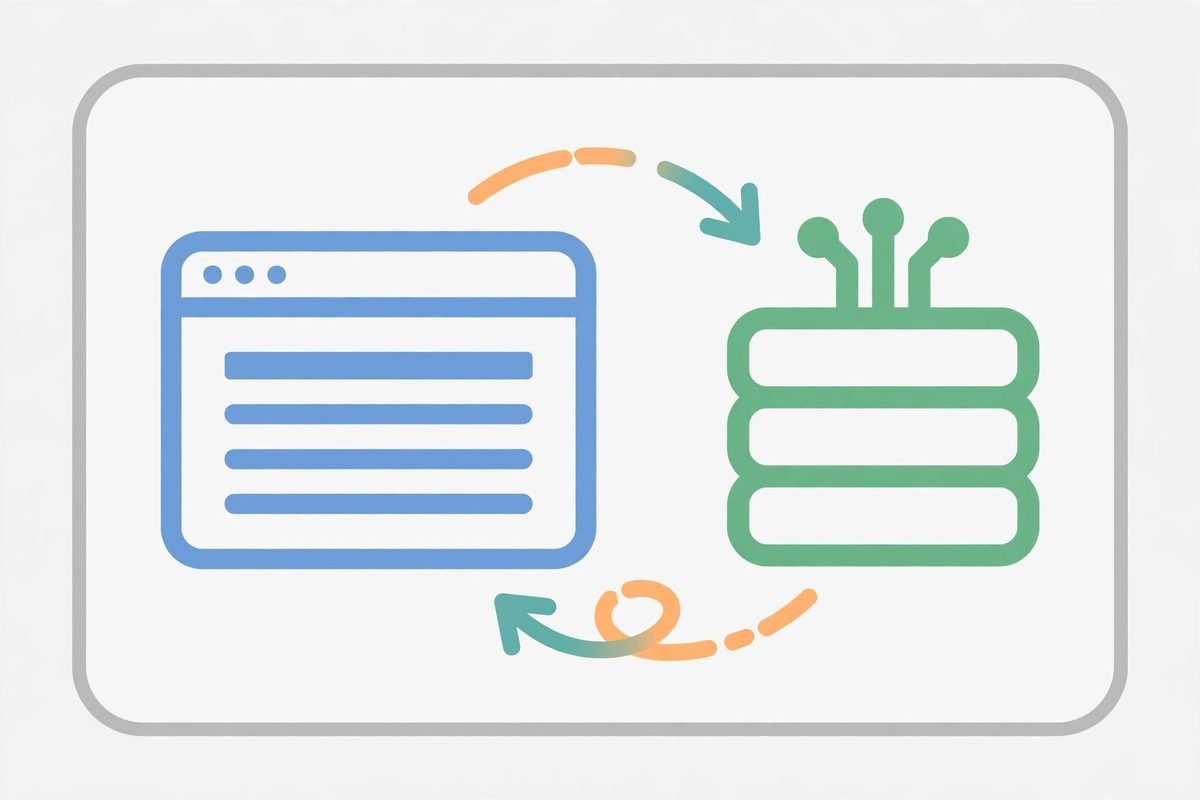
An internet address alone is not enough to reach a specific program. A computer can run many network programs at once — a browser, a chat app, a game, a development server — and the address 127.0.0.1 does not say which one should receive a connection. That is the job of the port number.
Key: Port. A number that identifies a specific program or service on a computer.
Key: In this address. 14444.
Key: Range. Ports run from 0 to 65535.
Key: Well-known ports. Numbers below 1024 are reserved for standard services, such as 80 for plain web traffic and 443 for encrypted web traffic.
Key: High ports. Numbers above 1024 are free for ordinary programs to use.
A useful analogy is a building with one street address and many apartments. The street address gets you to the building, and the apartment number gets you to the right door. Here, 127.0.0.1 is the building — your computer — and 14444 is the apartment number — the particular program listening for connections on that port.
The number 14444 itself carries no standard meaning. It is not reserved for any particular well-known service, and there is no widely recognised program that owns it. It sits in the high range that ordinary applications choose freely, which means it was most likely picked by whichever program created the address — either because the developer chose it, because the program’s default configuration uses it, or because it was assigned at random when the program started. You should not assume that any specific service runs on port 14444. The only way to know what is listening there is to check on the machine itself, as described later in this guide.
When you open http://127.0.0.14444 in a browser, the browser connects to port 14444 on your own computer and asks whatever program is listening there for a web page. If a program is listening and speaks the web’s language, you see its page. If nothing is listening, the browser reports that it cannot connect. The address itself is just directions; whether anything answers depends entirely on what is running.
Why You Might See This Address
A development server
This is the most common reason. Web developers run local servers while building websites and applications. Instead of uploading every small change to a live server, they run the site on their own machine and view it through localhost. The development tool picks a port — sometimes a familiar one, sometimes an unusual one like 14444 — and opens the browser at that address. If you are learning to code, following a tutorial, or working on a project, this is almost certainly what you are seeing.
A local application with a web interface
Many desktop programs include a small built-in web server that provides a control panel, a preview, or a settings page in the browser. Media servers, note-taking tools, download managers, and developer utilities all use this pattern. The program starts, opens a port on localhost, and shows its interface in your browser. The interface looks like a website, but it is served by a program on your own computer.
A game or tool that runs a local service
Some games and creative tools run background services that communicate through localhost. A companion app, a modding tool, or a local multiplayer feature may use a port to exchange data between components on the same machine. The address may appear in a log file, a settings screen, or a browser tab the tool opened for you.
A forwarded or tunnelled connection
Developers sometimes forward a port from a remote machine to their local machine so they can work with a distant service as if it were local. In that setup, a localhost address on your computer actually reaches a service running elsewhere, through a secure tunnel. This is an advanced setup, but it is another legitimate reason a localhost address with an unusual port might appear.
A leftover tab or bookmark
Browsers restore old tabs, and people bookmark addresses they used during a project. A localhost tab from a session that has long since ended will fail to load, because the program that served it is no longer running. Before assuming something is broken, check whether the address is simply a leftover from earlier work.
Is a Localhost Address Safe?
In general, a localhost connection is safer than a connection to a random internet server, for one simple reason: it never leaves your computer. Nobody on the internet can connect to your localhost, and a localhost page cannot be used to reach your machine from outside — unless you have deliberately set up port forwarding or a tunnel that exposes it, which is a choice you would have to make explicitly.
That said, “local” does not mean “harmless in every case.” A program running on your computer could itself be malicious, and a localhost page served by such a program should not be trusted just because the address looks internal. The safety question is really about the program behind the port, not the address. If you recognise the program — your code editor, your media server, a tool you installed deliberately — there is nothing alarming about its localhost page. If you have no idea what program opened the port, that is worth investigating before you interact with it, just as you would investigate any unfamiliar program on your machine.
One more caution applies to links. A link to a localhost address sent by someone else will not show you their content, as explained above. It will probe your own computer for a service on that port. This is rarely dangerous on its own, but it is a reason to be sceptical of localhost links from strangers: at best they do nothing, and at worst they are probing for a local service they hope to exploit through your browser. Do not click localhost links you did not expect.
How to Tell What Is Using a Port
If you want to know which program is listening on port 14444, your operating system can tell you. The commands below list listening ports and the programs behind them. You do not need to understand networking deeply to use them — you are simply looking for the line that mentions 14444.
On Windows, open a command prompt or PowerShell and run netstat with options that show listening ports and process identifiers. Find the line for port 14444, note the process identifier, then look that identifier up in Task Manager to see the program name. On macOS and Linux, the lsof command can show which program holds a port, and the ss or netstat commands list listening ports in a similar way. The exact flags differ slightly between systems, so check your system’s help text if the first attempt does not show what you need.
If nothing appears for port 14444, then no program is currently listening there. That is a complete answer in itself: the address fails because there is nothing to answer it. Either the program has stopped, it was never started, or it is configured to use a different port now.
Knowing the program name usually resolves the mystery immediately. A development server, a media tool, or a game helper explains the address. An unfamiliar program name deserves a quick search on your own machine — check whether you installed it, whether it belongs to software you use, and whether it starts automatically with your computer.
Troubleshooting a Localhost Address That Will Not Load
Start the program that serves it
The most common fix is also the simplest. A localhost page only exists while its program is running. If you closed the development server, quit the application, or restarted your computer, the page disappears with it. Start the program again, wait a few seconds for it to initialise, and refresh the browser tab.
Check you have the right port
Programs do not always use the same port every time. Some pick a free port at random on each launch, especially if their usual port is already taken. If an old bookmark or tab uses port 14444 but the program now runs on a different port, the old address will fail. Look at the program’s own output, status screen, or settings to find the current port, and use the address it gives you rather than the old one.
Look for a “port already in use” error
Only one program can listen on a given port at a time. If two programs want port 14444, the second one fails to start its listener and usually prints an error saying the address is already in use. Check the program’s logs or terminal output for that message. If you find it, either stop the program that grabbed the port first or configure one of the programs to use a different port.
Check your firewall and security software
Firewalls normally allow localhost traffic, since it never leaves the machine, but strict security software can occasionally interfere. If a localhost address worked before and stopped after a security update, temporarily disabling the firewall for a test — and re-enabling it immediately after — can confirm whether it is involved. Do not leave a firewall disabled as a permanent fix; if it is the cause, add a proper rule for the program instead.
Clear the browser cache for that address
Browsers cache redirects and error pages, and a cached failure can persist even after the underlying problem is fixed. A hard refresh usually clears it. If the page still shows an old error, try a private or incognito window, which starts without cached data for that address.
Restart the program, then the computer
If a program claims to be running but its localhost page will not load, stop the program completely and start it again. If that does not help, restart the computer to clear any stuck process that might still be holding the port without serving pages. This is a blunt tool, but it resolves the surprisingly common case of a half-dead process squatting on a port.

Localhost Versus a Live Website
| Feature | Localhost (127.0.0.1:14444) | Live website |
|---|---|---|
| Where it runs | Your own computer | A server on the internet |
| Who can reach it | Only you, on that machine | Anyone with the address |
| Needs internet | No | Yes |
| Typical use | Development, testing, local tools | Publishing content to the world |
| Address stability | Port may change between runs | Domain name stays the same |
| Privacy of traffic | Never leaves your machine | Travels across the internet |
The two are complementary, not competitors. Developers build on localhost because it is fast, private, and free, then deploy to a live server when the work is ready for others. A localhost address is a workshop; a live website is a shopfront. Confusion only arises when a workshop address escapes into the wild — in a shared screenshot, a pasted link, or a restored browser tab — and someone else tries to open it as if it were a shopfront.
Frequently Asked Questions
What is http://127.0.0.14444?
It is a localhost web address. The 127.0.0.1 part means your own computer, and 14444 is the port number of the program the browser should talk to. It is not a public website.
Why does my browser say it cannot reach 127.0.0.1:14444?
Almost always because no program is currently listening on port 14444 on your computer. Start the program that serves that address, check it is using port 14444, and refresh the page.
Is 127.0.0.1:14444 the same for everyone?
No. The address always refers to the computer it is opened on. Your 127.0.0.1:14444 and someone else’s 127.0.0.1:14444 are different machines, and each only works if a program on that machine is listening on that port.
Does port 14444 belong to a specific program?
No widely recognised service owns port 14444. It is a high, unreserved port that ordinary programs can choose freely, so the program behind it varies from one computer to another. Check your own machine to find out what is using it.
Can someone hack me through my localhost address?
Nobody on the internet can connect directly to your localhost, because the address resolves on their own machine, not yours. The real risk would come from a malicious program already running on your computer, or from a tunnel you set up deliberately, so keep your installed software trustworthy and do not expose local ports publicly unless you understand the consequences.
How do I stop a program using port 14444?
Stop the program that is listening on that port. If you do not need the program, you can also prevent it from starting automatically, through your operating system’s startup settings, so the port stays free.
Can I use a different port instead of 14444?
Yes, in most cases. Programs that let you configure their port allow any free high port. If a tutorial or tool insists on 14444, it is usually just a default you can change in its settings, as long as nothing else is already using your chosen port.
Read Also: Http Error 413 Request Too Large Fix (2026 Guide)

Related Articles
Epic Games Active.com Account Activation Explained (2026 Guide)
If you have searched for Epic Games Active.com, you are probably trying to activate an Epic…
Http Error 413 Request Too Large Fix (2026 Guide)
HTTP error 413 appears when a file or request is larger than the server accepts. This…

Running on http://127.0.0.1:5000 Explained in Simple Terms
"Running on http://127.0.0.1:5000" is your Flask development server telling you it started successfully and where to…
1 Comment