Nissan Patrol: Full-Size SUV History and Guide (2026)
The Nissan Patrol has been in production since 1951 and remains Nissan's longest-running nameplate. This guide traces its generations and explains what buyers should know.
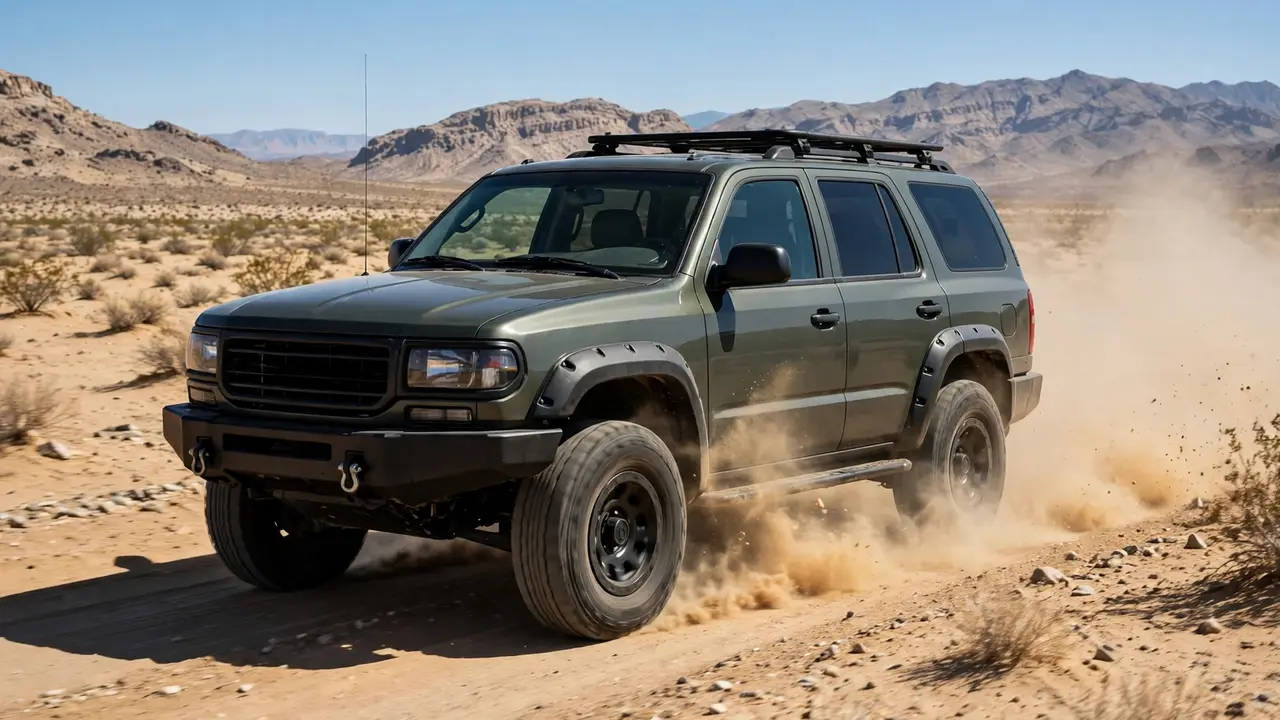
Nissan Patrol: Full-Size SUV History and Guide (2026)
Few vehicles have lasted as long, or changed as much, as the Nissan Patrol. It began in 1951 as a rugged, no-nonsense four-wheel drive, built in Japan in the years after the Second World War, and it is still in production today as a large, luxurious full-size SUV. In between, it has been a farm workhorse, a military and expedition vehicle, a desert family car, and, in the Middle East in particular, a status symbol that shares garage space with supercars. That range is not a contradiction. It is the story of a vehicle that kept its core idea, a tough body on a strong frame, while the world around it changed what a large SUV was expected to be.
This guide explains what the Patrol is, how its generations differ, where it is sold, what it does well, where it falls short, and what to check if you are considering a used one. It does not quote prices, because prices vary widely by market, year, condition, and specification, and a price quoted here would be out of date quickly. It also avoids treating the Patrol as a single car: a 1980s leaf-sprung Patrol and a current luxury Patrol share a name and a philosophy, but they are very different vehicles to live with.
For readers in the United States, one point needs clearing up at the start. The Patrol itself has not been sold as a Nissan Patrol in the United States for many years, but its close relatives have been: the Infiniti QX56, later QX80, was Patrol-based, and from the 2017 model year the Nissan Armada has been the Patrol-based full-size SUV for North America. That relationship explains why American readers may recognise the shape and the size, even if the Patrol badge itself is unfamiliar.
In this article:
- What the Nissan Patrol is
- A brief history of the Patrol
- Generations of the Nissan Patrol
- Where the Patrol is sold
- Design and engineering in plain terms
- Strengths and weaknesses
- Patrol versus its rivals
- Buying a used Nissan Patrol
- Running costs and everyday life
- Pros and cons summary
- Frequently asked questions
What the Nissan Patrol Is
Key: manufacturer. Nissan, Japan.
Key: production. 1951 to the present, making it Nissan’s longest-running series of models.
Key: class. Off-road vehicle and full-size SUV, depending on generation and market.
Key: construction. Body-on-frame, with a separate chassis under the body, throughout most of its history.
Key: layout. Front-engine, four-wheel-drive, with rear-wheel-drive variants in some markets and generations.
Key: other names. Datsun Patrol until 1984, Nissan Safari in Japan from 1980 to 2007, and Nissan Armada in North America from 2017.
A body-on-frame SUV is built more like a truck than like a modern car-based SUV. The body sits on a separate ladder-frame chassis, which is strong, durable, and well suited to rough roads, heavy loads, and towing, but heavier and less refined than a car-style unibody. That construction choice defines the Patrol’s character across generations, even as interiors, engines, and suspension have changed. Early Patrols were basic, noisy, and focused entirely on capability. Later Patrols kept the frame but added comfort, quiet, technology, and luxury, until the current model is, in many markets, a premium family SUV that happens to be very capable off road, rather than a work vehicle that happens to have seats.
The Patrol has traditionally competed with the Toyota Land Cruiser in most world markets, and that rivalry explains much of its development. Both vehicles built reputations for durability in harsh conditions, both grew larger and more luxurious over time, and both attract loyal owners who value longevity over fashion. If you understand that rivalry, you understand why Patrol owners talk about reliability, parts availability in remote areas, and long service lives as much as they talk about performance or styling.
A Brief History of the Patrol
The Patrol was Nissan’s answer to a post-war need for a capable four-wheel-drive vehicle in Japan, at a time when the country’s automobile industry was rebuilding and when a tough, simple off-roader had clear uses for government, agriculture, and industry. The first generation, known as the 4W60, appeared in 1951, and it established the pattern that would last for decades: a short-wheelbase three-door or a long-wheelbase five-door body, four-wheel drive, and a focus on durability over comfort.
Through the 1960s and 1970s, the Patrol developed gradually, gaining larger bodies, stronger engines, and more variants, including pickup and cab-chassis versions of the long-wheelbase model. In Japan, from 1980, the same vehicle was also sold as the Nissan Safari, a name that lasted until 2007. In some markets, the Patrol was sold under other badges: Ford Australia marketed it as the Ford Maverick between 1988 and 1994, and in parts of Europe it was marketed by Ebro as the Ebro Patrol. Those badge changes are a reminder that a successful vehicle platform often travels further than its original name.
The Patrol’s reputation was built not in showrooms but in use: on farms, on construction sites, on desert tracks, and on long overland journeys where a breakdown far from help is more than an inconvenience. Owners and fleet users valued a vehicle that could be repaired with basic tools, that tolerated poor fuel and rough roads, and that kept going after other vehicles had stopped. That reputation, earned slowly over decades, is why older Patrols still command respect among off-road enthusiasts, even when their interiors and safety equipment look dated by modern standards.
Generations of the Nissan Patrol
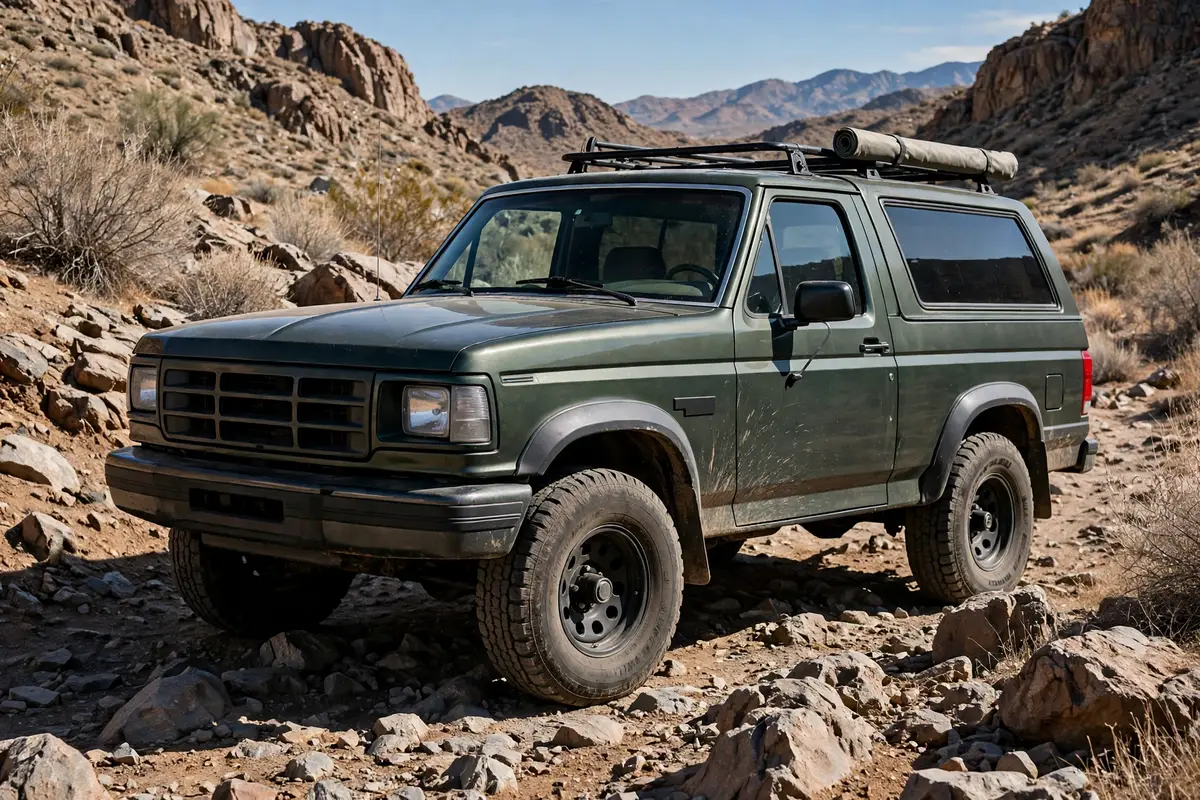
The generation history is often described by chassis codes, which can be confusing at first but become clear with a short summary. The early generations, from the 4W60 in 1951 through the 60 series in the 1960s and 1970s, were simple, rugged vehicles with leaf-spring suspension and basic interiors. They are now collector and enthusiast vehicles in many markets, valued for their simplicity and character rather than for daily comfort.
The 160 series, produced from 1980 to the late 1980s, brought a more modern shape, a five-door layout, seven seats in some versions, and air conditioning, and it was built in Barcelona from 1983 for some markets. It kept the leaf-sprung, ladder-frame character but moved the Patrol closer to a family vehicle. The Y60, produced from 1987 to 1997 and known in Australia as the GQ, brought coil springs to the wagons, power steering, and a more refined ride, while keeping solid axles and a tough frame. It is widely regarded as a classic Patrol generation, and it remains popular with off-road enthusiasts for its durability and simplicity.
The Y61, produced from 1997 and known in Australia as the GU, continued the solid-axle, rugged formula with larger cabins, more advanced off-road technology, and a range of petrol and diesel engines, including well-known six-cylinder units. In the Middle East, it returned in 2016 as the Super Safari, and it continues to be sold alongside the newer Patrol in some Gulf markets, a sign of how strongly buyers there value the older, tougher formula. The Y62, launched on February 13, 2010, marked a bigger change: independent suspension, a V8 engine in many markets, and a much more luxurious, full-size SUV character. It is the Patrol most buyers in the Gulf, Australia, and other current markets will recognise, with large three-row seating, strong air conditioning, and modern technology.
The newest generation, the Y63, launched in 2024, continues the full-size luxury direction with updated design, technology, and driver assistance systems. The details of engines and specifications vary by market, and they change with model years, so a buyer should always check the specification for their own country and year, rather than assuming that a Patrol in one market matches a Patrol in another. The generation story, however, is consistent: from basic workhorse, through rugged family off-roader, to luxury full-size SUV, with the older formula still available in some markets for buyers who prefer it.
Where the Patrol Is Sold
The Patrol is sold throughout the world, but not everywhere under the same name or specification. It is available in Australia, Central and South America, South Africa, parts of Southeast Asia, and Western Europe, as well as Iran and the Middle East, where it is particularly popular. In the Gulf states, it is a common sight and a strong seller, with a range of trims from practical to highly luxurious, including a Nismo performance version in some markets.
In North America, the story is different. The Patrol was not sold as a Nissan Patrol in the United States after the early years, but a Patrol-based vehicle returned for the 2011 model year as the Infiniti QX56, later renamed QX80, and from the 2017 model year as the Nissan Armada. American buyers who want the Patrol’s size, frame, and capability should therefore look at the Armada and QX80, while understanding that specifications, engines, and trims differ from the Patrol sold in the Middle East or Australia.
That market variation matters for used buyers, too. Parts, service knowledge, and resale values depend on which version was officially sold in your country, and on whether grey imports are common. A Patrol imported privately may be a fine vehicle, but it can be harder to insure, service, and resell than a version sold locally. Checking local availability before falling in love with a foreign specification is a practical step that saves trouble later.
Design and Engineering in Plain Terms
The Patrol’s engineering can be understood through a few simple ideas. Body-on-frame construction gives strength and durability, and it allows the vehicle to handle rough terrain, heavy loads, and towing without flexing in the way a car-based SUV might. Solid axles, used in the Y60 and Y61 generations, give excellent articulation off road and are simple and strong, but they can feel less refined on paved roads. Independent suspension, used in the Y62 and Y63, gives a smoother, quieter ride and better handling on road, at the cost of some of the older simplicity.
Engines have varied widely by generation and market, from early four- and six-cylinder petrol and diesel units to larger six-cylinder and V8 petrol engines in later models, with diesel options important in Australia and other markets. Transmissions have moved from manuals, common in earlier generations, to automatics, which dominate current models. Four-wheel-drive systems have developed from simple part-time systems, where the driver selected four-wheel drive manually, to sophisticated full-time systems with electronic controls, hill descent, terrain modes, and locking differentials in some versions.
Inside, the change is even clearer. Early Patrols had basic dashboards, vinyl seats, and little sound insulation. The Y62 and later models offer leather, large screens, advanced climate control, driver assistance systems, and quiet cabins that would not shame a luxury car. That transformation is the Patrol’s story in miniature: the frame stayed, but everything around it became more comfortable, more technological, and more expensive.
Strengths and Weaknesses
The Patrol’s strengths are consistent across generations, even if their expression changes. Durability and longevity come first: well-maintained Patrols are known for long service lives, and the vehicle’s reputation in harsh climates and remote areas is a major reason for its following. Off-road capability comes second, particularly for the solid-axle generations and for the newer models with advanced four-wheel-drive systems, ground clearance, and towing ability. Space and presence come third: a full-size Patrol offers three rows of seats, a large cargo area, and a commanding driving position that families and long-distance travellers value.
The weaknesses are equally consistent, and a buyer should face them honestly. Fuel consumption is high by modern standards, particularly for large petrol V8 models, and it is a real running cost, not a minor detail. Size is a drawback in cities: parking, manoeuvring, and garage space all require thought, and a Patrol is not a nimble urban car. Older models lack modern safety equipment, refinement, and driver assistance, and they can feel noisy, slow, and basic compared with a current SUV. Newer models, by contrast, are expensive to buy and to maintain, with large tyres, complex electronics, and premium servicing costs.
For readers who enjoy this kind of practical vehicle guide, the everyday explainers on 9bio and the news and guides on The Modern Post cover similar topics in plain language. The Patrol, like any large SUV, rewards a buyer who matches the vehicle to their real use, rather than to an imagined lifestyle: a family that tows, travels long distances, or drives rough roads will value it differently from a city driver who rarely leaves paved streets.
Patrol Versus Its Rivals
The Patrol’s natural rival is the Toyota Land Cruiser, and the comparison has shaped both vehicles for decades. The Land Cruiser is often described as more refined, more widely available, and stronger in resale in some markets, while the Patrol is often described as more spacious, more comfortable in its later generations, and strong in the Gulf and Australia. Those generalisations vary by generation, market, and specification, and a serious buyer should compare specific model years, not just badges.
Other rivals depend on the market. In the Gulf and Australia, large SUVs from other makers, including American full-size SUVs, compete on space, luxury, and towing. In Europe, where the Patrol has had a smaller presence in recent years, large SUVs from premium makers compete on road manners and technology, though rarely on the same off-road durability. In North America, the Armada competes with other full-size SUVs, including the Land Cruiser’s relatives, the Chevrolet Tahoe, and the Ford Expedition, on space, towing, and family comfort.
The honest summary is that the Patrol does not win on every measure, and it does not need to. It wins for buyers who prioritise frame-based durability, long-distance comfort, and a proven record in harsh conditions, and who accept higher fuel use and size as the price of those qualities. Buyers who prioritise fuel economy, city manoeuvrability, or the latest hybrid technology will find better matches elsewhere, and that is a sensible reason to look beyond the Patrol, not a criticism of it.
Buying a Used Nissan Patrol
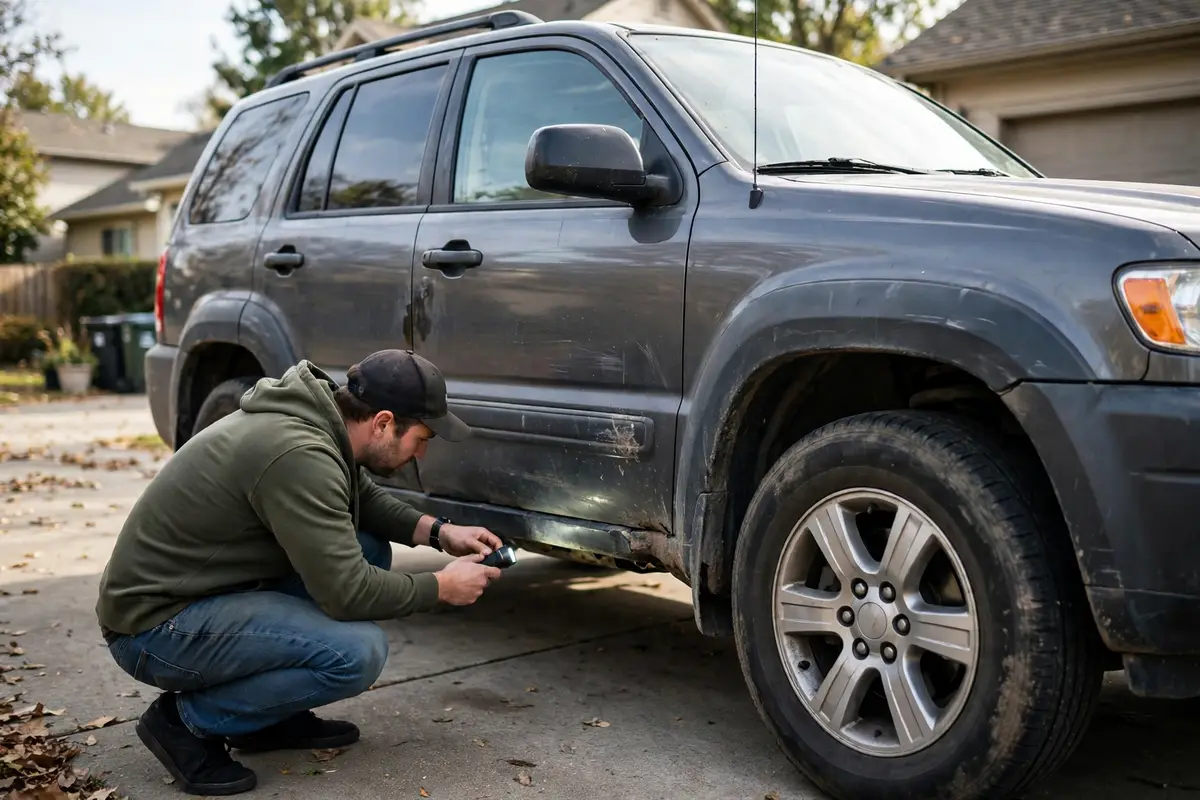
Buying a used Patrol is a different exercise from buying a new one, and it rewards patience. The first check is service history: a Patrol that has been serviced regularly, with records, is a far better prospect than a cheaper example with gaps in its history, however good it looks. The second check is rust, particularly on older generations, around the underbody, chassis, wheel arches, and sills. A clean exterior can hide underbody corrosion, so an inspection underneath, ideally on a lift, is essential.
The third check is the four-wheel-drive system and suspension. Test every four-wheel-drive mode, listen for noises from differentials and transfer cases, and check for worn bushes, leaking shocks, and sagging springs, all common on vehicles that have worked hard. The fourth check is the engine and transmission: look for smoke, leaks, overheating, and rough shifting, and be wary of modified vehicles with raised suspension, large tyres, and engine tuning, unless the work is documented and well done. Modifications can improve off-road ability, but they can also hide abuse and affect reliability.
Finally, check the vehicle’s market history. Was it officially sold in your country, or imported? Is it a Y60, Y61, Y62, or Y63, and does that generation match your needs for comfort, safety, and parts? Are parts and specialist mechanics available locally? A Patrol is a long-term vehicle, and the answers to those questions matter more than a small saving on the purchase price. A pre-purchase inspection by a mechanic who knows Patrols is money well spent, particularly for older or heavily modified examples.
Running Costs and Everyday Life
Running a Patrol costs more than running a smaller SUV, and a buyer should budget accordingly. Fuel is the largest everyday cost, especially for petrol V8 models, and it rises quickly with city driving, towing, or off-road use. Tyres for a large, heavy SUV are expensive, and they wear faster if the vehicle is used off road or with incorrect pressures. Servicing, particularly for newer models with complex electronics and driver assistance systems, should be done by a dealer or specialist, and parts prices vary by market.
Everyday life with a Patrol, however, has real pleasures that offset those costs for the right owner. The driving position is commanding, the cabin is spacious for families and luggage, and the vehicle feels unstressed on long journeys, in heat, and on rough roads. For a family that travels, tows a trailer or boat, or lives where roads are poor, those qualities are not luxuries but practical benefits. For a single city driver with a short commute, they are harder to justify, and a smaller SUV or car would likely be a better financial and practical choice.
The Patrol’s longevity also affects its running costs in a positive way. A well-maintained Patrol can last for many years and high mileages, spreading its purchase cost over a long life, and its parts and knowledge base are extensive in its main markets. That long life is part of why Patrols hold their appeal: they are not disposable vehicles, but long-term tools that reward care.
Pros and Cons Summary
| Aspect | Advantage | Drawback |
|---|---|---|
| Durability | Long service life and a strong record in harsh conditions | Older models can suffer rust and wear if neglected |
| Capability | Strong off-road ability, towing, and load carrying | Large size makes city driving and parking harder |
| Space | Three rows, large cargo area, and a commanding view | Fuel consumption is high, especially for petrol V8 models |
| Comfort (newer models) | Quiet, luxurious cabins with modern technology | Newer models are expensive to buy and maintain |
| Simplicity (older models) | Easy to understand and repair, with basic tools | Lacks modern safety, refinement, and driver assistance |
Frequently Asked Questions
What is a Nissan Patrol?
The Nissan Patrol is a series of off-road vehicles and full-size SUVs made by Nissan in Japan since 1951. It is Nissan’s longest-running nameplate, built on a body-on-frame chassis, and sold worldwide, with close relatives in North America called the Armada and QX80.
Is the Nissan Patrol sold in the United States?
Not under the Patrol name in recent years. In North America, the Patrol-based full-size SUV is sold as the Nissan Armada from the 2017 model year, and earlier as the Infiniti QX56, later QX80.
What are the main Nissan Patrol generations?
The main generations include the early 4W60 and 60 series, the 160 series from 1980, the Y60 from 1987, the Y61 from 1997, the Y62 from 2010, and the Y63 from 2024. The Y60 and Y61 are known in Australia as the GQ and GU.
Is the Nissan Patrol reliable?
Well-maintained Patrols have a strong reputation for durability and long service lives, particularly in harsh conditions. Reliability depends heavily on generation, maintenance history, and use, so service records and a pre-purchase inspection matter greatly for used examples.
Is the Nissan Patrol good off road?
Yes, particularly the solid-axle Y60 and Y61 generations and the newer models with advanced four-wheel-drive systems. Ground clearance, frame strength, and four-wheel-drive capability are central to the Patrol’s design, though newer models prioritise on-road comfort more than older ones.
What is the difference between a Patrol and a Safari?
In Japan, from 1980 to 2007, the same vehicle was sold as the Nissan Safari, alongside the Patrol name used elsewhere. They are the same basic vehicle under different badges for the Japanese market.
Should I buy a used Nissan Patrol?
It can be an excellent choice if you need space, durability, and off-road or towing capability, and if you find an example with a good service history, minimal rust, and a sound four-wheel-drive system. Budget for higher fuel and maintenance costs, and have it inspected by a Patrol-aware mechanic before buying.
Read Also: Conferences 2024: Education Events Guide and Lessons

Related Articles
Columbus Day 2026: Date, History, and What Is Open
Columbus Day 2026 is Monday, October 12. This guide explains the date, the history behind the…

763 Area Code Guide to Minnesota Cities and Dialing
Area code 763 covers the northwestern suburbs of Minneapolis, Minnesota, including cities like Brooklyn Park, Maple…

Turks- és Caicos-szigetek: Teljes Utazási Útmutató 2026
A Turks- és Caicos-szigetek a Karib-térség egyik legnyugodtabb és legszebb úti célja, türkiz tengerrel, fehér homokkal…
1 Comment