Best Beaches Near Barcelona (2026 Guide): City Beaches and Day Trips Explained
The best beaches in Barcelona and the day trips worth taking: city favorites like Bogatell, plus Sitges, Castelldefels, and Ocata by train.

Barcelona is one of the few European cities where you can tour a Gothic cathedral in the morning and be swimming in the Mediterranean by the afternoon. The catch is that not all of its beaches are equal, and the best beaches near Barcelona are often thirty minutes from the city by train.
This guide covers both sides of the coastline: the city beaches you can reach by metro, and the day-trip beaches where the sand is wider, the water clearer, and the crowds thinner. Pick the one that fits your day, not just the one with the most famous name.
In this article
The Short Answer: Which Beach Should You Pick?
Barcelona is a city with beaches, not a beach resort, and that distinction matters. The urban shoreline is broad, public, and brilliantly connected, but it can also be busy, windy, and more energetic than the postcard coves elsewhere on the Catalan coast. Here is the quick chooser:
- Barceloneta: easiest to combine with the old city. Go for the location, not the tranquility.
- Nova Icària: the practical family choice, with calm water and extensive facilities near Port Olímpic.
- Bogatell: the strongest all-rounder, with more room and a calmer atmosphere than Barceloneta.
- Mar Bella: a livelier, more local-feeling stretch, popular for sport and a younger crowd.
- Sitges: the best full day trip, pairing beaches with a genuinely charming old town.
- Castelldefels: the best value day trip, a long sandy beach on a cheap train ride.
- Ocata: the quiet escape, wide and calm, twenty minutes from the city.
For a first trip, the default pick that locals themselves recommend is Bogatell or Nova Icària for a half-day beach session, and Barceloneta only when its location genuinely suits your sightseeing route. If the beach is the main event of the day rather than a two-hour break, get on a train instead.
Barcelona’s City Beaches
Much of the shoreline you see today was built or rebuilt for the 1992 Olympics, which is why it sits so close to the city center. The nine city beaches each have a distinct character, and choosing between them is mostly a question of crowds, facilities, and which metro line you are near.
Barceloneta: the iconic one
This is the beach most people picture when they search for a Barcelona beach. At 422 metres long, it sits at the foot of the Barceloneta neighbourhood, about a 15-minute walk from the Gothic Quarter, with an arcade of restaurants and bars along the seawall. It is lively, convenient, and the easiest beach to fold into a sightseeing day. It is also the busiest, the most tourist-heavy, and not the cleanest stretch of sand. Go once for the experience, then try the others.
Bogatell: the local favorite
At 702 metres, Bogatell is the longest city beach, and it is the one Barcelona locals consistently name as their favorite. It holds a Blue Flag for 2026, sits a short walk from metro Line 4 (Llacuna), and offers sports facilities, calmer water, and noticeably more space than Barceloneta. If you want the best combination of location and tranquility inside the city, this is it.

Nova Icària: the family pick
Right by the Olympic Port, Nova Icària is the beach to choose with kids. The water is calm, the facilities are extensive (volleyball, playground, restaurants), and it carries a Blue Flag for 2026. It feels more relaxed and local than Barceloneta while staying easy to reach.
Mar Bella: the sporty, local stretch
Further up the coast in Poblenou, Mar Bella draws a younger, more local crowd. It is known for windsurfing, kayaking, beach sports, and an inclusive, alternative atmosphere, including a designated naturist section. Come here when you want energy without the Barceloneta tourist crush.
Somorrostro and Sant Sebastià: the quieter city stretches
Two more city beaches deserve a mention. Sant Sebastià, at 660 metres near the W Hotel, is one of the oldest beaches in the city and draws a mix of locals and sailing club members; it is busy but a step calmer than Barceloneta. Somorrostro sits between Barceloneta and Port Olímpic and is the quietest of the central beaches, known for beach tennis courts and a relaxed local vibe. Neither is a destination in itself, but both are smart defaults if you happen to be staying nearby.
| Beach | Length | Best for | Nearest metro |
|---|---|---|---|
| Barceloneta | 422 m | Quick dip, people-watching, sightseeing combo | Barceloneta (L4) |
| Nova Icària | 415 m | Families, calm water, facilities | Ciutadella-Vila Olímpica (L4) |
| Bogatell | 702 m | Locals, space, sports, calm | Llacuna (L4) |
| Mar Bella | Long stretch | Windsurfing, younger crowd, sport | Poblenou (L4) |
| Llevant | 375 m | Space, quieter far end, dog-friendly zone | El Maresme-Fòrum (L4) |
Best Beaches Near Barcelona: Day Trips
The real upgrade happens when you leave the city. Within 45 minutes by train, the beaches get wider, the water gets clearer, and the atmosphere shifts from urban to genuinely coastal. Every option below is reachable without a car.
Sitges: the classic day trip
About 35 to 45 minutes south by Rodalies train (around €4.55 each way), Sitges packs 17 beaches into a town that is worth the trip on its own: a whitewashed old town, a modernist church on the hill, and a restaurant scene far better than anything on the city beaches. The beaches range from family-friendly to lively, and the town stays animated into the evening, though the last train back leaves around 22:22, so plan accordingly.
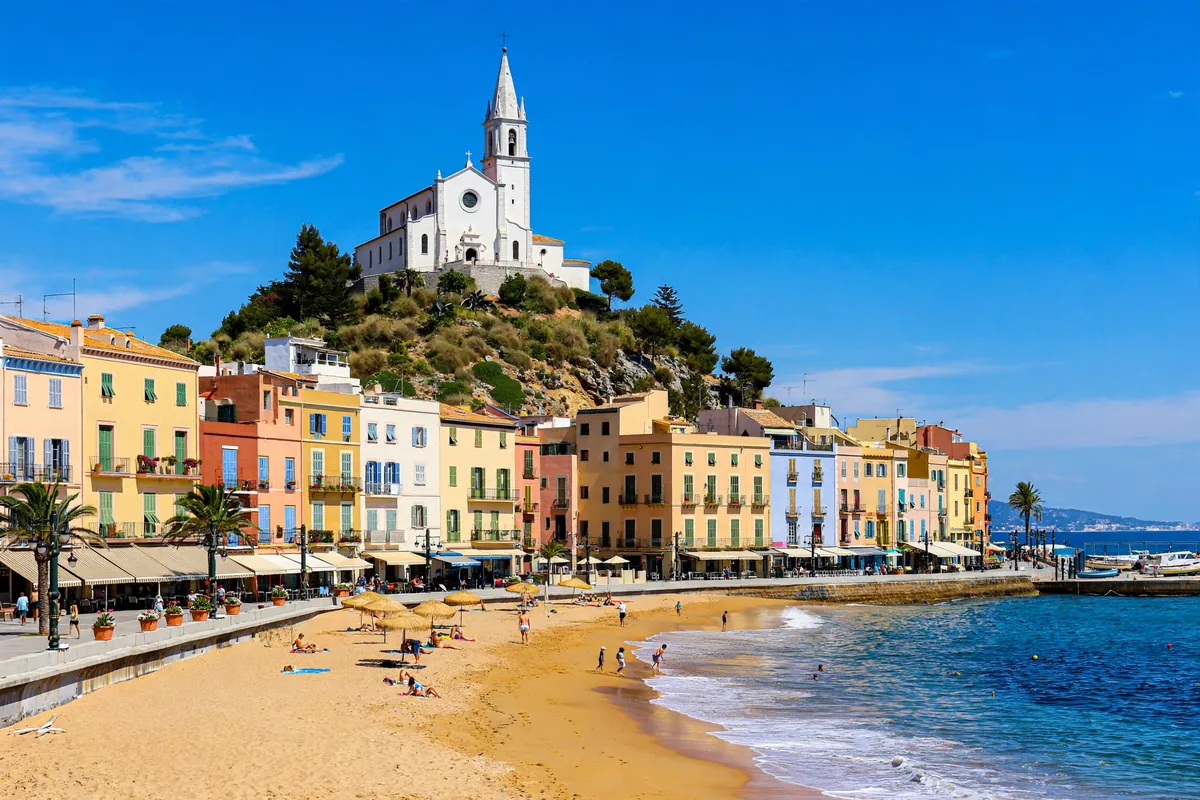
Castelldefels: the long, easy beach
Five kilometres of golden sand, about 28 minutes from Passeig de Gràcia on the R2 Sud line. Because Castelldefels sits in fare zone 1, the ride costs the same as a metro trip (around €2.90), which makes it arguably the best value beach day from the city. Families love the space, and kitesurfers love the wind. Full facilities line the promenade.
Ocata: the quiet escape
Twenty minutes north on the Maresme coast, Ocata in El Masnou is the locals’ secret that is not much of a secret anymore: wide golden sand, excellent water clarity, and a peaceful atmosphere for about €3.35 each way. Come here when you want to read a book in actual quiet.
| Destination | Train time | Cost (each way, approx.) | Best for |
|---|---|---|---|
| Castelldefels | ~28 min (R2 Sud) | ~€2.90 | Long beach, families, kitesurfing |
| Ocata (El Masnou) | ~20 min | ~€3.35 | Quiet, clear water, relaxing |
| Sitges | ~39-45 min | ~€4.55 | Beach + old town, restaurants, evening |
| Tossa de Mar | ~80 min (direct bus) | Varies | Scenic coves, medieval town, Costa Brava |
If you have a full day and want the dramatic Costa Brava scenery, the direct Moventis Sarfa bus from Estació del Nord reaches Tossa de Mar in about 80 minutes: cliffs, hidden coves, and a walled medieval old town above the sea. For more travel and lifestyle reading, The Modern Post regularly covers destinations and city guides across Europe.
City Beach vs Day Trip: Pros and Cons
| Pros | Cons | |
|---|---|---|
| City beaches | Minutes from the center; metro access; easy to combine with sightseeing; full facilities | Crowded in summer; less scenic; can be windy and exposed |
| Day trips | Wider beaches; clearer water; quieter; real coastal towns with better food | 30-80 minutes of travel each way; need to watch return train times |
When a Day Trip Becomes a Long Day: Costa Brava and Costa Daurada
For most visitors, Sitges and Castelldefels are the sweet spot. But if the beach is the entire point of your trip, the coasts north and south of Barcelona reward the extra travel time.
Costa Brava: dramatic coves and medieval towns
North of the city, the Costa Brava trades wide sandy strips for cliffs, pine trees, and hidden coves with startlingly clear water. Tossa de Mar is the easiest taste of it without a car: a direct bus from Estació del Nord takes about 80 minutes and drops you in a town where a walled medieval old town (the Vila Vella) sits on a headland between two beaches. Swim in the morning, climb the walls in the afternoon, eat grilled fish for dinner. It is a long day, but it is a complete one.
Costa Daurada: golden sand and Roman history
South of Sitges, the Costa Daurada around Tarragona offers long golden beaches with shallow water and, in Tarragona itself, UNESCO World Heritage Roman ruins a short walk from the sand. It takes roughly an hour to an hour and a half to reach, so it works best as a full-day plan rather than a half-day add-on.
The honest tradeoff: these longer trips cost you time and energy, but they are the only way to get the classic Mediterranean cove experience from a Barcelona base. If you have three or more beach days, spend one of them out here.
Practical Tips for Beach Days
A few local realities that 2026 guides flag and first-time visitors usually learn the hard way:
- Smoking and vaping are banned on every Barcelona city beach, with fines of up to €30.
- Do not buy from beach vendors. Purchasing from unauthorized sellers on the sand can cost up to €600 under a city bylaw in force since February 2026, according to 2026 guides.
- Go early or late. City beaches fill up by midday in summer; mornings before 11 and evenings after 5 are calmer and the light is better.
- Bring water shoes for rocky coves if you head to the Costa Brava, where the prettiest swimming spots are often pebbly.
- Check return times for day trips: Sitges’ last train back is around 22:22, and missing it means an expensive taxi.
- Sunscreen and shade: the Mediterranean sun is stronger than it feels with the sea breeze. There is very little natural shade on the urban beaches.
Frequently Asked Questions
What is the best beach in Barcelona for families?
Nova Icària is the safest pick inside the city: calm water, a playground, volleyball courts, restaurants, and a Blue Flag for 2026. For a day trip with kids, Castelldefels offers five kilometres of space to spread out.
Which Barcelona beaches have a Blue Flag in 2026?
Bogatell and Nova Icària hold Blue Flags for 2026. Barceloneta, Sant Miquel, and Llevant are the city beaches without one this year.
Can you swim at Barcelona beaches in October?
The sea is usually still swimmable in early October, though it cools noticeably by late October. The beaches themselves stay open year-round, and the promenades are pleasant even in winter.
Is Sitges worth a day trip from Barcelona?
Yes. It is the rare day trip where the town is as good as the beach: 17 beaches, a beautiful old town, excellent restaurants, and a 35-45 minute train ride. It is the best all-round beach day trip from the city.
How do I get to the beaches without a car?
You do not need one. City beaches connect via metro Line 4. Castelldefels, Ocata, and Sitges are on direct commuter rail lines, and Tossa de Mar is served by a direct bus from Estació del Nord. Every pick in this guide is reachable by public transport.
Are Barcelona beaches free?
Yes. All beaches in Spain are public by law, and access is free. You only pay if you rent a sun lounger and umbrella, which is optional.
Which Barcelona beach is least crowded?
Inside the city, Llevant and Nova Mar Bella at the far northern end are the quietest, along with Somorrostro in the center. For a genuinely uncrowded day, Ocata or the Costa Brava coves beat every city beach.
Can I surf near Barcelona?
Barcelona is not a surf capital, but Mar Bella and Barceloneta get rideable waves when the wind picks up, and several surf schools operate on the city beaches. Castelldefels is better known for kitesurfing. Serious surfers usually head further up the coast.
Is the water clean at Barcelona’s beaches?
Blue Flag beaches like Bogatell and Nova Icària meet strict water quality standards. After heavy rain, it is wise to wait a day before swimming anywhere urban, as storm runoff can temporarily affect water quality. Ocata and the Costa Brava coves consistently have the clearest water.
Read Also: How to Wash a Wool Blanket (2026 Guide): Hand Wash and Machine Steps

Related Articles

Actors in 22 Jump Street: Full Cast and Characters (2026 Guide)
A complete guide to the actors in 22 Jump Street (2014): Jonah Hill, Channing Tatum, Ice…

How to Read Comics Online: The Best Free and Legal Ways (2026 Guide)
You can read comics online without paying a cent or breaking the law. This guide covers…

100+ Best Corny Jokes (Explained): Dad Jokes, Puns & Knock-Knock Jokes
The ultimate collection of corny jokes: 100+ dad jokes, puns, knock-knock jokes and clean one-liners for…